


Medically reviewed for accuracy by Dr. Charleston, FACFAOM, C.PED.
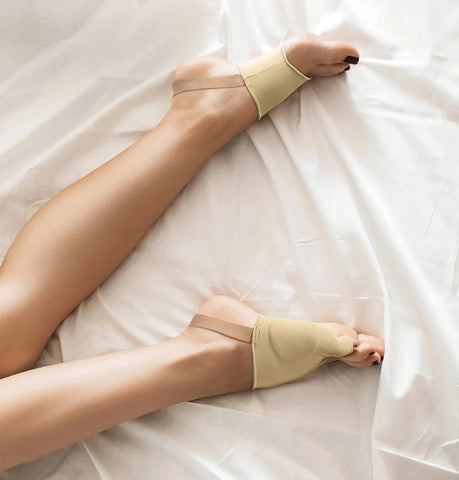
Yes, a sleeve can help with a tailor's bunion, within limits. The HalluxCare Tailor's Bunion (Pinky Toe) Sleeve is a soft, stretchy sleeve made for the bony lump on the outside of your little toe, with an attached heel strap that keeps it from sliding. It adds a protective layer over that spot so shoes rub less. It will not shrink the bump or move the bone back; only surgery physically realigns bone.
If you landed here searching for a "bunionette sleeve", you already know what the lump is. (In short: it is a bump on the fifth metatarsal head, the outer side of the foot below the little toe, and our guide to what a bunionette is, its causes and symptoms covers the detail.) This guide is for the next question: is a sleeve the right product, how does it compare with the alternatives, and how do you use it properly?
Key takeaways
- A tailor's bunion sleeve is a comfort and protection tool. Many users find it eases rubbing and soreness; it does not remove the bump.
- The sleeve is made for the outer edge of the foot, over the lump below the little toe. A big-toe bunion sleeve is shaped for a different spot.
- Start with 5-15 minutes, add 5 minutes per session, and build to 30+ minutes. It can go inside socks and roomy shoes, or be worn at home and in bed.
- Toe-box width matters as much as the sleeve. A sleeve inside a narrow shoe can add pressure instead of relieving it.
- See a podiatrist if pain is severe, the skin is broken, or the toe is numb, red and hot, or getting worse.
What a tailor's bunion sleeve does (and does not do)
A tailor's bunion sleeve slips over the forefoot like a short sock. The soft, medical-grade stretch fabric covers the outside of the foot, so the sore bump has a layer of material over it instead of pressing straight into the side of a shoe. The fabric gives gentle, even contact, and the attached heel strap anchors it so it does not creep forward as you walk.
What it can realistically do:
- Protect the bump. The fabric layer helps take direct pressure and rubbing off the lump instead of letting it press against the shoe wall.
- Reduce friction. Less rubbing can mean fewer red, sore patches and calluses over the area.
- Stay put. The heel strap is the difference between a sleeve you forget about and one that bunches up at the toes.
- Work around your day. Wear it in socks, in shoes, at home, or overnight.
What it does not do:
- It does not remove the bone growth. The bump is part of the bone structure. Orthopaedic sources say padding and shoe changes ease symptoms but do not correct the deformity.
- It will not rescue a narrow shoe. If the toe box is too tight, the sleeve takes up room you do not have.
- It is not a treatment for infection, fracture, or nerve problems. Those need a professional.
If you want the broader evidence on correctors in general, see our evidence review of whether bunion correctors really work. The honest summary for a tailor's bunion is the same: comfort and protection are realistic goals, a changed bone shape is not.
Tailor's bunion sleeve vs gel pads, moleskin, splints and wider shoes
Most people end up combining two or three of these. Here is how they differ for a lump on the little-toe side of the foot.
| Option | Good at | Watch out for |
|---|---|---|
| Tailor's bunion sleeve | Soft protective layer over the lump, held in place by a heel strap; slips on like a sock; wearable day or night | Does not change bone position; needs some shoe room |
| Loose gel pad or bunion shield | Cheap, low-profile, easy to cut to size | Can slide off or fold over inside a shoe; often needs adhesive or a tight sock |
| Moleskin or felt padding | Quick fix for a hot spot; can be shaped with a hole around the bump | Adhesive can irritate skin; wears out quickly; thick layers add bulk |
| Corrector splint (rigid or adjustable) | Applies a set pull or spacing; some people use them mainly at night | Bulky for shoes; the pinky side is small, so fit can be awkward |
| Wider or softer shoes | Removes the cause of rubbing; the single biggest comfort change for many people | Costs money; needs a roomy toe box and soft upper |
The general medical advice for a bunionette is consistent: wear shoes with a wider toe box, use padding to reduce rubbing, and consider supportive insoles. Those measures ease symptoms; they do not correct the deformity. A sleeve is essentially a better-anchored, wearable version of the padding step.
For the generic version of this comparison, see bunion pads vs sleeves.
Why a sleeve instead of a pad on its own
The practical issue with a loose pad on the outside of the foot is that the little toe side is a high-friction spot. Every step slides the shoe sideways across it. A pad that depends on adhesive or sock tension often drifts. A sleeve with a heel strap is anchored at the back as well as the front, so the protective layer tends to stay where you put it. If you want a ready-made option, the Tailor's Bunion Sleeve (2 pairs, US$29.96) is designed around exactly that.
Readers who found this guide helpful are also checking these out — used by 1,800+ customers managing bunion pain at home:

What customers are saying
“The biggest win for me is the pain relief. I used to have this constant ache around the bunion area, especially after a long day on my feet. With the sleeve on, that pain has significantly toned down. I won't say it's a miracle cure, but it's definitely given me some much-needed comfort.”
“My right foot had been bothering me for months — shoes that were always comfortable suddenly hurt after a long day. I’ve been wearing these sleeves for three weeks now and my foot feels mostly back to normal. And the shipping was incredibly fast.”
"I am so pleasantly surprised with this product! I contemplated buying it for weeks and finally did it. My feet have started to form bunions just in the last year or so. I purchased this to alleviate the pain that has started after a long day on my feet. I don't have aching sore feet at the end of the day anymore. I highly recommend it."
"Typically not one to write a review but I was pleasantly surprised with this product. I often wear heels that don't give my toes much room to straighten and over the years my pinky toe started to shift inwards towards my other toes. The misalignment caused the joint to stick out the side of my foot and I started to get inflammation and pain when I walked. In less than a week of using this product I noticed a major difference in the alignment of my toe. The pain is gone and the joint that was inflamed has gotten smaller."
"It's been 2 months since I purchased this item and I can honestly say they work. You have to be patient with them and give your foot time to heal. I had a very painful bunionette on my left foot and these sleeves made a real difference once I wore them consistently."
"I bought this because my bunions were becoming quite painful and I wanted to avoid surgery. These work really well inside shoes. They are well made too, so easy to use and doesn't cut off circulation like other products. A very effective item for pain relief and for those of us trying to keep those bunions from getting worse."
Where it sits and how to put it on
Find the spot first. Run a finger along the outer edge of your foot from the heel toward the little toe. The sore, bony bump you feel just behind the toe joint is the head of the fifth metatarsal. The sleeve should sit with its fabric covering that spot on the outer edge of the foot.
- Start with clean, dry skin. Lotion makes the sleeve slide.
- Slide your toes in and draw the sleeve up over the front of the foot like a sock.
- Position it over the lump. The sleeve should cover the outer side of the foot, with the heel strap behind the heel, and nothing bunched under the toe.
- Set the heel strap around the back of your heel so the sleeve cannot creep forward when you walk.
- Smooth out wrinkles. A fold under the ball of the foot will feel like a pebble in a shoe.
- Check after a few steps. If the sleeve has shifted, take it off and reposition it rather than adjusting it inside your shoe.
It should feel snug and comfortable, not tight. Numbness, tingling, or a throbbing toe means take it off.
Fit and shoes
The sleeve is one size and made to fit adult feet. The stretch fabric moulds around the forefoot, so the usual fit signs are:
- The sleeve stays in place over the lump after you walk around the room.
- No pinching at the toes and no toe discolouration.
- The heel strap holds without digging in.
- Your usual sock still fits over or with it comfortably.
Shoes are where most people go wrong. A sleeve adds a thin layer of material to an area that is already the widest part of the foot. In a snug shoe that extra layer can press the bump harder and worsen soreness, so choose:
- A wide, rounded or square toe box with soft, flexible uppers.
- Shoes with adjustable fastenings (laces, straps) that you can loosen at the forefoot.
- Styles without a seam or stitched edge right over the lump.
Our 8-point shoe fit test walks through this in the shop, and DIY shoe stretching methods can add room to pairs you already own. It is also worth reading about the risks of wearing sleeves inside narrow shoes. At home, in sandals with a wide strap, or in bed, a sleeve gives your foot the most room of all.
How long to wear it and when you will notice a difference
Build up gradually, even if it feels comfortable straight away.
- First sessions: 5-15 minutes, ideally at home.
- Then: add about 5 minutes each session.
- Goal: 30+ minutes at a time. Many people then wear it for the day in suitable shoes, or overnight.
Honest expectations: comfort is often noticeable straight away, because the sleeve takes pressure and rubbing off the lump. That is a protection effect, and it lasts while you are wearing it. Changes in the look of the bump are not something to expect, and a sleeve cannot remove bone. If the underlying cause stays the same (a narrow toe box, high heels, long hours on your feet), the lump stays tender when the sleeve comes off.
If you have tried consistent self-care for about three weeks without improvement, one foot and ankle practice suggests seeing a podiatrist. Our tailor's bunion pain relief, wider toe box and foot exercises guide and the piece on flare relief, surgery timing and travel add more day-to-day tactics.
Washing and care
Hand wash in cold water and air dry. Avoid hot water, a tumble dryer and strong detergents, which can stiffen the fabric. With two pairs in the pack, you can wear one while the other dries.
If you have a big-toe bunion too
Many people have both: a bunion on the big toe and a tailor's bunion on the little toe. They are separate lumps with separate pressure points, so one sleeve rarely covers both. The Tailor's Bunion Sleeve targets the outer edge of the foot. For the big toe, the Orthopedic Bunion Sleeve (2 pairs, US$29.96) has a built-in toe separator and a silicone gel pad over the big-toe bump. If both sides are sore, ask a podiatrist whether wearing both is right for you, and check that your shoes have the room.
The pairing matters mostly for shoe choice: with two bumps, forefoot width is even more important. If the big toe is your main complaint, see how fast bunions progress for what to watch for.
When to see a podiatrist
A sleeve is a self-care step, not a diagnosis. Book an appointment if:
- Pain is severe, constant, or keeps you from normal walking.
- The skin over the lump is broken, blistered, or looks infected (redness, heat, swelling, discharge).
- The toe feels numb, tingly, or weak.
- You are not improving after a few weeks of consistent self-care and wider shoes.
- You have diabetes, poor circulation, or reduced foot sensation. Check with a clinician before wearing any compressive or padded product.
A podiatrist can confirm that the lump is a bunionette and not something else, may suggest custom insoles, and can discuss surgery if conservative care fails. Surgery is generally considered a later option, and it is the only approach that realigns the bone. See tailor's bunion surgery and week-by-week recovery if you want to know what that involves, and pinky toe pain advice and foot protection tips for what to do in the meantime.
FAQ
Does a bunionette sleeve work?
It works as a cushion and a protective layer: many users find it reduces rubbing and soreness on the outside of the little toe. It does not shrink the bump or realign the bone. Results depend on wearing it consistently and pairing it with roomy shoes.
What is the difference between a tailor's bunion sleeve and a regular bunion sleeve?
A tailor's bunion sleeve is made for the outer edge of the foot, over the fifth metatarsal head, and uses a heel strap to hold position. A regular bunion sleeve is shaped for the inner side of the big toe and typically adds a toe separator. They treat different spots.
Is a tailor's bunion corrector the same as a sleeve?
Not exactly. "Corrector" is often used for rigid or adjustable splints that apply a set pull. A sleeve is soft and protective. Neither one removes the bone growth; see our evidence review for what the research says.
Can I wear a tailor's bunion sleeve in shoes?
Yes, if the shoe has a wide, soft toe box. Start at home for the first sessions, then try it in your roomiest shoes. If the shoe feels tighter or the lump hurts more, go up a width or choose another pair.
Can I sleep in a bunionette sleeve?
Yes. The sleeve can be worn at night, and bedtime gives it the most room. Build up wear time first, and remove it if you notice numbness or tingling.
Are bunionette orthotics better than a sleeve?
They do different jobs. Insoles and orthotics shift pressure through the foot, and some podiatrists use custom versions for tailor's bunions. A sleeve protects the bump directly. Many people use both, and a podiatrist can tell you whether custom orthotics make sense for you.
How do I get tailor's bunion relief fast?
The quickest steps are removing pressure: switch to wider shoes, pad the lump, and rest the foot. A sleeve can add day-to-day protection from rubbing. If pain is severe or does not settle, see a podiatrist.
Ready to try it? You can find the Tailor's Bunion Sleeve here; it comes with a 100% satisfaction guarantee, so you can return it for a full refund if it is not right for you.
Sources

Orthopedic Tailors Bunion (Pinky Toe) Bunionette Pain Relief & Correction Sleeves (2 Pairs)
5 (974 avis)$68.95 $34.45 · Livraison et retours gratuits