


Medically reviewed for accuracy by Dr. Charleston, FACFAOM, C.PED.
A tailor's bunion (bunionette) is the bump on the outside of the foot, at the base of the little toe. Most people never need surgery for it. Wider shoes, padding and time are enough. But if the bump is still painful every day, the skin over it keeps breaking down, or you have a big toe bunion on the same foot, surgery becomes a reasonable question.
This guide covers what the main operations involve, what recovery usually looks like week by week, and the practical details people tend to ask about afterward: swelling, shoes, and whether the bump can come back. Timelines vary with the procedure and your surgeon's protocol, so treat the ranges below as a general picture and follow your own instructions where they differ.
Key takeaways
- Surgery is considered for ongoing pain, recurring sores or calluses, or difficulty with shoes that wider footwear and padding have not solved, not for appearance alone.
- The main options are shaving the bump, cutting and shifting the metatarsal bone (osteotomy), or a minimally invasive version of the osteotomy. Which fits depends on how wide the angle between the bones is.
- Many people can bear some weight in a protective shoe early, but swelling on the outer forefoot can affect shoe fit for months.
- Having a big toe bunion fixed at the same time is common and usually sets the recovery timeline.
When tailor's bunion surgery is considered
Surgeons usually want to see that you have given conservative care a fair go first. That typically means shoes with a wide, deep toe box, padding or a soft sleeve over the bump, and sometimes activity changes. Our guide to relieving tailor's bunion pain with wider shoes and exercises covers that stage in detail.
Situations where the surgery conversation tends to start:
- Pain on the outer forefoot that limits walking, work or exercise even in wide shoes
- A bursa (fluid sac) over the bump that keeps inflaming, or skin that splits or blisters repeatedly
- A painful callus under or beside the fifth metatarsal head
- A little toe that is drifting inward and crowding the fourth toe
People in bunion communities often say the same thing about timing: they waited until the bump decided what shoes they could wear, and wished they had at least had the consult sooner. A consult is not a commitment. It simply tells you your options and your surgeon's view of how stable the problem is.
Types of surgery: shaving, osteotomy and minimally invasive
Shaving the bump (exostectomy)
The surgeon removes the prominent outer part of the fifth metatarsal head without moving the bone itself. It is the smallest operation and often the quickest to recover from. The trade-off is that it only treats the bump. If the underlying bone angle is wide, the bump can grow back or the little toe can keep drifting, which is why many surgeons reserve shaving for milder cases. AOFAS (the American Orthopaedic Foot and Ankle Society) describes this and the other options on its patient information site, FootCareMD.
Osteotomy (cutting and shifting the bone)
For a wider angle, the surgeon cuts the fifth metatarsal and slides the end of it inward so the bone sits in a better line, then holds it in place with a small screw, wire or pin while it heals. There are several versions, often named for where the cut is made (near the head of the bone or further along the shaft). It is a bigger operation than shaving, with a longer protected period, but it addresses the cause of the bump rather than only its outline.
Minimally invasive approaches
Some surgeons perform a version of the osteotomy through very small incisions, using a burr and imaging rather than an open cut. People often ask about this, including whether to choose a technique with or without a screw. The honest answer is that evidence comparing techniques for the fifth toe is thinner than for big toe bunions, and results depend heavily on the surgeon's experience with that specific method. Ask how many they perform each year and what their typical recovery looks like. Our article on minimally invasive bunionectomy and tailor's bunionectomy shares one person's experience.
Having a bunion and a tailor's bunion fixed together
Many people have both, and fixing the two at once avoids a second round of anesthesia and a second recovery. The catch is that the combined recovery is governed by the larger operation, usually the big toe procedure. If you are having a Lapidus or an osteotomy on the big toe as well, expect the longer timeline, a longer period of protected walking, and swelling that affects the whole forefoot. Some surgeons prefer to stage them for that reason. This is a genuine judgment call, so ask your surgeon which they would do and why.
Recovery week by week
Every surgeon's protocol is different, so use this as a map, not a promise. If your instructions say something else, follow them.
Weeks 0 to 2: protect and elevate
- Your foot is bandaged and you are in a protective surgical shoe or boot. Many people are allowed to put weight through the heel; some are non-weight-bearing, particularly after an osteotomy with a pin.
- Pain is usually worst in the first few days, especially when a nerve block wears off. Elevation above heart level, as much as you can, does more for swelling and pain than almost anything else.
- Keep the dressing dry and intact. Stitches typically come out around two weeks, and a pin, if you have one, is usually removed in the clinic around this time or a little later. Some people notice a sore, tender patch after pin removal that settles over days.
Weeks 2 to 6: walking returns, swelling stays
- Most people move toward more normal walking in the protective shoe as the surgeon allows. An X-ray around the four to six week mark often guides the green light.
- Expect a puffy, sometimes purple foot at the end of the day. Bruising can travel down toward the toes and look alarming without being a problem.
- Gentle scar care and movement of the other toes are usually encouraged once the wound is closed.
Weeks 6 to 12: shoes and strength
- Many people are cleared for regular, roomy shoes somewhere in this window, though timing for a shaving procedure can be sooner and timing with a big toe osteotomy or fusion can be later.
- The outer edge of the foot may feel tender or numb, and swelling often returns after long days. That is common and tends to ease with time.
- Your surgeon may refer you to physical therapy if walking is uneven or the little toe is stiff.
After this, most of the gains are slow. Swelling on the outer forefoot can take several months to fully settle, and some people notice it at the end of a busy day for longer than that. For the big toe timeline in the same stages, see our week-by-week walking timeline after bunion surgery.
Readers who found this guide helpful are also checking these out — used by 1,800+ customers managing bunion pain at home:

What customers are saying
“The biggest win for me is the pain relief. I used to have this constant ache around the bunion area, especially after a long day on my feet. With the sleeve on, that pain has significantly toned down. I won't say it's a miracle cure, but it's definitely given me some much-needed comfort.”
“My right foot had been bothering me for months — shoes that were always comfortable suddenly hurt after a long day. I’ve been wearing these sleeves for three weeks now and my foot feels mostly back to normal. And the shipping was incredibly fast.”
"I am so pleasantly surprised with this product! I contemplated buying it for weeks and finally did it. My feet have started to form bunions just in the last year or so. I purchased this to alleviate the pain that has started after a long day on my feet. I don't have aching sore feet at the end of the day anymore. I highly recommend it."
"Typically not one to write a review but I was pleasantly surprised with this product. I often wear heels that don't give my toes much room to straighten and over the years my pinky toe started to shift inwards towards my other toes. The misalignment caused the joint to stick out the side of my foot and I started to get inflammation and pain when I walked. In less than a week of using this product I noticed a major difference in the alignment of my toe. The pain is gone and the joint that was inflamed has gotten smaller."
"It's been 2 months since I purchased this item and I can honestly say they work. You have to be patient with them and give your foot time to heal. I had a very painful bunionette on my left foot and these sleeves made a real difference once I wore them consistently."
"I bought this because my bunions were becoming quite painful and I wanted to avoid surgery. These work really well inside shoes. They are well made too, so easy to use and doesn't cut off circulation like other products. A very effective item for pain relief and for those of us trying to keep those bunions from getting worse."
Shoes after bunionette surgery
Shoe fit is the question most people ask once the boot comes off. A swollen outer forefoot does not forgive narrow toe boxes. What helps:
- A wide, deep toe box with a soft upper that does not press on the scar
- A cushioned sole with some stiffness, so the forefoot is not bending sharply with every step
- Adjustable closures (laces or straps) so you can loosen them as the foot swells during the day
- A try-on late in the day, when your foot is largest
Some people find they need a half size or wider fitting for several months. If you are deciding between a sleeve or pad and a change of shoes, remember they do different jobs: the shoe has to fit first, and a soft sleeve is something you add once your wound is fully healed and your surgeon says it is fine.
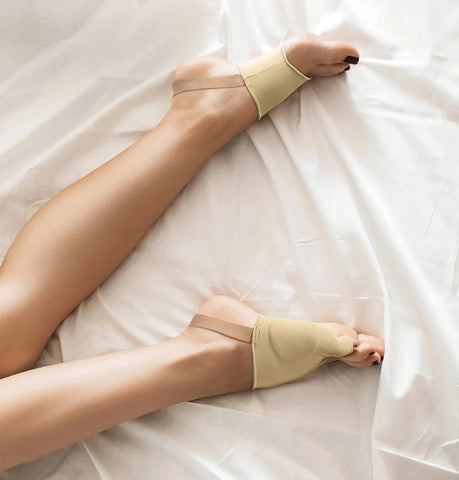
If you are still managing the bump while you decide, or you have been cleared by your surgeon to wear shoes again, a soft barrier over the outer forefoot can reduce rubbing. It eases pressure; it does not correct the bone.
Possible complications and recurrence
Most tailor's bunion surgeries go well, but it helps to know what can happen so you can recognize it early:
- Infection: increasing redness, warmth, drainage or fever.
- Recurrence: more likely after shaving alone when the bone angle is wide, or if you return to very narrow shoes.
- Stiffness or numbness: small skin nerves run along the outer foot and can be irritated; tingling often improves over months.
- Little toe position problems: the toe pointing upward, drifting, or pressing on the fourth toe after surgery.
- Delayed bone healing or hardware irritation: uncommon, but possible with an osteotomy.
Questions for your surgeon
- Which procedure do you recommend for my bone angle, and why that rather than shaving (or the reverse)?
- Will you also address my big toe bunion, and does that change the recovery plan?
- When can I put weight on the foot, and in what footwear?
- When will stitches or any pin come out?
- When can I return to work, driving and exercise?
- What signs should make me call you before my next appointment?
When to see a doctor
- Signs of infection: spreading redness, pus, a bad smell, fever, or a wound that opens
- The little toe pointing up or pressing against the fourth toe after surgery
- Calf pain or swelling (possible blood clot), or chest pain or breathlessness (call emergency services)
- Numbness or tingling that is getting worse, or toes that turn pale, blue or cold
- Pain on the outer forefoot that is not improving by around three months
For related reading, see what a bunionette is and how it is treated and tailor's bunion flare relief and timing surgery around travel.
Related reading: shoes after bunion surgery, a stiff big toe and limping after surgery, bandages, showering and incision care.
FAQ
How long is recovery from tailor's bunion surgery?
It depends on the procedure. Shaving the bump is often the quickest, with many people in regular shoes within a few weeks. An osteotomy typically takes longer, commonly in the range of one to two months before comfortable regular shoes, and swelling can last several months. If you have a big toe procedure at the same time, that usually sets the schedule.
Can I walk after bunionette surgery?
Often yes, but with limits. Many surgeons allow heel or protected weight-bearing in a surgical shoe or boot early on, while others ask for crutches for a short time, especially with a pin or screw. Your surgeon's instructions decide.
Is shaving the bump enough?
For milder cases with a normal bone angle it can be. When the angle between the fourth and fifth metatarsals is wide, shaving alone has a higher chance of the bump returning, which is why many surgeons recommend an osteotomy. Ask which suits your X-ray.
Can bunion and tailor's bunion surgery be done together?
Yes, it is common. One anesthetic and one recovery are the advantages. The recovery tends to follow the larger big toe procedure, and some surgeons prefer to stage the two. It is worth asking about both options.
What shoes can I wear after bunionette surgery?
Start with the protective shoe your surgeon gives you, then move to a wide, deep, soft-upper shoe with adjustable closures and a cushioned sole once cleared. Expect your foot to need extra room for a few months because of swelling.
Can a tailor's bunion come back after surgery?
It can, particularly after shaving alone or if narrow shoes are worn again. Choosing the procedure that matches your bone angle and keeping a roomy toe box lowers the risk but cannot remove it entirely.
Educational information only. It is not medical advice and does not replace your surgeon's instructions. HalluxCare sleeves are soft comfort aids that ease pressure and rubbing; they do not correct bunions or speed healing.

Orthopedic Tailors Bunion (Pinky Toe) Bunionette Pain Relief & Correction Sleeves (2 Pairs)
5 (974 reviews)$59.96 $29.96 · Free shipping & returns