


Medically reviewed for accuracy by Dr. Charleston, FACFAOM, C.PED.
You are weeks or months past surgery. The bunion is gone or much smaller, and the pain is better, but the big toe will not bend. Walking feels like you are rolling off the outside of your foot, there is a hitch in your step, and you wonder if this is how it will be forever.
For most people, it is not. Reduced bend in the big toe joint is one of the most common complaints after bunion surgery, and with time and the right work most people regain much of their movement and a smoother stride. This guide explains why stiffness happens, what timelines to expect, what a physical therapist will usually do, and when to call your surgeon.
Key takeaways
- A stiff, swollen, tight-feeling toe is common for months after bunion surgery and usually improves with mobilization, time and walking.
- The big toe needs a good amount of upward bend (roughly 60 degrees is often quoted) for a normal push-off, so even a modest loss can change how you walk.
- Exercises should be cleared by your surgeon or physical therapist. Gentle ache is expected; sharp pain is a stop sign.
- If you had a joint fusion, the joint is not meant to bend, and the goal is a smooth walking pattern instead.
Why the big toe gets stiff after bunion surgery
- Swelling. Fluid in and around the joint physically limits motion, and it can persist for months.
- Scar tissue and adhesions. Healing tissue around the joint and tendons can be tight and sticky, especially after weeks of protection.
- Protection and disuse. The boot, the pin or the cautious way you walk all reduce movement. Joints stiffen when they are not moved.
- Muscle weakness and nerve recovery. The small muscles under the foot and the calf weaken, and nerves around the scar can tingle or feel numb as they recover.
- The procedure itself. Different operations affect motion differently, and some people have more stiffness than others from the same operation.
Is this normal? Typical timelines by procedure
Many people notice that the toe is stiffest in the first weeks after the pin or cast comes off, and then improves over the following months. People who have described it say things like a rubber band feeling in the toe, morning stiffness that eases as they move, and more ache in the evening. Some report a gradual return of nearly full movement within three to six months, while for others it keeps improving past a year. Range of motion may not fully return even when pain and function are good, and plenty of people say they can walk and exercise comfortably with a toe that does not bend as far as before.
If you had a fusion
If your surgery fused the big toe joint, or you had a Lapidus fusion at the base of the bone, the situation is different. A big toe joint (MTP) fusion is designed so the joint does not bend. People who have had one often describe feeling mostly recovered after several months, with some limits in shoe choice, and the focus is on a stable, comfortable walking pattern. A Lapidus fusion, at the midfoot, is meant to leave the big toe joint itself moving, so a toe that remains stiff deserves attention. If you are unsure which you had, ask your surgeon.
How stiffness causes limping and other aches
When the big toe cannot bend, you avoid rolling over it. Many people unknowingly shift weight to the outside of the foot, shorten their step or turn the foot out. That can load the ball of the foot, the smaller toes, the ankle, the knee and the hip, and it can cause calf tightness. Pain on the ball of the foot or a limp that persists is often a sign your gait is compensating, not that something has failed. Our article on compensatory pain after bunion surgery goes through the common patterns.
Exercises to regain bend (with PT clearance)
Check with your surgeon before starting, especially after fusion or if there is hardware, and ideally work with a physical therapist who sees foot surgery patients. People who did structured physical therapy are the group who most often say it helped, and many found that a program focused on the toe and foot, not just the ankle, made the biggest difference. Our rehab overview, exercises after bunion surgery, gives the full program, and physical therapy for bunions explains what a therapist does.
Passive, active and loaded mobility
- Passive: Sitting, with the foot supported, use your hand to gently bend the big toe up and down within a comfortable range, holding briefly at the end. Warm the foot first.
- Active: Lift the big toe up on its own while the other toes stay down, then lower it. Aim for smooth, controlled movement. Many people find isolating the big toe hard at first, and a therapist can cue it.
- Loaded: As you are cleared, progress to heel raises with the toes bent, weight shifts onto the ball of the foot, and short walks focused on rolling through the step.
A mild stretch or ache that settles within an hour or so is typically acceptable. Sharp, pinching, grinding or lingering pain, or increased swelling the next day, means ease off.
Sesamoid and scar mobilization
Under the big toe joint are two small bones, the sesamoids, that glide as the toe bends. When they stick, motion is limited. Therapists may teach gentle sliding of the sesamoids, and once the wound is fully closed, light scar massage to soften tight tissue. Do not massage over an open or tender incision.
Gait retraining: rolling through the big toe again
- Slow down. Walk at a pace where you can heel-strike, roll through the middle and push off from the big toe.
- Look at your footprints or video. A phone video of you walking can show whether you are rolling out to the side.
- Choose helpful shoes. A cushioned shoe with a stiffer, rocker-shaped sole can help you roll through the step without needing full toe bend, while very flexible or barefoot soles may feel harder early on. Ask your therapist to check your shoes as part of gait work.
- Work the whole chain. Calf stretches, hip strength and balance work help your walking pattern as much as toe motion does.
Readers who found this guide helpful are also checking these out — used by 1,800+ customers managing bunion pain at home:

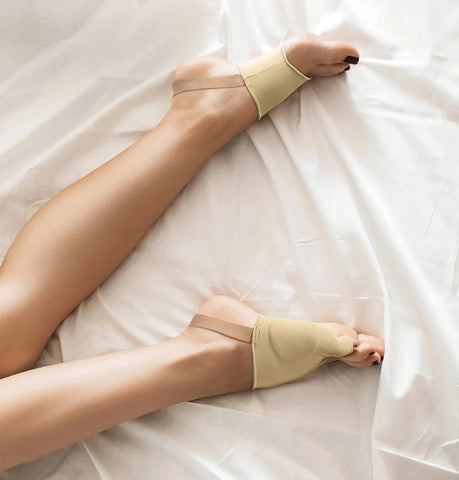
What customers are saying
“The biggest win for me is the pain relief. I used to have this constant ache around the bunion area, especially after a long day on my feet. With the sleeve on, that pain has significantly toned down. I won't say it's a miracle cure, but it's definitely given me some much-needed comfort.”
“My right foot had been bothering me for months — shoes that were always comfortable suddenly hurt after a long day. I’ve been wearing these sleeves for three weeks now and my foot feels mostly back to normal. And the shipping was incredibly fast.”
"I am so pleasantly surprised with this product! I contemplated buying it for weeks and finally did it. My feet have started to form bunions just in the last year or so. I purchased this to alleviate the pain that has started after a long day on my feet. I don't have aching sore feet at the end of the day anymore. I highly recommend it."
"Typically not one to write a review but I was pleasantly surprised with this product. I often wear heels that don't give my toes much room to straighten and over the years my pinky toe started to shift inwards towards my other toes. The misalignment caused the joint to stick out the side of my foot and I started to get inflammation and pain when I walked. In less than a week of using this product I noticed a major difference in the alignment of my toe. The pain is gone and the joint that was inflamed has gotten smaller."
"It's been 2 months since I purchased this item and I can honestly say they work. You have to be patient with them and give your foot time to heal. I had a very painful bunionette on my left foot and these sleeves made a real difference once I wore them consistently."
"I bought this because my bunions were becoming quite painful and I wanted to avoid surgery. These work really well inside shoes. They are well made too, so easy to use and doesn't cut off circulation like other products. A very effective item for pain relief and for those of us trying to keep those bunions from getting worse."
When stiffness is a problem worth reporting
Most stiffness is part of healing, but tell your surgeon or therapist if:
- There is no improvement in motion after several months of consistent therapy
- You suddenly lose motion that you had, or notice a new deformity
- The joint grinds or catches painfully, which can suggest joint damage or arthritis
- The big toe is drifting back toward the old position, or pointing inward (overcorrection)
In rare cases, when stiffness is stuck after months of therapy, a surgeon may consider manipulation under anesthesia or release of scar tissue. That is a decision for your surgical team after assessment. For the timeline in context, see our week-by-week recovery guide, and if your joint has damage, hallux limitus and early arthritis explains what stiffness before surgery can mean.
When to see a doctor
- No improvement in motion after several months of physical therapy
- Sudden loss of motion or a new deformity
- Grinding or catching pain in the joint
- The toe drifting back or turning inward
- New redness, heat or swelling in the foot, calf pain, or numbness that is getting worse
Related reading: tailor's bunion surgery recovery, shoes after bunion surgery, returning to running after surgery, hardware removal, hip and knee pain from the walking boot.
FAQ
Is it normal for my big toe not to bend after bunion surgery?
Yes, reduced bend is common in the weeks and months after surgery because of swelling, scar tissue and protection. It usually improves with time and mobilization. If you had a joint fusion, the joint is not meant to bend.
How long does stiffness last after a bunionectomy?
It varies. Many people see steady improvement over three to six months, and some keep improving for a year. Range of motion may not fully return even when pain and function are good.
Will my toe ever bend normally again?
Many people regain most of their movement, particularly with physical therapy, but some keep a small loss. The goal is a toe that moves enough for comfortable, smooth walking.
How do I stop limping after bunion surgery?
Work on toe and foot mobility, calf flexibility and hip strength, and retrain your walking pattern: heel-strike, roll through the middle of the foot, and push off the big toe. Supportive shoes with a gentle rocker sole can help. A physical therapist can personalize this.
Can I push through pain when stretching my toe?
Not through sharp or lingering pain. A mild stretch or ache that settles within about an hour is usually fine. Pain that is sharp, pinching or leaves the toe more swollen the next day is a sign to back off.
Does scar massage help toe movement?
It can help soften tight scar tissue once the wound is fully healed and your surgeon agrees. Use light pressure and never over an open or tender incision. It works best alongside joint mobility work and walking practice.
Educational information only, not medical advice. Do not start new stretches or exercises after surgery without clearance from your surgeon or physical therapist.

Orthopedic Bunion Pain Relief & Correction Sleeve (2 Pairs)
4.9 (1864 reviews)$68.95 $34.45 · Free shipping & returns