


Why Do Bunions Run in Families? Genetics, Foot Structure, and Prevention
If your mother had bunions, your grandmother had bunions, and now you're noticing a bump forming on your big toe joint — you're not imagining a pattern. Research confirms that bunions (hallux valgus) have a strong hereditary component, with genetics playing a role in up to 70% of cases. But inheriting "bunion genes" doesn't mean surgery is inevitable.
What Exactly Is Inherited?
You don't inherit the bunion itself — you inherit the foot structure that makes bunions more likely. Key inherited traits include:
- Metatarsal length and shape: A longer first metatarsal bone creates more leverage for the big toe to drift outward
- Joint hypermobility: Looser ligaments allow more movement in the first metatarsophalangeal joint
- Flat feet (pes planus): Overpronation places excess medial stress on the big toe joint
- Round metatarsal head: A rounded joint surface (vs. flat) allows more rotational movement
- Wide forefoot: Changes the biomechanical forces during push-off in walking
The Research on Bunion Genetics
Several large-scale studies have confirmed the hereditary link:
- A 2020 Arthritis Care & Research study of 1,370 adults found that first-degree relatives of bunion patients had 5.5× higher odds of developing bunions
- Twin studies show 70-89% concordance for hallux valgus in identical twins
- Specific genes affecting collagen structure (COL1A1, COL5A1) have been linked to bunion susceptibility
- Women with a family history develop bunions an average of 8 years earlier than those without
Genetics vs. Shoes: The Real Story
The relationship between genetics and footwear is nuanced. Here's what the research shows:
- Genetics loads the gun; shoes pull the trigger. A 2019 study found bunions in 33% of women with genetic predisposition who wore narrow shoes, but only 9% of genetically predisposed women who wore wide shoes
- Populations that habitually go barefoot still develop bunions — but at lower rates (3-5% vs. 23-35% in shoe-wearing populations)
- Men with genetic predisposition develop bunions too, just less often because men's shoes are typically wider
Are You at Risk? A Self-Assessment
Check these hereditary risk factors:
- ☐ Parent or grandparent had/has bunions
- ☐ You have flat feet or low arches
- ☐ You can bend your big toe backward more than 70 degrees (hypermobility)
- ☐ Your second toe is longer than your big toe (Morton's toe)
- ☐ You've noticed your big toe drifting inward, even slightly
3+ checks = high genetic risk. Start preventive measures now — early intervention is dramatically more effective than waiting.
Prevention Strategies for Genetically Predisposed Feet
If bunions run in your family, these evidence-based steps can prevent or significantly delay development:
1. Shoe Selection (Most Important)
- Always choose shoes with a wide toe box — your toes should be able to spread naturally
- Avoid pointed-toe shoes and heels over 2 inches
- Shop for shoes in the afternoon when feet are slightly swollen (most accurate fit)
- Look for shoes with "bunion-friendly" or "wide width" designations
2. Daily Toe Exercises
- Toe yoga: Lift big toe while pressing other toes down, then reverse — builds independent toe control
- Barefoot walking: 20 minutes daily on safe surfaces strengthens intrinsic foot muscles
- Resistance band abduction: Loop band around big toes, pull apart — targets the abductor hallucis muscle
3. Early Intervention with Bunion Sleeves
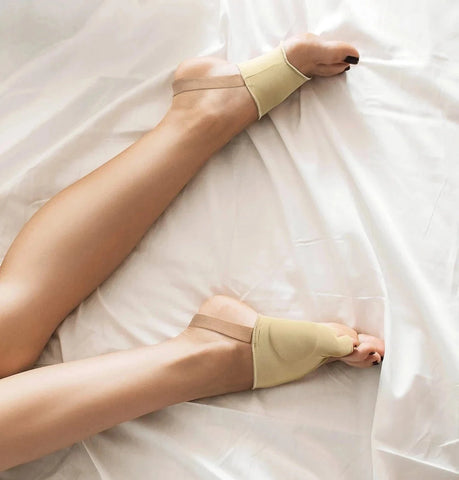
For those with genetic predisposition, wearing a corrective bunion sleeve starting at the first sign of toe drift can prevent progression. Medical-grade sleeves apply gentle realignment force throughout the day while fitting inside regular shoes.
Readers who found this guide helpful are also checking these out — used by 1,800+ customers managing bunion pain at home:

What customers are saying
“The biggest win for me is the pain relief. I used to have this constant ache around the bunion area, especially after a long day on my feet. With the sleeve on, that pain has significantly toned down. I won't say it's a miracle cure, but it's definitely given me some much-needed comfort.”
“My right foot had been bothering me for months — shoes that were always comfortable suddenly hurt after a long day. I’ve been wearing these sleeves for three weeks now and my foot feels mostly back to normal. And the shipping was incredibly fast.”
When Genetics Wins: Knowing When to See a Podiatrist
Even with perfect prevention, some genetically predisposed feet will develop bunions. See a podiatrist if:
- Your big toe angle exceeds 15 degrees (visible drift)
- The bunion bump is red, swollen, or painful
- You're having difficulty finding comfortable shoes
- Pain is limiting your activities or exercise
Early podiatric intervention with custom orthotics, physical therapy, and corrective sleeves can slow progression by years — and in many cases, avoid surgery entirely.
Your genes may predispose you to bunions, but they don't determine your outcome. Proactive foot care, smart shoe choices, and early intervention can keep you moving comfortably for decades.