


Metatarsalgia and Bunions: Why the Ball of Your Foot Hurts and How to Fix It
Has the pain from your bunion started spreading to the ball of your foot under the second, third, or fourth toes? You likely have metatarsalgia — and your bunion is probably to blame. This is called transfer metatarsalgia, and it's one of the most common complications of untreated bunions.
What Is Transfer Metatarsalgia?
Metatarsalgia is pain under the metatarsal heads — the ball-of-foot bones where they meet the toes. Transfer metatarsalgia specifically occurs when pressure shifts from the first metatarsal (big toe) to the lesser metatarsals because of bunion deformity.
The Mechanism
- Bunion develops: First metatarsal shifts medially and elevates slightly
- First metatarsal loses weight-bearing function: The elevated metatarsal head carries less load
- Load transfers: The second and third metatarsals now bear disproportionate weight
- These smaller bones aren't designed for this load: Pain, calluses, and inflammation develop
- Vicious cycle: Pain causes further gait changes, shifting even more weight laterally
Signs You Have Transfer Metatarsalgia
- Burning or aching pain under the ball of the foot, particularly the second and third metatarsal heads
- Callus formation under the second or third metatarsal head — your body's response to increased pressure
- Feeling like you're walking on a pebble or fold in your sock
- Pain worsens with barefoot walking on hard surfaces
- Pain increases throughout the day and with prolonged standing
Diagnosis
Your podiatrist will likely:
- Palpate the metatarsal heads: Pressing on each to identify the pain source
- Weight-bearing X-rays: Check for metatarsal elevation, length discrepancies, and stress fracture
- Gait analysis: Observe your walking pattern to see the pressure transfer
- Callus pattern assessment: Where calluses form tells the story of where pressure accumulates
Readers who found this guide helpful are also checking these out — used by 1,800+ customers managing bunion pain at home:

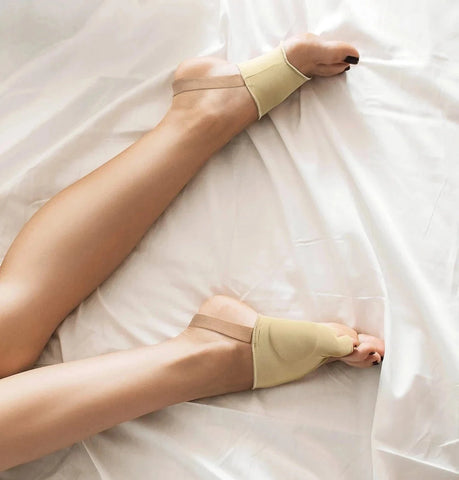
What customers are saying
“The biggest win for me is the pain relief. I used to have this constant ache around the bunion area, especially after a long day on my feet. With the sleeve on, that pain has significantly toned down. I won't say it's a miracle cure, but it's definitely given me some much-needed comfort.”
“My right foot had been bothering me for months — shoes that were always comfortable suddenly hurt after a long day. I’ve been wearing these sleeves for three weeks now and my foot feels mostly back to normal. And the shipping was incredibly fast.”
Treatment: Addressing Both Problems
Metatarsal Pad (Immediate Relief)
A felt or silicone met pad placed just behind (proximal to) the painful metatarsal heads inside the shoe or on an insole. This:
- Spreads the metatarsals apart
- Shifts pressure behind the metatarsal heads
- Immediately reduces pain in the ball of the foot
Placement is critical: The pad goes BEHIND the sore spot, not directly on it. Placed too far forward, it makes things worse.
Custom Orthotics
For long-term management, custom orthotics with a built-in metatarsal raise and first metatarsal cutout can restore more normal weight distribution.
Bunion Sleeve + Wide Shoes
A bunion sleeve cushions the first metatarsal area and provides gentle realignment. Combining with properly fitted wide shoes allows natural forefoot spreading and prevents compression that drives weight laterally.
Callus Management
- Do NOT cut calluses yourself — risk of infection
- A podiatrist can safely debride thick calluses
- Once pressure is redistributed (orthotics/met pad), calluses gradually soften
When Surgery Addresses Both
If bunion surgery is needed, your surgeon should consider the metatarsalgia component:
- Correcting the bunion restores first metatarsal weight-bearing → reduces transfer loading
- Some procedures include metatarsal osteotomy to shorten an overly long second metatarsal
- Without addressing the metatarsal length relationship, transfer metatarsalgia may persist after bunion surgery
Prevention
- Treat bunions early before significant metatarsal pressure transfer develops
- Wear supportive shoes with adequate cushioning
- Use bunion sleeves to maintain first metatarsal function
- Strengthen the muscles that support the metatarsal arch (interossei and lumbricals)
If your bunion pain has "spread" to the ball of your foot, you're experiencing the cascading effect of forefoot misalignment. Treating both the bunion and the transfer metatarsalgia together gives the best chance of complete relief.