


Golf and Bunions: Shoe Fitting, Swing Mechanics, and Course Strategy
Golf is one of the most bunion-unfriendly sports biomechanically — the rotational swing motion places intense torsional stress on the big toe joint, while 18 holes of walking adds cumulative impact. But with the right equipment and technique adjustments, golf and bunions can absolutely coexist.
Why Golf Stresses Bunion Joints
The Swing Mechanics
During a full golf swing:
- Backswing: The back foot (right foot for right-handed golfers) supinates while the front foot pronates — both create stress on their respective big toe joints
- Downswing and impact: The front foot's big toe joint undergoes intense dorsiflexion as weight transfers forward — the same motion that's painful in hallux rigidus and stressful in hallux valgus
- Follow-through: The back foot's big toe becomes the pivot point as the heel rises — concentrated load on the first MTP joint
A typical 18-hole round involves approximately 80-100 full swings, each generating this stress pattern.
Walking Volume
Walking 18 holes covers 4-6 miles on uneven terrain. Golfers who walk (rather than cart) are adding significant bunion stress on top of the swing forces.
Golf Shoe Selection for Bunions
Key Features
- Wide toe box: The most critical factor — look for golf shoes specifically offered in wide (2E) or extra-wide (4E) sizing
- Waterproofing with flexibility: Most golf shoes use stiff uppers for stability, but the forefoot section should have some lateral flex
- Spikeless vs. cleated: Spikeless golf shoes have more flexible, cushioned soles — generally more bunion-friendly than traditional cleated models. Modern spikeless shoes provide adequate traction for most conditions.
- Rocker sole: Some golf shoes incorporate mild rockering at the toe — reduces big toe joint extension during weight transfer
Recommended Brands
- ECCO Golf (known for anatomically shaped, wider lasts)
- New Balance Golf (2E and 4E width options)
- Skechers GO GOLF (wide toe boxes, walking comfort)
- FootJoy (select models available in wide widths)
Readers who found this guide helpful are also checking these out — used by 1,800+ customers managing bunion pain at home:

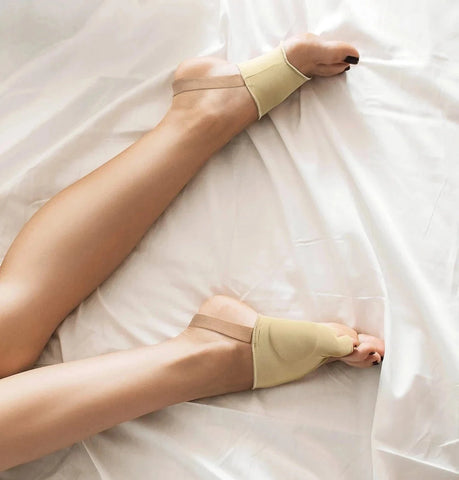
What customers are saying
“The biggest win for me is the pain relief. I used to have this constant ache around the bunion area, especially after a long day on my feet. With the sleeve on, that pain has significantly toned down. I won't say it's a miracle cure, but it's definitely given me some much-needed comfort.”
“My right foot had been bothering me for months — shoes that were always comfortable suddenly hurt after a long day. I’ve been wearing these sleeves for three weeks now and my foot feels mostly back to normal. And the shipping was incredibly fast.”
Swing Modifications
Trail Foot Modification
Allow the trail foot (back foot) to flare outward 10-20° at address. This reduces the need for supination during the backswing, decreasing stress on that big toe joint. Many teaching professionals actually recommend this for all golfers — it's a natural position.
Lead Foot Heel Lift
Slightly raising the heel of your lead foot on a 1/4-inch heel wedge reduces the amount of dorsiflexion required at the big toe during the downswing. Some players use this naturally; a podiatrist can create a small ramp orthotic for golf shoes.
Abbreviated Follow-Through
During bunion flare-ups, a "punch shot" style abbreviated follow-through that keeps the trail foot more planted reduces big toe loading at follow-through. Not ideal for full power shots, but manageable for maintenance play during recovery.
Course Strategy
- Use a cart for 18 holes during flare-ups — walking 5 miles over a bunion flare is counterproductive
- Wear your bunion sleeve inside the golf shoe before every round
- Ice the bunion after the round (15-20 min) — routine prevention of post-round inflammation
- Bring a change of shoes for the 19th hole — non-restrictive footwear at the clubhouse reduces total daily forefoot load
Practice Range Advice
- Limit practice range sessions during active flares
- On the range, take breaks between shots to shake out the foot
- Putting and chipping practice places minimal stress on the big toe — focus here during painful periods
Small equipment and technique adjustments can keep golf in your life regardless of your bunion. Talk to your club pro and podiatrist together — they make a surprisingly good team for golf-related foot issues.