


Walking Barefoot with Bunions: Helpful or Harmful?
The barefoot movement has gained massive popularity, but if you have bunions, you're probably wondering: will going barefoot strengthen my feet or make my bunions worse? The answer isn't black and white — it depends on your bunion severity, foot mechanics, and surfaces.
The Case FOR Barefoot Walking
Strengthens Intrinsic Foot Muscles
Shoes — especially narrow, supportive ones — can act like a cast, weakening the small muscles inside your foot. Walking barefoot on safe surfaces forces these muscles to work, building strength in the arch and toe flexors that help stabilize the big toe joint.
Improves Proprioception
Your feet contain thousands of nerve endings. Barefoot walking stimulates proprioception (your body's sense of position), which improves balance and may reduce compensatory gait changes that worsen bunions.
Allows Natural Toe Splay
Without shoes compressing your toes, your toes can spread naturally. This is especially beneficial if your bunion is partly caused by years of wearing narrow shoes.
The Case AGAINST Barefoot Walking
No Protection from Hard Surfaces
Walking on hard floors (tile, concrete, hardwood) without cushioning puts excessive pressure on the bunion joint. This can increase inflammation and pain, especially with moderate-to-severe bunions.
Overpronation Risk
If your bunion is associated with overpronation (foot rolling inward), barefoot walking on hard surfaces can worsen this pattern. Without arch support, the medial arch collapses, increasing the valgus force on the big toe.
Impact Stress
Large bunions with bursitis or joint inflammation can flare up from the impact stress of barefoot walking on hard surfaces.
The Smart Middle Ground
- Barefoot on soft surfaces: Grass, sand, carpet, yoga mats — excellent for strengthening without excessive impact
- Barefoot toe exercises at home: Towel scrunches, marble pickups, toe yoga — build strength safely
- Minimalist shoes for daily wear: Wide toe box, zero-drop, thin sole — provides some protection while allowing natural foot movement
- Supportive shoes on hard surfaces: For extended walking on concrete, cushioning and arch support protect the bunion joint
Readers who found this guide helpful are also checking these out — used by 1,800+ customers managing bunion pain at home:

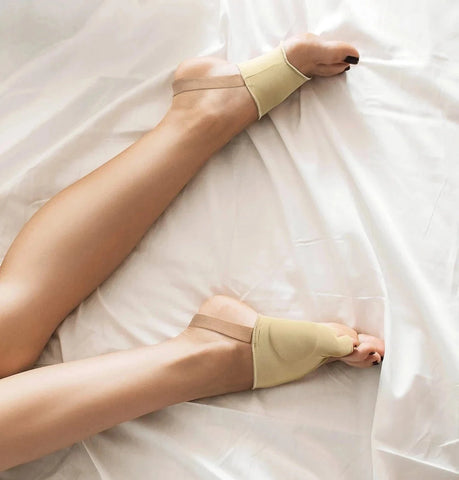
What customers are saying
“The biggest win for me is the pain relief. I used to have this constant ache around the bunion area, especially after a long day on my feet. With the sleeve on, that pain has significantly toned down. I won't say it's a miracle cure, but it's definitely given me some much-needed comfort.”
“My right foot had been bothering me for months — shoes that were always comfortable suddenly hurt after a long day. I’ve been wearing these sleeves for three weeks now and my foot feels mostly back to normal. And the shipping was incredibly fast.”
Barefoot Strengthening Exercises for Bunions
- Short Foot Exercise: Standing barefoot, try to shorten your foot by drawing the ball of the foot toward the heel (don't curl toes). Hold 5 seconds, repeat 10 times.
- Big Toe Presses: Press your big toe into the ground while lifting the other four toes. Hold 5 seconds. This activates the abductor hallucis muscle that opposes bunion formation.
- Towel Scrunches: Place a towel on the floor and scrunch it toward you using only your toes. 3 sets of 10.
- Toe Spacer Walking: Wear silicone toe spacers while walking barefoot at home for 15-20 minutes daily. This encourages proper toe alignment while strengthening.
When to AVOID Barefoot Walking
- Severe bunion with active bursitis inflammation
- Post-bunion surgery (until fully cleared by your surgeon)
- If you have diabetes or peripheral neuropathy (can't feel injuries)
- On uneven outdoor surfaces where you could twist the bunion joint
The bottom line: strategic barefoot time — on soft surfaces, with targeted exercises — can benefit your bunion health. But going fully barefoot on hard surfaces all day is likely to increase pain, not reduce it.