


If you are a nurse in your mid thirties to late fifties, a bunion can turn a long shift into a countdown to the locker room. Rubbing at the bump, aching through the midfoot, and swelling after twelve hours are common. The right shoe setup will not erase the deformity, but it can make walking from patient to patient more tolerable.
This checklist is educational. It focuses on daytime comfort, cushioning, and shoe fit for U.S. women who work on their feet. It is not medical advice and it does not claim to cure or permanently straighten a bunion.
1. Start with a truly wide toe box
Many nursing shoes look roomy on the shelf and still press the big toe joint once you are moving. Try shoes in a wide or extra wide last. You should be able to wiggle the toes while standing. If the upper creases hard over the bunion, size up in width before you size up in length.
Skip pointed or tapered toe shapes, even if they look sleek. Soft mesh or stretch panels over the bunion area often feel better than stiff leather during a busy floor shift.
2. Prioritize cushion and midsole support
Look for responsive foam under the forefoot and a midsole that does not collapse by hour eight. Removable insoles help if you already use a soft orthotic. Replace worn shoes on a schedule. Many nurses get twelve to eighteen months from a pair with heavy use, sometimes less on concrete floors.
3. Consider a mild rocker sole
A gentle rocker helps the foot roll forward so the big toe joint does less forceful push off. You do not need an extreme medical rocker for every shift. A mild curve often feels more natural in hallways and on stairs. Test a short walk before you buy a full rotation of pairs.
4. Sock tips that reduce friction
- Choose moisture wicking crew socks with a smooth toe seam
- Avoid thick terry that crowds the toe box
- Pack a dry spare pair for after meal break if feet sweat heavily
- If a seam sits on the bunion, rotate the sock or switch brands
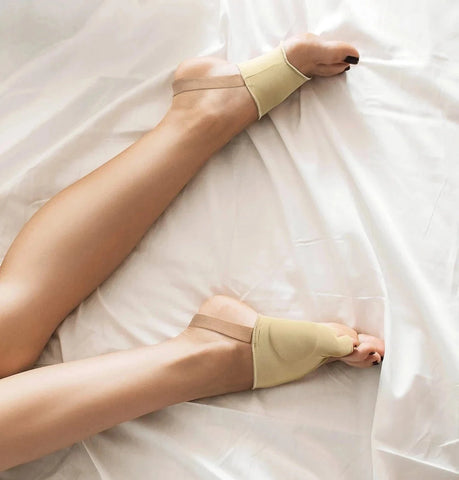
Some nurses slip a soft orthopedic bunion sleeve under the sock for cushioning against shoe pressure. Think of it as daytime padding and gentle separation, not a permanent straighten tool.
5. Build a locker kit for flare days
- Backup wide shoes that are already broken in
- Spare socks and a small towel
- Gel pad or sleeve for the bump if your unit allows
- Compact ice pack for break if policy permits
- Blister care and a note of which shoes failed last week
6. Mid shift resets that actually help
During breaks, elevate your feet when you can. Loosen laces temporarily. Do a few gentle ankle circles. Avoid aggressive stretching into pain. If one shoe suddenly feels tight, swap to your backup pair rather than finishing the shift in a hot spot.
If you want daytime cushioning under socks while you sort shoes and care:

7. When to see a podiatrist
Schedule care if pain wakes you at night after shifts, swelling does not settle by the next morning for several days in a row, the skin over the bump breaks down, or you start limping between rooms. Bring photos of your work shoes and a short log of which hours hurt most. Ask about imaging only if your clinician thinks alignment or joint damage needs a closer look.
For a plain language look at what sleeves and similar devices can and cannot do, see our evidence review on bunion correctors.
State guides for clinic pathways
If you are comparing non surgical steps with local clinic options, these state hubs outline cost questions and conservative pathways:
- Ohio bunion surgery center alternatives
- Washington bunion surgery center alternatives
- New Jersey bunion surgery center alternatives
- Utah bunion surgery center alternatives
- California bunion surgery center alternatives
FAQ
What shoe features help most on a 12 hour nursing shift with a bunion?
Look for a wide toe box, soft cushioning under the ball of the foot, a stable heel, and a mild rocker sole that rolls you forward so the big toe joint works less hard at push off.
Can I wear a bunion sleeve under nursing socks during a shift?
Many nurses use a soft orthopedic sleeve under socks for daytime cushioning and less shoe rub. It is a comfort aid, not a device that permanently straightens the toe. Stop if you notice numbness, color change, or increasing pain.
When should a nurse see a podiatrist for bunion pain?
Book a visit if pain limits walking between rooms, swelling lasts overnight for several days, the skin breaks down, or shoes that used to work suddenly fail despite a wide toe box.
Do nursing shoes fix bunions?
No. Good shoes and cushioning can reduce irritation during long shifts. They do not reverse bone alignment. Treat them as part of daily comfort and load management while you decide on further care.
Educational content for general foot comfort. Not a substitute for personal medical advice. HalluxCare products cushion and support daytime wear. They do not permanently straighten bunions or replace clinical care.