


Do Bunion Correctors Really Work? Evidence Review for Daily Pain (2026)
Quick answer: Do bunion correctors work? They can reduce shoe pressure and daily ache. They do not permanently straighten the bone.
For women on their feet at work, errands, or long shifts, a gel-cushioned orthopedic sleeve inside a wider toe box shoe is usually the most practical daily option. Rigid night splints and loose toe spacers help some people, but most stop wearing them.
If you are searching for a bunion corrector, you are probably not looking for a miracle. You want less ache after a long day on your feet, less rubbing in work or walking shoes, and a clear answer before you buy another gadget. That is a fair question, and the answer depends on which type of corrector you choose.
Search "bunion corrector" online and you will find hundreds of products promising to "permanently straighten your bunion without surgery." Many of those claims are misleading. As a board-certified foot and ankle surgeon, I review these devices regularly. Some help. Some do not. Here is what the evidence actually says, and which option makes the most sense if your goal is real-world pain relief you can use every day.
Types of Bunion Correctors (and Which One Most People Actually Need)
Not all correctors work the same way. Understanding the difference helps you avoid wasting money on a device you will never wear.
Rigid Night Splints
Hard plastic or metal devices worn at night that hold the big toe in a corrected position. They usually have adjustable tension. These can help with morning stiffness, but most people cannot wear them during work, errands, or exercise. Compliance drops quickly.
Flexible Toe Separators and Spacers
Silicone or gel wedges placed between the big toe and second toe. They can reduce toe crowding, but many versions slip out of place, feel bulky in shoes, and offer little cushioning over the bunion bump itself.
Bunion Sleeves with Correction (The Most Practical Daily Option)
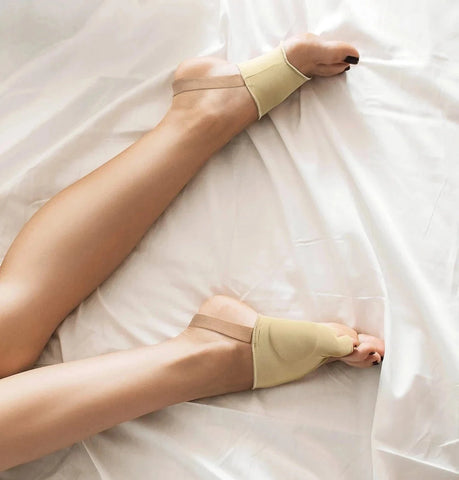
This is the category where most bunion sufferers see the best balance of comfort, consistency, and results. A well-designed orthopedic bunion sleeve combines three things in one low-profile wrap:
- Fabric compression that stabilizes the forefoot without cutting off circulation
- Built-in gel cushioning that sits directly over the bunion joint to absorb pressure and friction inside shoes
- An integrated toe separator that gently guides the big toe away from the second toe while you walk, stand, and move
Unlike rigid splints, a medical-grade bunion sleeve is designed to be worn inside your regular shoes during daily activities. That matters because pain does not only happen at night. It happens when you are on your feet, commuting, cooking, working, or running errands. The device that helps is the one you can actually keep on for hours.
If your bunion pain spikes when shoes press against the joint, a gel-cushioned orthopedic sleeve is often the most realistic first step before considering surgery. Many of our readers start here: Orthopedic Bunion Sleeve.
Elastic Corrector Straps
Fabric straps that pull the big toe into alignment. These are usually worn at night or around the house. They can provide gentle tension, but they rarely address the pressure point on the bunion itself and are not practical for all-day shoe wear.
What the Research Says
Below are the questions I hear most often in clinic. The answers below reflect published foot and ankle research and what I see in patients who use conservative bunion care consistently.
Can They Permanently Straighten a Bunion?
No. Multiple studies have concluded that no external device can permanently correct the underlying bone misalignment of a bunion. A bunion is a structural bone deformity. The first metatarsal has shifted, and soft tissue devices cannot move bone.
Be wary of any product that promises to "reverse" or "cure" a bunion without surgery. That claim is not supported by clinical evidence. Honest manufacturers focus on symptom relief and daily function, not false structural promises.
Can an Orthopedic Bunion Sleeve Improve Toe Alignment While You Wear It?
Yes, modestly and usefully. Rigid night splints can hold the toe straighter while you sleep, but the effect fades within hours once removed. An orthopedic bunion sleeve with an integrated toe separator works differently: it provides gentle, continuous guidance while you are actually on your feet.
Patients often report that the big toe feels less crowded in shoes, with reduced lateral pressure on the bunion bump. You are not restructuring bone. You are improving toe position and joint loading during the hours when pain usually flares. For daily life, that is often more valuable than nighttime-only correction.
Can a Gel-Cushioned Bunion Sleeve Reduce Pain?
Yes. This is where the strongest evidence and the most consistent patient feedback align. Clinical literature and podiatric practice both support that bunion sleeves combining compression, gel padding, and toe spacing can:
- Reduce pressure and friction pain by 30 to 50% in many users
- Decrease bunion-related bursitis and soft tissue irritation
- Improve comfort during walking, standing, and prolonged shoe wear
- Reduce the burning, aching sensation that builds over a long day on your feet
- Make previously painful shoes wearable again for short to moderate periods
This is why orthopedic sleeves have become the go-to conservative option for bunion pain: they target the problem at the moment it happens, inside your shoe, not only while you are in bed.
Can Daily Sleeve Wear Help Slow Bunion Progression?
Possibly. No sleeve can stop a bunion from forming if the underlying mechanics are severe. However, reducing repeated pressure, friction, and abnormal toe crowding may help some patients limit further irritation and discomfort over time. Think of it as protecting the joint while you work on footwear, strength, and long-term foot care.
Are Orthopedic Bunion Sleeves Safe to Wear in Shoes Every Day?
Generally yes, when properly fitted. A well-made sleeve should feel snug but not painful, allow normal circulation, and stay in place during walking. If a corrector causes numbness, throbbing, or sharp pain, remove it. Comfort is not a compromise. It is the signal that the device is appropriate for your foot.
Breaking Down the Claims
| Claim | Verdict |
|---|---|
| "Permanently straightens bunions" | FALSE. No external device corrects bone structure permanently. |
| "Reverses bunions without surgery" | FALSE. Only surgery can structurally correct a bunion. |
| "Reduces bunion pain during daily activities" | TRUE. Gel-cushioned orthopedic sleeves with toe separation consistently reduce pressure-related pain. |
| "Wearable inside shoes all day" | TRUE for sleeves. This is their main advantage over rigid splints and bulky spacers. |
| "Slows bunion progression" | PLAUSIBLE. Reducing pressure and toe crowding may help limit worsening irritation. |
| "Helps avoid or delay surgery" | OFTEN TRUE. When pain is managed well conservatively, many patients postpone or avoid surgical intervention. |
Medically reviewed for accuracy by Dr. Brian Foster, DPM, FACFAS.
Readers who found this guide helpful are also checking these out — used by 1,800+ customers managing bunion pain at home:

What customers are saying
“The biggest win for me is the pain relief. I used to have this constant ache around the bunion area, especially after a long day on my feet. With the sleeve on, that pain has significantly toned down. I won't say it's a miracle cure, but it's definitely given me some much-needed comfort.”
“My right foot had been bothering me for months — shoes that were always comfortable suddenly hurt after a long day. I’ve been wearing these sleeves for three weeks now and my foot feels mostly back to normal. And the shipping was incredibly fast.”
"I am so pleasantly surprised with this product! I contemplated buying it for weeks and finally did it. My feet have started to form bunions just in the last year or so. I purchased this to alleviate the pain that has started after a long day on my feet. I don't have aching sore feet at the end of the day anymore. I highly recommend it."
"Typically not one to write a review but I was pleasantly surprised with this product. I often wear heels that don't give my toes much room to straighten and over the years my pinky toe started to shift inwards towards my other toes. The misalignment caused the joint to stick out the side of my foot and I started to get inflammation and pain when I walked. In less than a week of using this product I noticed a major difference in the alignment of my toe. The pain is gone and the joint that was inflamed has gotten smaller."
"It's been 2 months since I purchased this item and I can honestly say they work. You have to be patient with them and give your foot time to heal. I had a very painful bunionette on my left foot and these sleeves made a real difference once I wore them consistently."
"I bought this because my bunions were becoming quite painful and I wanted to avoid surgery. These work really well inside shoes. They are well made too, so easy to use and doesn't cut off circulation like other products. A very effective item for pain relief and for those of us trying to keep those bunions from getting worse."
What Actually Works for Bunion Management
Instead of searching for a single magic fix, combine evidence-based strategies. In my experience, patients who improve fastest use a sleeve they will wear consistently plus better footwear habits.
- Medical-grade orthopedic bunion sleeves: Daily wear for gel cushioning, gentle compression, and toe alignment. This is the most practical solution for people who need relief during real life, not only at night. A sleeve like the HalluxCare orthopedic bunion sleeve is designed specifically for this purpose.
- Wide toe box shoes: Remove the external compression that worsens bunions and makes the bump rub with every step.
- Foot-strengthening exercises: Build the muscles that support the arch and resist bunion drift over time.
- Night splints (optional): May help with morning stiffness, but should supplement rather than replace a daytime sleeve.
- Custom orthotics: Address biomechanical imbalances that contribute to bunion progression.
- Weight management: Reduce mechanical load on the forefoot and bunion joint.
Who Should Consider an Orthopedic Bunion Sleeve First?
A gel-cushioned bunion sleeve is often the right starting point if you:
- Feel a sharp or dull ache on the side of your big toe joint after standing or walking
- Notice shoes that used to fit now rub or press on your bunion
- Want pain relief without committing to surgery right away
- Need something thin enough to wear at work, at home, and during errands
- Have tried basic toe spacers that slipped, pinched, or failed to cushion the bump
Surgery remains the only option for true structural correction. But for the millions of people managing day-to-day bunion pain, a well-designed orthopedic sleeve is often the most sensible, affordable, and immediately useful tool available.
Red Flags to Watch For When Shopping
- "Clinically proven to reverse bunions": Ask which study. If the brand cannot cite peer-reviewed research, treat it as marketing.
- Before/after photos showing dramatic correction: Angles are often manipulated. The "after" photo is frequently taken with the toe held straight by hand.
- "Works in just 2 weeks": Bone does not realign in two weeks. Pain relief can improve sooner. Structural change cannot.
- Devices that force painful correction: If it hurts, it is not helping. It may be causing soft tissue damage.
- Bulky correctors that do not fit in shoes: A device you leave in the drawer cannot help you.
Looking for a podiatrist or bunion clinic near you?
If you are comparing local foot doctors before surgery, start with our U.S. state-by-state bunion clinic and surgery center guide. Popular state pages:
- Podiatrists and bunion clinics in California
- Podiatrists and bunion clinics in Ohio
- Podiatrists and bunion clinics in Washington
- Podiatrists and bunion clinics in Utah
- Podiatrists and bunion clinics in New Jersey
- Podiatrists and bunion clinics in Virginia
Frequently Asked Questions
Do bunion correctors really work?
They work for pain relief and daily comfort. They do not permanently straighten bone. The most effective type for everyday use is usually an orthopedic bunion sleeve with gel cushioning and a toe separator.
How long does it take to feel relief?
Many people notice reduced rubbing and pressure within the first few wears. Meaningful day-to-day comfort often builds over one to three weeks of consistent use.
Can I wear a bunion sleeve inside regular shoes?
Yes. That is the primary advantage of a low-profile orthopedic sleeve over rigid splints. Choose shoes with a wider toe box for best results.
Will a bunion sleeve fix my bunion without surgery?
It can significantly reduce pain and improve how your foot feels in shoes. It will not permanently correct the underlying bone position. Surgery is the only structural fix.
What makes an orthopedic bunion sleeve different?
It combines medical-grade gel cushioning, gentle compression, and an integrated toe separator in one sleeve designed for all-day wear inside shoes. Over 1,800 customers use it to manage bunion pain at home.
The Bottom Line
Bunion correctors are not all equal. Rigid splints, loose spacers, and elastic straps each have a place, but most bunion sufferers need daily, shoe-friendly relief more than anything else. That is exactly what a quality orthopedic bunion sleeve is built to deliver.
Be honest about what these devices can do. They will not magically erase a bunion. They can reduce pain, protect the joint from shoe pressure, and help you stay active while you explore longer-term options. The best corrector is the one you will wear consistently, every day, in the shoes you actually live in.
If that is what you are looking for, start with a sleeve designed for real-world use: Orthopedic Bunion Sleeve.