


If you are a woman between about 35 and 59 shopping for bunion relief, the aisle can feel noisy. Sleeves, toe spacers, and gel pads all promise comfort. They are not interchangeable. Matching the tool to the problem saves money and frustration.
This guide compares what each option tends to help, where it falls short, and how to think about daytime wear. It is educational. No device here is framed as a cure or a permanent straighten solution.
For study context and marketing claim checks, read our evidence review: do bunion correctors really work?
Quick comparison
| Option | Best for | Typical setting | Main limitation |
|---|---|---|---|
| Orthopedic bunion sleeve | Cushioning the bump, light big toe separation, less shoe rub | Daytime inside shoes and socks | Does not reverse bone deformity |
| Toe spacer | Creating space between toes, short mobility drills | Barefoot, sandals, or very wide shoes | Often bulky in standard closed shoes |
| Gel pad or cushion | Spot protection where shoes rub the bump | Short use in specific shoes | Can slide, add bulk, or compress flat |
Orthopedic bunion sleeve
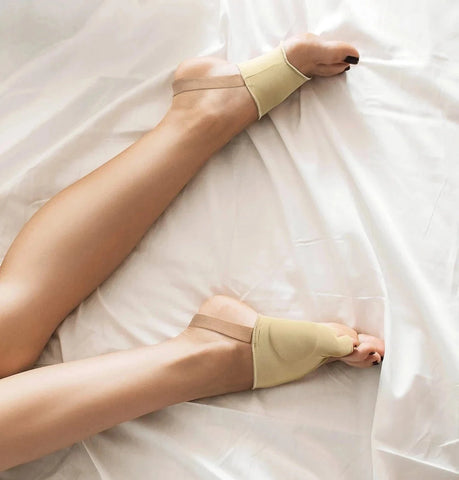
A soft orthopedic bunion sleeve wraps the forefoot, cushions the medial bump, and gently separates the big toe while you walk. It is built for real shoes, which matters if you commute, stand at work, or run errands for hours.
Helps most when:
- Shoes rub the bump during the day
- You want one layer that stays under a sock
- Mild separation feels better than nothing between the first and second toe
Honest limits:
- Will not permanently realign the joint
- Too thick a sleeve in a narrow shoe can increase pressure
- Skin irritation is possible if damp or too tight
Toe spacer
Toe spacers sit between toes to encourage space. Silicone gel styles are common. Some people use them during short home routines or while wearing sandals.
Helps most when:
- Toes feel cramped after narrow shoes
- You have time barefoot or in open footwear
- You want a simple spacer without wrapping the whole forefoot
Honest limits:
- Often hard to fit inside standard work or dress shoes
- Can irritate skin between toes if oversized
- Does not cushion the outer bump the way a sleeve pad can
Gel pad
Gel pads stick or slip over the bunion to reduce friction in a specific shoe. They are handy when one pair of flats or heels rubs a hot spot.
Helps most when:
- You need spot protection for a known shoe
- You only need coverage for a few hours
Honest limits:
- Adhesive can fail with sweat
- Extra bulk may crowd the toe box
- Does little for toe spacing or all day walking comfort
How to choose for your day
- Closed work shoes, all day: lean toward a low profile sleeve
- Home mobility or sandals: a spacer may feel more natural
- One problematic pair: try a gel pad first, then reassess fit
- Nighttime rigidity: night splints are a different category. They are not the same as daytime sleeves
Whatever you pick, treat it as comfort and load management. Pair it with wider shoes and a plan for when pain escalates. Our evidence review explains why permanent correction claims deserve skepticism.
If daytime cushioning inside shoes is the main gap you are trying to fill:

State guides for clinic pathways
If you are comparing non surgical steps with local clinic options, these state hubs outline cost questions and conservative pathways:
- Ohio bunion surgery center alternatives
- Washington bunion surgery center alternatives
- New Jersey bunion surgery center alternatives
- Utah bunion surgery center alternatives
- California bunion surgery center alternatives
FAQ
Is a bunion sleeve better than a toe spacer?
They solve different problems. A sleeve cushions the bump inside shoes and can gently separate the big toe during the day. A toe spacer focuses on space between toes and is often easier barefoot or in very roomy shoes. Neither permanently straightens bone.
Can I use a gel pad and a sleeve together?
Usually you pick one cushioning layer so the toe box does not get crowded. If a gel pad plus sleeve makes the shoe tighter, pain can worsen. Test at home for short walks before a long day.
Do any of these correct a bunion permanently?
No. Soft sleeves, spacers, and gel pads are comfort and friction tools. Structural change needs clinical evaluation and, when appropriate, surgical planning. See our evidence review for a deeper look at claims.
Which option works best at work in closed shoes?
Many women prefer a low profile orthopedic sleeve because it stays put under socks. Rigid spacers often feel bulky in standard dress or work shoes. Gel pads help isolated rub spots but may slide.
Educational comparison only. HalluxCare sleeves are soft daytime comfort aids. They do not cure bunions or replace advice from your clinician.