


Medically reviewed for accuracy by Dr. Charleston, FACFAOM, C.PED.
Most bunion pain is on the inner side of the foot, at the bump. So it can be confusing when the pain is actually underneath the big toe joint, on the ball of the foot, particularly when it comes on when you push off, run or go up on your toes. Some people are told it is just an early bunion. Others end up in a boot being treated for sesamoiditis and wonder whether the two are connected.
They often are connected, and sometimes they are two separate problems that happen to sit close together. This guide explains what the sesamoids are, how their pain differs from the pain at the bump, what you can do at home, what imaging can show, and what surgery can and cannot be expected to do. It is general information, not a diagnosis.
What the sesamoids are and why bunions affect them
Your sesamoids are two small, pea-sized bones embedded in a tendon underneath the head of the first metatarsal, the long bone behind the big toe. They work like pulleys: they raise the bone slightly and absorb load each time you push off. Because they sit directly under the big toe joint, they take a lot of force when you walk, run, jump or dance.
In a bunion, the first metatarsal drifts inward while the big toe angles outward. The sesamoids tend to stay held in place by the tendons around them, so relative to the bone above they appear to shift outward. That changes how load passes through the joint, and it can leave a sesamoid sitting where it is more exposed to pressure. This is one way a bunion and sesamoid pain can occur together.
How sesamoid pain differs from bunion bump pain
- Location. Bunion bump pain is on the inner side of the joint, often where a shoe rubs. Sesamoid pain is underneath, at the ball of the foot behind the big toe.
- Trigger. Bump pain is usually worse with tight shoes. Sesamoid pain is usually worse with push-off, standing on tiptoe, hard surfaces or thin soles.
- Feel. Sesamoid pain is often a deep ache or sharp pain pressing under the joint, sometimes with swelling or bruising. The ball of the foot may be tender to touch. A callus under the joint can be a sign of pressure there.
- Movement. Bending the big toe up can reproduce it.
Pain at the ball of the foot has several causes, and sesamoid pain can be mistaken for general forefoot pain. Our article on metatarsalgia and bunions covers the broader picture.
Sesamoiditis versus a fracture versus turf toe
Several conditions can feel similar under the big toe joint:
- Sesamoiditis is irritation and inflammation of the sesamoids and the tendon around them. It builds gradually and is linked to repeated load.
- A fracture or stress fracture of a sesamoid can follow a jump, a fall or a sudden impact, or come on gradually from repeated stress. The pain is often sharper and may not ease with rest.
- Turf toe is a sprain of the big toe joint, usually from forcing it upward.
- Avascular necrosis, where the bone loses its blood supply, is rarer.
You cannot reliably tell these apart by feel, which is why imaging matters if the pain persists.
Offloading at home
The aim is to take load off the sesamoids while the irritation settles.
- Use a pad that offloads the area. A dancer or J-shaped pad is a soft pad with a cut-out under the sore spot, which redirects pressure to the surrounding area. Whether the pad sits comfortably in your shoe depends on how much room it has.
- Choose a stiff or rocker-soled shoe. A stiff sole stops the big toe joint from bending as much on push-off. Thin, flexible soles make it worse.
- Cut back on what aggravates it. Reduce running, jumping, dancing on the ball of the foot, and long hours on hard floors for a while.
- Ice and rest after activity can help with soreness.
- Avoid walking barefoot on hard floors, at least until it settles.
Insoles on their own are not a treatment for sesamoid pain. They can help only when paired with a pad that takes pressure off the area under the big toe joint. If you need general arch support alongside offloading, the HalluxCare orthopedic insoles are one option, but they do not replace a sesamoid pad. Our insoles and orthotics guide explains how to choose.
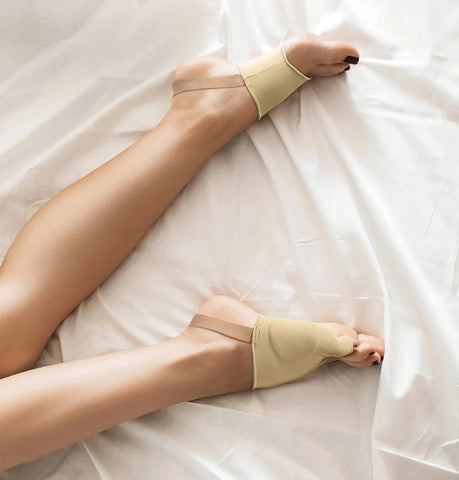
A bunion sleeve is a limited fit here. It cushions the side bump rather than the underside of the joint, so do not expect it to relieve pain under the big toe.
What imaging shows
If the pain does not ease after two to three weeks of offloading, or if it began suddenly, a clinician will often order a weight-bearing X-ray. It shows the bunion angles, the position of the sesamoids relative to the metatarsal head, and whether there is a fracture or arthritis. Our article on bunion X-ray angles explains the measurements. An MRI or other scan may be used if the X-ray is unclear, for example for a stress fracture or damaged bone.
Readers who found this guide helpful are also checking these out — used by 1,800+ customers managing bunion pain at home:

What customers are saying
“The biggest win for me is the pain relief. I used to have this constant ache around the bunion area, especially after a long day on my feet. With the sleeve on, that pain has significantly toned down. I won't say it's a miracle cure, but it's definitely given me some much-needed comfort.”
“My right foot had been bothering me for months — shoes that were always comfortable suddenly hurt after a long day. I’ve been wearing these sleeves for three weeks now and my foot feels mostly back to normal. And the shipping was incredibly fast.”
"I am so pleasantly surprised with this product! I contemplated buying it for weeks and finally did it. My feet have started to form bunions just in the last year or so. I purchased this to alleviate the pain that has started after a long day on my feet. I don't have aching sore feet at the end of the day anymore. I highly recommend it."
"Typically not one to write a review but I was pleasantly surprised with this product. I often wear heels that don't give my toes much room to straighten and over the years my pinky toe started to shift inwards towards my other toes. The misalignment caused the joint to stick out the side of my foot and I started to get inflammation and pain when I walked. In less than a week of using this product I noticed a major difference in the alignment of my toe. The pain is gone and the joint that was inflamed has gotten smaller."
"It's been 2 months since I purchased this item and I can honestly say they work. You have to be patient with them and give your foot time to heal. I had a very painful bunionette on my left foot and these sleeves made a real difference once I wore them consistently."
"I bought this because my bunions were becoming quite painful and I wanted to avoid surgery. These work really well inside shoes. They are well made too, so easy to use and doesn't cut off circulation like other products. A very effective item for pain relief and for those of us trying to keep those bunions from getting worse."
Does bunion surgery fix sesamoid pain?
It depends on the procedure and the cause. Some bunion operations are designed to bring the first metatarsal back over the sesamoids, which can improve how load passes through the joint. But surgery does not guarantee that sesamoid pain will go away, and some people have sesamoid pain after bunion surgery. In some cases a damaged sesamoid is treated directly, which is a separate and sometimes lengthy recovery.
If you are considering surgery, ask your surgeon whether the sesamoids are involved, whether they will be addressed, and what the chances are that this pain will persist. Our article on whether bunion surgery is necessary can help you weigh the options.
Getting back to running and dance
Return gradually. Start when walking is pain-free, then add short flat runs or low-impact dance, and increase only if pain stays away the next day. Choose a shoe with a stiffer forefoot and keep the pad in place while you rebuild. If you run, see our safe runners guide for bunions, and if you dance, apply the same graded return.
When to see a doctor
- Sudden pain after a jump or impact (possible fracture)
- Pain that does not ease after two to three weeks of offloading
- Swelling and bruising under the joint
- Inability to push off the big toe
Related reading: returning to running after surgery, burning or numb big toe with a bunion.
FAQ
Can a bunion cause sesamoiditis?
It can contribute. In a bunion, the first metatarsal shifts relative to the sesamoids, which changes how load passes through the joint and can leave a sesamoid under more pressure. Sesamoiditis can also develop on its own from repeated load, so a clinician needs to assess which applies.
How do I know if it is my sesamoid or my bunion?
Bump pain is on the inner side of the joint and usually worse with tight shoes. Sesamoid pain is under the joint, worse when you push off or press on the ball of the foot. The two can occur together, so an exam and often an X-ray are the reliable way to tell.
What is the best pad for sesamoid pain?
A dancer or J-shaped pad, which has a cut-out under the sore spot to redirect pressure. It works best in a shoe with a stiff or rocker sole and enough room for the added thickness.
Do I need an X-ray for sesamoid pain?
If it came on suddenly, is severe, or has not eased after two to three weeks of offloading, yes, a weight-bearing X-ray is the usual first step. It helps tell sesamoiditis from a fracture and shows how the bunion is affecting the joint.
Can bunion surgery fix the sesamoids?
Some procedures aim to realign the metatarsal over the sesamoids, which can help, but there is no guarantee. Sesamoid pain can persist or appear after surgery, so ask your surgeon how it will be handled in your case.
How long does sesamoiditis take to heal?
It varies from a few weeks to several months, depending on how irritated it is, how well you can offload it and how much load you put on it. Pain that is not improving after a few weeks needs a proper assessment.
Educational guidance only, not a diagnosis. Pain under the big toe joint can have several causes, including fracture, and should be assessed if it is severe or persistent. HalluxCare products are comfort aids and are not a treatment for sesamoid conditions. Orthopedic Bunion Pain Relief & Correction Sleeve (2 Pairs) 
$59.96 $29.96 · Free shipping & returns