


Understanding Bunion Pain and Foot Health: Insights from Real Experiences
Last updated: 2025-12-22
Author: Dr. Emily Harper, DPM – Podiatrist and Foot Health Specialist
Bunions are a common foot condition where a bony bump forms at the base of the big toe, causing pain and difficulty with footwear. Managing bunion pain involves wearing proper shoes, using supportive devices like toe spacers and sleeves, and incorporating foot exercises to improve alignment and reduce discomfort.
Key Takeaways
- A bunion (hallux valgus) is a bony bump caused by toe misalignment, often due to genetics or footwear.
- Bunions can be managed conservatively with wide-toe shoes, toe spacers, and orthopedic sleeves.
- Avoiding high heels and tight shoes reduces pressure and slows bunion progression.
- Exercises and barefoot or minimal shoes help strengthen foot muscles and improve alignment.
- Tailor’s bunions (bunionettes) are similar but affect the little toe side of the foot.
- Consult a podiatrist if pain worsens or mobility is affected.
What Is a Bunion (Hallux Valgus) and Bunionette (Tailor’s Bunion)?
A bunion (hallux valgus) is a deformity characterized by a bony bump at the base of the big toe, caused by the misalignment of the joint where the big toe meets the foot [1]. This condition can cause swelling, redness, and pain, especially when wearing tight shoes.
A bunionette, or tailor’s bunion, is a similar bony bump but appears on the outside of the foot near the base of the little toe [2]. Both conditions can cause discomfort and affect daily activities.
Glossary:
- Bunion (hallux valgus): Bony bump on the inside of the big toe joint.
- Bunionette (tailor’s bunion): Bony bump on the outside near the little toe.
- Toe spacers: Devices placed between toes to help realign and relieve pressure.
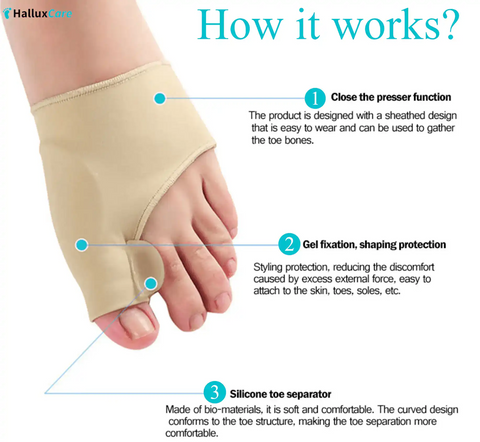
- Bunion sleeves: Soft orthopedic sleeves that cushion and support the affected joint.
- Orthoses: Custom or off-the-shelf shoe inserts to support foot structure.
Symptoms and When to Seek Care
Common symptoms include:
- Visible bump on the side of the foot at the big or little toe base
- Pain or soreness around the joint, aggravated by shoe pressure
- Swelling, redness, or inflammation
- Restricted movement of the affected toe
Seek professional care if:
- Pain persists despite conservative measures
- Toe deformity worsens or limits walking
- Signs of infection or severe inflammation occur
Early treatment can prevent progression and improve comfort [3].
Conservative Management Options and Product Use Guidance
Managing bunions without surgery is possible through lifestyle and product choices:
Footwear Tips
- Choose shoes with a wide toe box to avoid squeezing toes.
- Avoid high heels and narrow, pointed shoes that increase pressure [4].
- Consider barefoot or minimal shoes that encourage natural foot mechanics and muscle strength [5].
Supportive Products
- Toe spacers gently realign toes and reduce crowding. Wearing them for 30 minutes to 1 hour daily can improve alignment [6].
- Bunion sleeves provide cushioning and mild corrective pressure to ease pain during activity. Use them during walking or shoe wear for added support.
- Orthotic insoles help correct biomechanical issues related to arch type and toe alignment.
Exercises and Routine
- Stretch toes by manually spreading them apart for 10–15 seconds, repeat 3 times.
- Perform toe curls and towel scrunches to strengthen foot muscles.
- Regularly massage the bunion area to improve circulation and reduce stiffness [7].
4.9 ⭐⭐⭐⭐⭐ ( 1843 reviews )
The Role of Arch Type in Bunion Development
Foot arch type influences how weight is distributed across the foot and can affect bunion formation:
- Low arches (flat feet): Tend to overpronate, increasing stress on the big toe joint [8].
- Medium arches: Usually provide balanced support but can still develop bunions due to other factors.
- High arches: Can cause increased pressure on the forefoot and toes, potentially worsening bunion pain.
Custom orthotics or arch supports can help improve foot alignment based on your arch type [9].
Why Avoiding High Heels Matters
High heels push toes forward into a cramped space, increasing pressure on the big toe joint and accelerating bunion development [4]. Limiting heel height to under 2 inches and choosing shoes with a roomy toe box helps reduce strain and pain.
Practical Tips and Real-World Applications
- Maintain a healthy weight to reduce stress on feet.
- Use ice packs after long standing or walking to reduce inflammation.
- Gradually transition to barefoot or minimal shoes to strengthen foot muscles, but start slowly to avoid discomfort.
- Incorporate daily toe stretches and strengthening exercises into your routine.
- Use toe spacers or bunion sleeves during times of activity or shoe wear to ease pain.
How to Use Toe Spacers and Bunion Sleeves: A Simple Routine
- Start with clean, dry feet.
- Insert toe spacers between the big toe and second toe for 20-30 minutes daily, increasing wear time as tolerated.
- Put on bunion sleeves before wearing shoes to cushion the bunion area and reduce friction.
- Perform toe stretches and foot exercises after removing spacers and sleeves.
- Wear wide-toe-box shoes to maintain comfort throughout the day.
FAQs About Bunions and Bunions Care
Are toe spacers safe for bunions?
Yes, toe spacers are safe and can help realign toes gently. Use them for short periods initially and increase wear time gradually to avoid discomfort [6].
How long should I wear toe spacers daily?
Start with 20–30 minutes per day and increase as tolerated up to 1–2 hours. Consistency over weeks provides best results.
Bunion vs tailor’s bunion – what’s the difference?
A bunion forms at the big toe base (hallux valgus), while a tailor’s bunion (bunionette) appears on the outside near the little toe [2]. Both cause similar discomfort but affect opposite sides of the foot.
Do bunion sleeves help with shoe comfort?
Yes, bunion sleeves cushion the bony bump, reducing friction and pain during walking or shoe wear. They may also provide mild corrective support [10].
When should I see a podiatrist?
If bunion pain worsens, limits activity, or causes severe deformity, consult a podiatrist for evaluation and possible treatments, including orthotics or surgery.
Can I run or play pickleball with a bunion?
It depends on pain level. Using proper footwear, toe spacers, and sleeves can help manage symptoms during activity. Consult a podiatrist for personalized advice [11].
What’s Your Experience with Bunions?
Have you tried barefoot shoes, toe spacers, or orthopedic sleeves? What worked best for your bunion pain? Share your story in the comments below and join the conversation on foot health!
Recommended Bunion Care Products from HalluxCare
If you're looking for relief from bunion pain, consider using the Orthopedic Bunion Pain Relief & Correction Sleeve, which provides support and helps to alleviate discomfort.
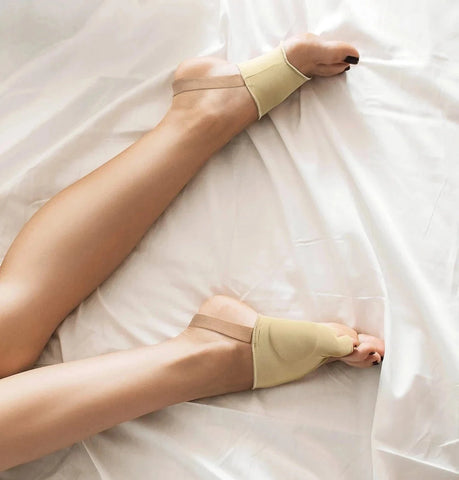
For additional protection, the Tailor's Bunion Bunionette Pain Relief Protection Sleeves are designed to offer comfort and protection for bunionette pain.
To nourish and soothe the skin around bunions, as well as to promote healthy hair, consider the Jamaica Black Castor Oil Soothing Oil. Known for its moisturizing and anti-inflammatory properties, it helps alleviate discomfort around bunions and supports hair growth and scalp health.
Sources
- [1] MedlinePlus, “Bunion” – https://medlineplus.gov/ency/article/001082.htm
- [2] American Orthopaedic Foot & Ankle Society (AOFAS), “Bunions and Tailor’s Bunions” – https://www.aofas.org/footcaremd/conditions/ailments-of-the-forefoot/bunion
- [3] National Institute of Arthritis and Musculoskeletal and Skin Diseases, “Bunion” – https://www.niams.nih.gov/health-topics/bunions
- [4] APMA, “Footwear and Foot Health” – https://www.apma.org/footwear/
- [5] Journal of Foot and Ankle Research, “Minimalist Footwear and Foot Strength” (2018)
- [6] Cochrane Review, “Non-surgical treatment for hallux valgus” (2020)
- [7] The Foot and Ankle Online Journal, “Exercise Therapy for Hallux Valgus” (2019)
- [8] Journal of Biomechanics, “Arch Types and Foot Mechanics” (2017)
- [9] NICE Guidelines, “Orthotic Devices for Foot Conditions” (2018)
- [10] Journal of Orthopaedic & Sports Physical Therapy, “Effectiveness of Bunion Sleeves” (2021)
- [11] Sports Health Journal, “Managing Foot Pain in Runners” (2022)