


Bunion Pain Relief and Management: A Practical Guide
TL;DR / Key takeaways
- Most people get meaningful relief from bunion pain with shoe changes, toe spacers/sleeves, and simple daily exercises.
- Use wide-toe-box shoes, low heels, and gel or silicone padding to reduce pressure and rubbing. [1][5]
- If pain limits activity or conservative care fails after several months, discuss advanced options (orthotics, injections, or surgery) with a foot specialist. [2][3]
Last updated: 2026-02-15T04:13:25.177Z
Author: Dr. Emily Carter, DPM
Simple steps after your first podiatrist visit: dealing with a bunion
Start with simple changes: wear roomier shoes, add toe spacers or a gel sleeve, and do short daily toe exercises. These steps often reduce pain and delay or avoid surgery for many people.
What you likely already tried — and why results vary
Toe spacers (the type that go between every toe) can help realign toe pressure and improve comfort. Night “bunion correctors” or splints sometimes feel promising, but most don’t permanently shift the angle — they mainly offer temporary relief. Shoe changes are usually the most effective first step because they reduce pressure on the joint and stop worsening from footwear [1][5].
4.9 ⭐⭐⭐⭐⭐ ( 1843 reviews )
What is a bunion (hallux valgus) and bunionette (tailor’s bunion)
A bunion (hallux valgus) is a bony bump at the base of the big toe where the joint angles outward. A bunionette, or tailor’s bunion, is a similar bump on the outside of the little toe. Both change how weight moves through the foot and can cause pain, rubbing, and shoe-fit problems [2].
Symptoms and when to seek care
- Visible bump at the base of the big toe or little toe.
- Pain when walking, standing, or wearing tight shoes.
- Redness, swelling, or callus where the shoe rubs.
- When pain limits daily tasks, or if toes overlap and function changes, seek specialty care to review options like custom orthotics or surgery [2][3].
Conservative management options and product use guidance
- Shoe changes: Wide toe box, low heel (less than 2 inches), and a stiff sole reduce pressure on the bunion [5].
- Toe spacers/separators: Use soft silicone or fabric spacers during the day to reduce overlap and rubbing. Spacers that separate every toe often feel best for balance. Research shows toe spacing can reduce symptoms in many patients [3].
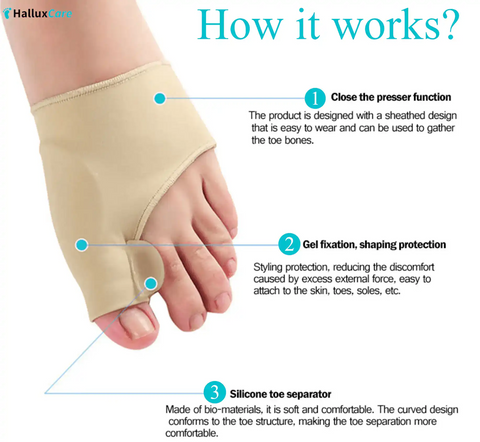
- Bunion sleeves and pads: Gel sleeves and silicone pads protect the skin and reduce friction. They also cushion and spread pressure away from the bump.
- Orthotics: Over-the-counter or custom orthotics can correct abnormal foot mechanics and lower joint stress. Studies show orthoses help symptoms even if they don’t change the bone angle [3][4].
- Medications and icing: Short bouts of ice reduce swelling after activity. Anti-inflammatory medications can help during flares.
Practical product notes:
- Use gel sleeves for padding during the day. The Orthopedic Bunion Pain Relief & Correction Sleeve pictured above is an example.
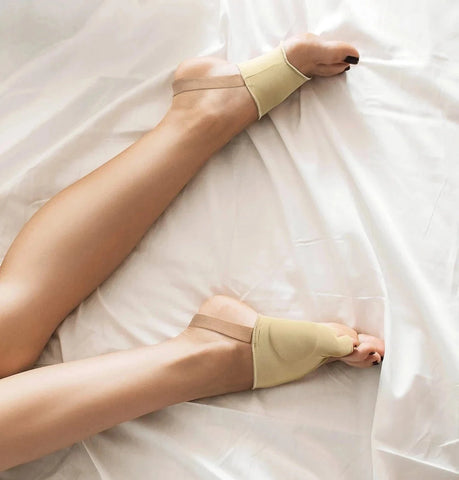
- For bunionette pain, choose sleeves and protective pads shaped for the fifth metatarsal area. The Tailor's Bunion sleeve above targets that spot.
- Protect skin with moisturizing oil if dry skin causes cracking; the listed Jamaica Black Castor Oil may help skin comfort.
Fit and footwear tips (wide toe box, materials, heel height)
- Look for shoes with a square or round toe box. Avoid pointed toes.
- Choose leather or mesh that stretches a bit; rigid materials can press on the bump.
- Low heels reduce forward pressure. Keep heel height under about 2 inches.
- Firm midsoles and arch support reduce joint motion that worsens bunions [5].
- When buying shoes, try them on later in the day when feet are slightly swollen for best fit.
How to choose shoe size and test fit
- Measure both feet. Buy for the larger foot.
- Check that toes can wiggle and the big toe is not pushed inward.
- Walk in the shoes for several minutes in the store or at home before committing.
Exercises and daily routines
Short routines help mobility and reduce stiffness. Aim for 5–10 minutes daily.
- Toe spread and hold: Sit, then spread toes wide and hold for 5–10 seconds. Repeat 10 times.
- Marble pickups: Pick up marbles or a towel with your toes for 2–3 minutes.
- Calf stretches: Stretching the calf reduces forefoot pressure during walking. Hold 30 seconds, repeat 2–3 times per leg.
- Icing: Apply ice 10–15 minutes after long walks to reduce swelling.
How to use toe spacers, sleeves, and orthotics — routine steps
- Put on clean, dry socks.
- Fit spacers between toes; leave them for short walks to test comfort.
- Slide gel sleeve over the forefoot or bunion. Use inside shoes with a roomy toe box.
- If using an orthotic, place it in the shoe and test walking for 10–20 minutes. Adjust shoe size if pressure points form.
- Reassess daily — if pain persists or worsens, track symptoms and timing.
When to consider more advanced options
- Pain prevents walking or daily tasks.
- Conservative care fails for 6–12 months.
- Toe angle worsens or neighboring toes are affected.
Surgery can correct alignment and relieve pressure, but it’s a personal choice. Discuss types of procedures and recovery time with your specialist [2][3].
Practical tips and real‑world applications
- Commuters: Use supportive sneakers with a wide toe box. Swap to roomier shoes after long stands.
- Hot climates: Breathable mesh plus gel pads reduce sweat-related rubbing.
- Active people: Choose firm midsoles and custom orthotics for running or long walks to limit joint stress.
- Office workers: Consider low-heeled dress shoes with removable insoles. Replace the insole with a custom or OTC orthotic if needed.
Glossary of key terms
- Bunion (hallux valgus): A bump at the base of the big toe from joint misalignment.
- Bunionette (tailor’s bunion): A bump at the base of the little toe.
- Toe spacers: Devices that sit between toes to reduce overlap.
- Sleeves: Gel or fabric covers that cushion the bunion area.
- Orthoses (orthotics): Shoe inserts that correct foot mechanics.
Frequently asked questions (FAQs)
Are toe spacers safe for bunions?
Toe spacers are generally safe for most people. They reduce toe overlap and rubbing and can ease pain during daily use. Start with short periods and soft silicone spacers, then increase wear time as comfort allows. If you have numbness, severe circulation problems, or pain that worsens, stop use and seek specialty care [3][4].
How long should I wear toe spacers daily?
Begin with 15–30 minutes per day and increase to a few hours as tolerated. Many people wear them during low-impact activities or while at home. Daily gradual use helps soft tissues adapt without causing blisters or extra rubbing.
Bunion vs tailor’s bunion – what’s the difference?
A bunion is a deformity at the big toe joint (medial side). A tailor’s bunion (bunionette) forms at the outside of the little toe. Both result from pressure and foot mechanics but occur on opposite sides of the forefoot [2].
Do bunion sleeves help with shoe comfort?
Yes. Gel sleeves cushion the bump, reduce friction, and can make shoes wearable for longer periods. They don’t change bone alignment, but they reduce pain and skin irritation for day-to-day comfort [3].
When should I see a podiatrist?
See a foot specialist when pain limits daily activities, redness or deformity worsens, or conservative measures do not ease symptoms after several months. Specialists can offer orthotics, injections, or surgical options when needed [2][3].
Can I run or play pickleball with a bunion?
You can often continue running or court sports with the right shoes, orthotics, and padding. Choose shoes with a wide toe box and firm support. Reduce mileage during flare-ups and use gel sleeves or spacers to limit rubbing. If pain persists, adjust activity and consult a specialist [4].
Will bunion sleeves or spacers change the bone angle?
Most sleeves and spacers provide symptom relief but do not permanently change the bone alignment. Some devices and night splints claim correction, but evidence shows structural change is uncommon without surgical correction [3][2].
How long until I see improvement with conservative care?
Many people notice reduced pain within days to weeks after changing shoes and adding padding. Mechanical changes from orthotics may take several weeks to show functional improvement. Track progress for 6–12 months before judging long-term success [3].
Are over-the-counter orthotics helpful?
Yes, many over-the-counter orthotics offer support and relieve symptoms for people with mild to moderate bunions. Custom orthotics may be recommended for complex foot mechanics or persistent symptoms [4].
Sources
- MedlinePlus. Bunions. https://medlineplus.gov/bunions.html
- National Center for Biotechnology Information (NCBI). Review articles on hallux valgus: pathophysiology, presentation, and management. https://www.ncbi.nlm.nih.gov/ (search “hallux valgus review”)
- Cochrane Library. Interventions for treating hallux valgus (bunions). https://www.cochranelibrary.com/ (search “hallux valgus interventions”)
- American Orthopaedic Foot & Ankle Society (AOFAS). Patient education: bunions and conservative care. https://www.aofas.org/footcaremd/conditions/hallux-valgus-bunions
- American Podiatric Medical Association (APMA). Choosing proper footwear and shoe fit guidelines. https://www.apma.org/
Additional Resources and Recommended Products
If you're looking for relief from bunion pain, consider using the Orthopedic Bunion Pain Relief & Correction Sleeve, which provides support and helps to alleviate discomfort.
For additional protection, the Tailor's Bunion Bunionette Pain Relief Protection Sleeves are designed to offer comfort and protection for bunionette pain.
To nourish and soothe the skin around bunions, as well as to promote healthy hair, consider the Jamaica Black Castor Oil Soothing Oil. Known for its moisturizing and anti-inflammatory properties, it helps alleviate discomfort around bunions and supports hair growth and scalp health.