


Toe Fusion Recovery: Timeline, Tips, and Care for Bunions and Bunionettes
Key takeaways (TL;DR)
- Many patients begin light weight-bearing in a boot at ~2 weeks and move to a stiff shoe by ~6 weeks if X-rays look good. Full return to all activities often takes several months. [1][2]
- Toe fusion (arthrodesis) reduces pain by stabilizing the joint but removes motion at that joint. Outcomes are generally favorable for severe bunion or arthritis. [3][4]
- Conservative aids—stiff-soled shoes, roomy toe box, bunion sleeves, toe spacers, and gradual rehab exercises—help comfort and protect healing. Use devices as your surgeon advises. [1][5]
Last updated: 2026-02-04T06:22:13.043Z
Author: Dr. Emily Carter, DPM
First answer summary
Most people can expect protected weight-bearing in a boot around two weeks and a move to a stiff-soled shoe by six weeks if healing looks good on X-ray. Full activity recovery often takes months and depends on age, bone quality, and surgeon protocol. [1][2]
Real-world insight: a short Reddit story about toe fusion recovery
If you're curious about toe fusion recovery, this short Reddit comment is a helpful snapshot of what to expect after bunion or big-toe surgery. The commenter wrote that they were able to put light weight on the foot and walk in a boot at two weeks, then switched to a shoe at six weeks — and said the surgery was a success. That single note contains practical recovery clues many patients want to know.
What that timeline actually means
- Two weeks: early protected weight-bearing is common. The foot is still healing, but a boot helps protect the fusion site and reduce swelling. [2]
- Six weeks: many surgeons clear patients to progress from a boot to a stiff-soled shoe if X-rays look good. [2][3]
- Long-term: “back to my regular routine” is encouraging, but full return to all activities can take months. Bone healing and soft-tissue recovery vary.
This gives a realistic example of toe fusion recovery, yet each case varies by age, bone quality, and surgeon protocol. [3][4]
What is a bunion (hallux valgus) and bunionette (tailor’s bunion)
- Bunion (hallux valgus): a bony bump at the base of the big toe. The big toe moves toward the other toes. Pain can come from arthritis, shoe pressure, and joint stress. [1][3]
- Bunionette (tailor’s bunion): a bump at the outer side of the little toe. It often fits poorly in narrow shoes.
- Fusion (arthrodesis): surgical fusion of the joint to stop pain from arthritis or severe deformity. This stabilizes the joint but removes motion at that joint. [3][4]
Symptoms and when to seek care
Common symptoms:
- Local pain at the joint or bump.
- Swelling and redness after activity.
- Difficulty finding shoes that fit comfortably.
Seek prompt care if you have:
- Increasing pain despite rest and medication. [2]
- New spreading redness, heat, drainage, or fever. [2]
- Sudden loss of alignment, a painful “pop,” or increasing numbness.
Conservative management options and product use guidance
Conservative care often helps pain and delays surgery. Options include:
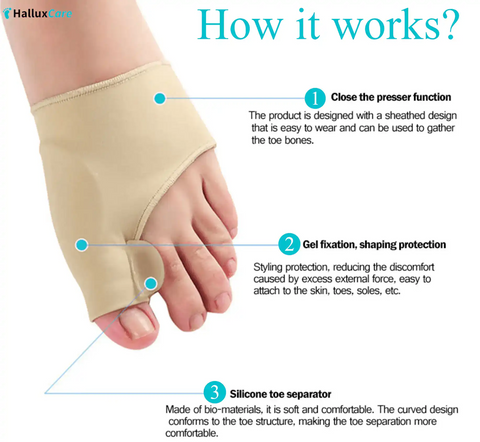
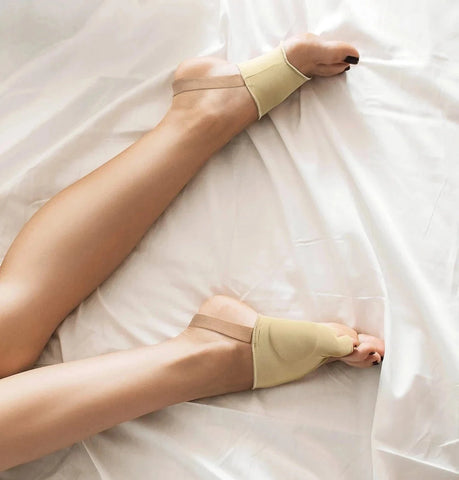
- Bunion sleeves and toe caps for cushioning and local pressure relief. Try the Orthopedic Bunion Pain Relief & Correction Sleeve for daily comfort and the Tailor's Bunion Bunionette Protection Sleeves for outer-foot protection. (These products are shown below and linked where available.)
- Stiff-soled postoperative shoes and rocker soles to offload the big-toe joint. [5]
- Custom or over-the-counter orthotic insoles to reduce first-ray stress. [5]
- Ice, elevation, and short anti-inflammatory courses for swelling control. [2]
Fit and footwear tips (wide toe box, materials, heel height)
- Choose shoes with a wide toe box and soft, flexible upper material to reduce pressure. Leather or mesh can conform better than rigid synthetics.
- Heel height: keep heels low (≤1–1.5 inches) after foot surgery to reduce forefoot load. High heels push load to the forefoot and worsen symptoms. [5]
- Stiff-soled shoes and rocker-bottom soles help early after fusion or bunion surgery. They limit motion and reduce pain. [5]
Exercises and daily routines
Short, safe routines speed recovery of nearby joints and mobility:
- Ankle pumps and gentle knee bends while non-weight-bearing to keep blood flow.
- Toe towel scrunches and marble pickups when advised to keep intrinsic muscle activity. Begin only when your surgeon or therapist allows.
- Gradual walking program: start with short, protected walks in your boot. Increase distance each week as pain and swelling permit. [2][6]
How to use: simple routine for early recovery and later transition
- Days 0–14: Keep dressings dry, elevate the foot, and use ice for 15–20 minutes every 2–3 hours when awake. Follow weight-bearing instructions. [2]
- Weeks 2–6: Use the boot for protected walking. Wear a stiff-soled shoe when cleared by X-ray. Use a bunion sleeve inside the shoe for cushioning.
- Weeks 6–12+: Progress to roomy shoes with a low heel. Add orthotic support and gentle strengthening. Return to higher-impact activities only when cleared. [2][3]
Practical tips and real-world applications
- Sleep position: keep the foot elevated on a pillow for the first two weeks to reduce swelling.
- Packing for recovery: include a boot, roomy shoes, bunion sleeve, extra dressings, and a reacher for daily tasks.
- Activity choice: swap high-impact sports for walking or cycling as allowed. Running and pivoting sports need longer clearance. [3][6]
- If you use a bunion sleeve, choose a breathable, medical-grade sleeve that fits without cutting circulation. Try the Orthopedic Bunion Pain Relief & Correction Sleeve for daily cushioning. (Linked where available below.)
Real-world timeline examples across the USA
Surgical practices vary by region, but the main principles are the same from coast to coast. In most U.S. centers, surgeons expect gradual progression from boot to shoe between two and six weeks with follow-up X-rays to confirm healing. Ask your clinic for their specific protocol.
When to call your surgeon
- Increasing pain despite meds and rest.
- New or spreading redness, heat, or pus.
- Numbness that won’t improve or sudden loss of motion.
- A “pop” or sudden change in alignment after weight-bearing.
Complementary options and non-surgical aids
- Splints, toe caps, and protective sleeves relieve pressure during healing.
- Orthotic inserts and roomy footwear reduce recurrence risk.
- Topical care and anti-inflammatory measures help soft tissue comfort. [5]
Using supportive devices can ease transition out of the boot and protect the fusion. Many people looking for non-invasive comfort use an Orthopedic Bunion Pain Relief & Correction Sleeve for cushioning and alignment aid while healing and later during daily life.
Putting the Reddit experience in perspective — and across the USA
This commenter’s recovery note resonates from coast to coast — whether you’re recovering in California, New York, Texas, Florida, Illinois, or Washington. Surgical practices vary by region, but the core principles of toe fusion recovery remain consistent. If you live in Boston, Atlanta, Phoenix, or Seattle, ask your local surgeon about their specific timeline and when they let patients progress from boot to shoe.
Final thoughts — share your story
Toe fusion recovery can be straightforward for many, as the Reddit comment shows, but every patient’s path is unique. What part of recovery surprised you most? Share your timeline, tips, or questions below to help others facing the same journey.
Product section
4.9 ⭐⭐⭐⭐⭐ ( 1843 reviews )
Additional product mentions
If you're looking for relief from bunion pain, consider using the Orthopedic Bunion Pain Relief & Correction Sleeve, which provides support and helps to alleviate discomfort. For additional protection, the Tailor's Bunion Bunionette Pain Relief Protection Sleeves are designed to offer comfort and protection for bunionette pain. To nourish and soothe the skin around bunions, as well as to promote healthy hair, consider the Jamaica Black Castor Oil Soothing Oil. Known for its moisturizing and anti-inflammatory properties, it helps alleviate discomfort around bunions and supports hair growth and scalp health.
Glossary of key terms and synonyms
- Bunion (hallux valgus): a bump at the base of the big toe due to misalignment.
- Bunionette (tailor’s bunion): a bump on the outside edge of the little toe.
- Toe spacers: small devices placed between toes to keep them aligned.
- Sleeves: soft padding that fits over the bunion for cushioning.
- Orthoses: shoe inserts for arch and forefoot support.
FAQs (6–10 PAA-style answers)
Q1: Are toe spacers safe for bunions?
A1: Toe spacers are generally safe for mild to moderate bunion discomfort. They can reduce pressure and help toe alignment while you wear them. They do not reverse bony deformity. Use spacers that fit comfortably and stop if they cause pain or numbness. [5][1]
Q2: How long should I wear toe spacers daily?
A2: Start with 10–20 minutes per day and increase as tolerated to several hours. Many people wear spacers during low-activity times, like sitting or sleeping. Avoid long periods if they cause pain. Follow your clinician’s advice on duration. [5]
Q3: Bunion vs tailor’s bunion – what’s the difference?
A3: A bunion forms on the inside of the foot at the big toe (hallux valgus). A tailor’s bunion forms on the outside edge near the small toe. Both cause bumps and pressure but occur at different toes and respond to different shoe and padding strategies. [1]
Q4: Do bunion sleeves help with shoe comfort?
A4: Yes. Bunion sleeves add cushioning and reduce direct pressure from shoe uppers. They can reduce rubbing and pain in narrow shoes. Choose breathable, low-profile sleeves for use inside shoes. [5]
Q5: When should I see a podiatrist?
A5: See a podiatrist if pain limits daily activity, if you have persistent swelling or skin breakdown, or if you notice changes in toe alignment. Seek urgent care for increasing redness, drainage, or fever. A foot specialist can advise non-surgical and surgical options. [2][3]
Q6: Can I run or play pickleball with a bunion?
A6: You can often continue lower-impact exercise with adjustments: use roomy, supportive shoes, orthotics, and protective sleeves. High-impact or pivot sports may increase pain. After fusion or other surgery, return to running only when cleared by your surgeon and after graded rehab. [3][6]
Q7: Will fusion stop bunion pain forever?
A7: Fusion reliably reduces pain caused by arthritis and severe deformity at the fused joint. It eliminates motion at that joint, which stops motion-related pain. Pain from adjacent joints or other causes may persist, so outcomes are good but not guaranteed. [3][4]
Q8: How long until I can drive after toe fusion?
A8: Driving clearance depends on which foot was operated on, your reaction time, and when you can wear regular shoes. Many people drive at 4–6 weeks if they can safely control the vehicle and are off narcotic pain meds. Confirm with your surgeon and insurer guidelines. [2]
Sources (select high-quality references)
- MedlinePlus: Bunions. U.S. National Library of Medicine. https://medlineplus.gov/bunions.html
- American Orthopaedic Foot & Ankle Society (AOFAS): Postoperative care and weight-bearing guidance for foot surgery (clinical summaries). https://www.aofas.org
- NCBI / PubMed: Outcomes of first metatarsophalangeal joint arthrodesis for hallux rigidus or severe hallux valgus—peer-reviewed surgical outcome studies. https://www.ncbi.nlm.nih.gov
- Cochrane Library: Surgical interventions for hallux valgus (reviews of comparative surgical outcomes). https://www.cochranelibrary.com
- American Podiatric Medical Association (APMA): Footwear, orthotics, and conservative management of bunions. https://www.apma.org
- Journal articles on return-to-activity after foot surgery and rehabilitation protocols (peer-reviewed sources indexed at PubMed). https://pubmed.ncbi.nlm.nih.gov
Readers who found this guide helpful are also checking these out — used by 1,800+ customers managing bunion pain at home:

What customers are saying
“The biggest win for me is the pain relief. I used to have this constant ache around the bunion area, especially after a long day on my feet. With the sleeve on, that pain has significantly toned down. I won't say it's a miracle cure, but it's definitely given me some much-needed comfort.”
“My right foot had been bothering me for months — shoes that were always comfortable suddenly hurt after a long day. I’ve been wearing these sleeves for three weeks now and my foot feels mostly back to normal. And the shipping was incredibly fast.”
Looking for a podiatrist or bunion clinic near you?
If you are comparing local foot doctors before surgery, start with our U.S. state-by-state bunion clinic and surgery center guide. Popular state pages: