


Surfing and Water Sports with Bunions: Foot Protection for Ocean and Pool Activities
Surfing is a sport that's genuinely hard on bunions — the lateral weight shifts of rail-to-rail surfing, the gripping of a foam deck with the toes, and the asymmetric stance all create specific bunion stresses. But with targeted protection and smart technique, many surfers manage bunions throughout their careers. Similar considerations apply to paddleboarding, windsurfing, kiteboarding, and water polo.
How Surfing Stresses Bunions
- Toe curling for grip: Surfers unconsciously grip the board with their toes during powerful moves — compressing the forefoot and generating significant bunion stress, especially on the back foot which bears most vertical load during turns
- Lateral weight shifts: Rail-to-rail transitions involve the foot rolling medially (toeside) and laterally (heelside) — the toeside transition increases medial forefoot load directly stressing the bunion
- Stance asymmetry: Regular or goofy foot stance places different demands on each foot. The back foot bears more compression; the front foot more torsion. Know which positions stress your bunion most.
- Reef and bottom contact: Walking over reef or rocky shorebreak in bare feet regularly traumatizes the bunion bump
Foot Protection for Surfing
Surf Booties
Summer surf booties (1-2mm) are one of the best bunion protection tools available for water sports — they pad the bunion from reef contact and reduce direct board friction. Look for:
- Wide-last booties — most surf booties run narrow; Matuse and Excel offer wider options
- Split-toe design — follows the natural toe alignment; may reduce bunion compression compared to round-toe models
- Adequate sole thickness (2-3mm) without stiffness that kills board feel
Readers who found this guide helpful are also checking these out — used by 1,800+ customers managing bunion pain at home:

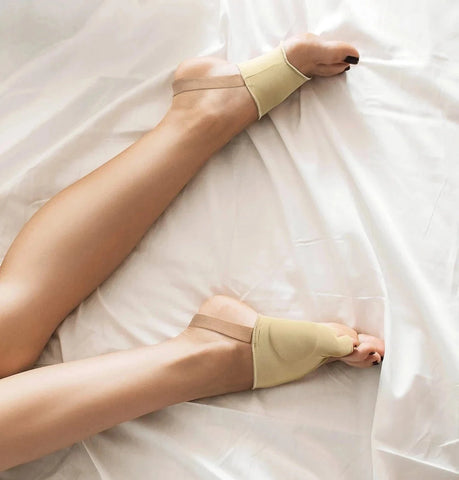
What customers are saying
“The biggest win for me is the pain relief. I used to have this constant ache around the bunion area, especially after a long day on my feet. With the sleeve on, that pain has significantly toned down. I won't say it's a miracle cure, but it's definitely given me some much-needed comfort.”
“My right foot had been bothering me for months — shoes that were always comfortable suddenly hurt after a long day. I’ve been wearing these sleeves for three weeks now and my foot feels mostly back to normal. And the shipping was incredibly fast.”
Bunion Padding for Water
- Standard silicone bunion sleeves don't stay on in water. Use waterproof moleskin or neoprene sleeve strips taped with waterproof athletic tape (covers bandage-grade)
- Aquaseal (dive equipment repair adhesive) can be used to bond a thin foam donut protector over the bunion before sessions — it survives water better than regular tape
Board Setup Adjustments
- Traction pad placement: If the standard back traction pad kicks sit where your bunion contacts, swap for a kickless pad — more surface for repositioning your back foot away from high-friction spots
- Wax texture: Warmer, softer wax grips with less forefoot friction than hard tropical wax — reduces the toe-gripping habit that stresses bunions
- Stance width: Slightly wider stance shifts some weight from the compressed medial forefoot to a broader distribution — worth experimenting with during a less critical session
Paddleboarding and Kayaking
Stand-up paddleboarding (SUP) is one of the most bunion-friendly water sports — the stable platform requires less toe-gripping than surfing. Wear neoprene booties on rocky launches and landings. Maintain a hip-width stance to avoid excessive medial loading.
After the Session
- Rinse foot thoroughly — saltwater and sand are abrasive to bunion skin that's been rubbed
- Check for any skin breakdown at the bunion site before your next session
- Ice for 15 minutes if any bunion inflammation developed
The ocean is one of the best places to be for low-impact movement that doesn't compress the foot in shoes. Protect the bunion specifically, and water sports remain some of the most joint-friendly activities in your repertoire.