


Bunions and Shin Splints: The Gait Connection That Causes Both Conditions
Runners who develop bunions frequently also develop shin splints — and the reverse is also true. This isn't coincidence. Both conditions share overlapping biomechanical origins in excessive pronation and altered lower leg loading, and treating one while ignoring the other typically leads to incomplete recovery.
How Bunions Cause Shin Splints
Overpronation as the Common Thread
Excessive subtalar pronation (flat-footed walking) is the single most common biomechanical cause of both conditions:
- Bunion pathway: Pronation collapses the medial arch, transferring force to the medial forefoot and destabilizing the first ray — progressive hallux valgus deformity develops
- Shin splint pathway: Pronation increases tibial internal rotation during stance phase — creating torsional stress at the tibia-posterior tibialis muscle interface — the classic medial tibial stress syndrome (MTSS) mechanism
Compensatory Gait
When bunion pain leads to reduced big toe push-off, the body compensates with increased tibialis anterior activity (front shin muscle) to swing the leg forward. Overloading the tibialis anterior and posterior is a direct shin splint mechanism.
Shortened Stride
Bunion-pain-related stride shortening increases step frequency — each foot strike happens sooner with a less-prepared landing pattern — increasing cumulative tibial stress.
Readers who found this guide helpful are also checking these out — used by 1,800+ customers managing bunion pain at home:

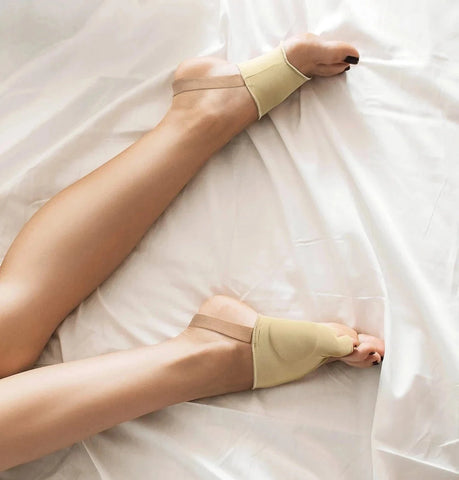
What customers are saying
“The biggest win for me is the pain relief. I used to have this constant ache around the bunion area, especially after a long day on my feet. With the sleeve on, that pain has significantly toned down. I won't say it's a miracle cure, but it's definitely given me some much-needed comfort.”
“My right foot had been bothering me for months — shoes that were always comfortable suddenly hurt after a long day. I’ve been wearing these sleeves for three weeks now and my foot feels mostly back to normal. And the shipping was incredibly fast.”
Distinguishing Shin Splints from Other Shin Pain
- MTSS (classic shin splints): Diffuse tenderness along the lower 2/3 of the medial tibia. Pain at start of run that may warm up then return after. Not to be confused with stress fracture (pinpoint tenderness).
- Compartment syndrome: Shin tightness that progresses during activity then forces stopping — vascular pressure mechanism; requires urgent evaluation
- Stress fracture: Point tenderness over tibia; pain progressively worsening with activity; positive hop test — requires imaging and rest
Unified Treatment Strategy
Address the Root: Overpronation
- Custom or prefabricated orthotics that control subtalar pronation simultaneously reduce bunion deforming force AND tibial torsional stress — single intervention benefits both conditions
- Motion-control running shoes reduce pronation without orthotics as a starting point
Shin Splint-Specific Care
- Reduce running volume 50% until pain below 3/10 on running
- Ice the shin 20 minutes after every run
- Eccentric tibialis anterior strengthening: seated resistance band ankle dorsiflexion against slight plantar flexion resistance — 3 × 15 daily
- Calf and posterior tibialis stretching: tight posterior chain increases anterior tibial overload
Bunion Management Concurrently
- Bunion sleeve during all running to reduce compensation patterns
- Wide-toe-box running shoes to allow natural toe splay
- Big toe push-off exercises to restore normal push-off mechanics and reduce compensatory shin loading
When running brings simultaneous shin and foot pain, address the biomechanical root together. Piecemeal treatment of each condition separately typically delays full recovery by weeks to months.