


How Bunions Affect Your Posture, Knees, Hips, and Lower Back
Last updated: March 2026 | Written by: Dr. James Rivera, DPM – Sports Medicine and Biomechanics Specialist
Most people think of bunions as a foot problem. But if you've been living with a bunion for months or years, you may have noticed pain creeping into your knees, hips, or lower back. This isn't a coincidence — it's a well-documented biomechanical chain reaction that affects millions of Americans every year.
The Biomechanical Chain: How Your Feet Affect Everything Above
Your feet are the foundation of your entire musculoskeletal system. When a bunion changes the alignment of your big toe joint (hallux valgus), it forces your foot to compensate during every step. This altered gait pattern ripples upward through your body:
1. Ankle and Foot Compensation
A bunion shifts weight away from the big toe during push-off. Instead of using the powerful first metatarsophalangeal (MTP) joint to propel forward, your foot rolls outward (overpronation) or places excessive load on the smaller toes. This leads to:
- Transfer metatarsalgia (pain under the 2nd and 3rd toes)
- Hammer toes from muscular imbalance
- Ankle instability and increased sprain risk
2. Knee Problems
Research published in the Journal of Foot and Ankle Research (2023) found that patients with moderate-to-severe bunions had a 40% higher incidence of medial knee pain compared to those without bunions. The altered gait mechanics cause:
- Patellofemoral syndrome (runner's knee) from abnormal tracking
- Increased medial compartment loading, accelerating knee osteoarthritis
- IT band tightness from compensatory hip rotation
3. Hip Misalignment
When your foot doesn't function properly, your hip compensates by rotating internally or externally during the gait cycle. Over time, this leads to:
- Hip bursitis (trochanteric bursitis)
- Gluteal muscle weakness and imbalance
- Early hip joint degeneration
4. Lower Back Pain
The pelvis tilts to compensate for the uneven gait, creating functional leg length discrepancy. Studies show that chronic bunion sufferers are nearly twice as likely to report lower back pain. The altered mechanics can cause:
- Lumbar muscle spasm and fatigue
- Sacroiliac (SI) joint dysfunction
- Disc compression from uneven loading
Real Signs That Your Bunion Is Affecting Your Whole Body
Watch for these warning signs:
- Knee pain on the same side as your bunion
- One shoe wearing out faster than the other
- Hip pain that worsens after walking or standing
- Lower back stiffness that improves when you're barefoot on soft surfaces
- You walk with a noticeable limp or lean
How to Break the Chain Reaction
Step 1: Stabilize the Bunion
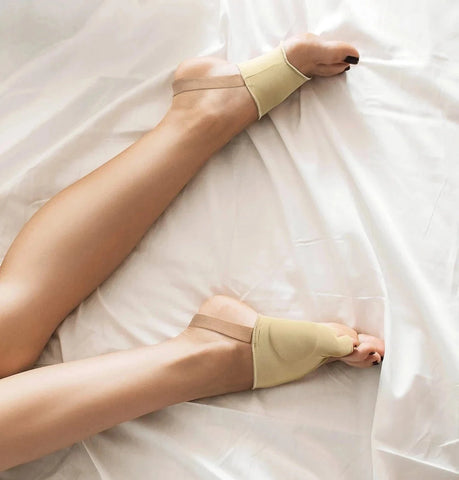
An orthopedic bunion sleeve helps realign the big toe joint and reduces the compensatory gait patterns that cause knee, hip, and back pain. Look for sleeves with medical-grade silicone padding that redistribute pressure across the forefoot.
Recommended Products for Bunion Relief
Shop the HalluxCare Orthopedic Bunion Sleeve →

Step 2: Strengthen the Kinetic Chain
Work with a physical therapist on exercises targeting:
- Intrinsic foot muscles: Towel scrunches, marble pickups, short foot exercises
- Hip stabilizers: Clamshells, single-leg bridges, lateral band walks
- Core: Planks, bird-dogs, dead bugs — a strong core reduces compensation
Step 3: Choose Proper Footwear
Switch to shoes with a wide toe box, firm heel counter, and moderate arch support. Brands like Hoka, New Balance (wide models), and Brooks are popular choices among US podiatrists.
Step 4: See a Podiatrist for Gait Analysis
A biomechanical assessment can identify exactly where your compensation patterns originate. Custom orthotics may be prescribed to correct alignment from the ground up.
Key Takeaways
- Bunions create a chain reaction that can cause knee, hip, and lower back pain
- The altered gait from a bunion forces your entire body to compensate
- Stabilizing the bunion with an orthopedic sleeve is the first step toward breaking the cycle
- Targeted exercises and proper footwear can prevent secondary injuries
- A podiatric gait analysis helps identify and correct compensation patterns
Readers who found this guide helpful are also checking these out — used by 1,800+ customers managing bunion pain at home:
What customers are saying
“The biggest win for me is the pain relief. I used to have this constant ache around the bunion area, especially after a long day on my feet. With the sleeve on, that pain has significantly toned down. I won't say it's a miracle cure, but it's definitely given me some much-needed comfort.”
“My right foot had been bothering me for months — shoes that were always comfortable suddenly hurt after a long day. I’ve been wearing these sleeves for three weeks now and my foot feels mostly back to normal. And the shipping was incredibly fast.”