


Best Socks for Bunions: Materials, Features, and Top Picks for Every Activity
The wrong socks can ruin a perfectly good pair of bunion-friendly shoes. Seams, tight elastic, rough materials, and poor construction can all irritate the bunion bump and create painful friction. Here's what your socks should (and shouldn't) have.
Essential Sock Features for Bunions
1. Seamless Toe Construction
Standard sock seams run directly across the toe line — right where they can rub against the bunion. Look for socks marketed as "seamless toe" or "smooth toe". These use a flat-knit or hand-linked closure that eliminates the raised seam ridge.
2. Gentle, Non-Constricting Elastic
The sock cuff should stay up without squeezing. Tight elastic around the ankle or arch restricts circulation, which worsens bunion swelling. Look for "loose-top" or "diabetic-style" socks with non-binding uppers.
3. Padding in the Right Places
Strategic cushioning over the ball of the foot and big toe area absorbs impact. However, excessive padding everywhere adds bulk that tightens shoes. Choose socks with targeted padding at the forefoot and heel — not thick throughout.
4. Moisture-Wicking Material
Moisture increases friction, and friction irritates bunions. Moisture-wicking materials pull sweat away from skin, reducing blister and irritation risk.
Best Sock Materials for Bunions
- Merino wool: Natural moisture-wicking, temperature-regulating, naturally anti-bacterial. The gold standard for bunion comfort.
- Bamboo: Incredibly soft, moisture-wicking, hypoallergenic, and antibacterial. Excellent for sensitive bunion skin.
- CoolMax/synthetic blends: Engineered for moisture management. Great for athletic use.
- Cotton (AVOID for active use): Absorbs moisture and holds it against the skin — increases friction. Fine for lounging only.
Socks by Activity
Everyday/Work Socks
- Seamless toe, medium cushioning at ball of foot
- Bamboo or merino wool blend for comfort
- Crew or quarter length depending on shoe type
- Avoid tight dress socks that compress the forefoot
Athletic/Exercise Socks
- Moisture-wicking synthetic or merino blend
- Extra cushioning at forefoot and heel
- Arch support band for stability
- Ankle length for sports shoes
Sleep Socks
- Loose-fitting, non-binding
- Super soft material (bamboo or cashmere blend)
- No tight elastic — should slide on easily
- Optional: built-in toe separator for overnight alignment
Readers who found this guide helpful are also checking these out — used by 1,800+ customers managing bunion pain at home:

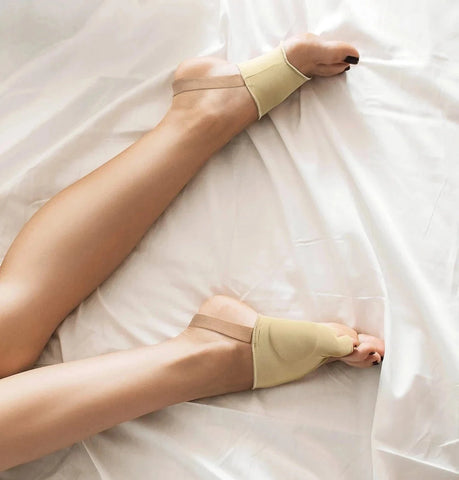
What customers are saying
“The biggest win for me is the pain relief. I used to have this constant ache around the bunion area, especially after a long day on my feet. With the sleeve on, that pain has significantly toned down. I won't say it's a miracle cure, but it's definitely given me some much-needed comfort.”
“My right foot had been bothering me for months — shoes that were always comfortable suddenly hurt after a long day. I’ve been wearing these sleeves for three weeks now and my foot feels mostly back to normal. And the shipping was incredibly fast.”
Toe Separator Socks
A newer category of bunion-specific socks features built-in toe separators between the big toe and second toe. These provide gentle alignment correction while wearing socks — essentially combining a toe spacer and sock in one product.
- Best for: overnight use, lounging at home, or wearing under loose shoes
- Not ideal for: tight dress shoes or high-performance athletic activities
- Look for: gentle, soft separator material (silicone or padded fabric) — not rigid
Common Sock Mistakes
- Wearing socks that are too small: Compresses the bunion area. When in doubt, size up.
- Ignoring seam position: If you can feel the seam on your bunion, it will irritate it — switch to seamless.
- Thick socks in tight shoes: Defeats the purpose. Match sock thickness to shoe volume.
- Re-wearing sweaty socks: Dampness + salt crystals from dried sweat = maximum friction irritation.
- Elastic too tight: If your socks leave marks on your legs or feet, they're restricting circulation.
Wearing Socks with Bunion Sleeves
If you wear a bunion sleeve, the sock goes over the sleeve. This means your sock needs to accommodate the slight extra bulk of the sleeve without creating compression. Choose a slightly roomier sock or go up one size when pairing with a sleeve.
The right socks are a small investment that makes a surprisingly big difference in daily bunion comfort. Seamless construction, proper materials, and correct fit work together with your shoes and sleeves to create a friction-free environment for your feet.