


Rock Climbing with Bunions: Shoe Fitting, Technique, and Pain Management
Rock climbing and bunions seem incompatible — tight, narrow shoes pressing on your most sensitive joint. But with the right shoe selection and technique modifications, many climbers with bunions continue to send routes at their grade. Here's how.
Why Climbing Shoes Are Bunion Torture
Climbing shoes are designed to be tight, narrow, and downturned — the exact opposite of what a bunion needs:
- Aggressive downturn: Pushes all toes forward and compresses the forefoot
- Narrow toe box: Designed for precision on small holds — directly presses on the bunion
- Tight fit philosophy: "Dead space" is the enemy in climbing — shoes are sized to be snug
- Asymmetric design: The toe point angles toward the big toe, increasing valgus pressure
Climbing Shoe Selection for Bunions
Best Shoe Characteristics
- Flat or moderate profile: Avoid aggressive downturn unless you're climbing overhanging routes exclusively
- Wider toe box: Some models offer significantly more forefoot room — see recommendations below
- Leather upper: Will stretch and mold to your bunion over time (synthetics will not)
- Lace-up closure: Allows selective loosening over the bunion area while keeping the heel and midfoot snug
- Slipper style: Some climbers find slip-on shoes accommodate bunions better because there's no rigid closure crossing the bump
Recommended Shoes
- La Sportiva Tarantulace: Wider forefoot, flat profile, leather — excellent entry-level bunion option
- Evolv Defy: Known for wider toe box among performance shoes
- Scarpa Origin: Generous fit, leather, lace-up — good for bunion accommodation
- Butora Endeavor (wide fit): Specifically offers a wide-fit version
Sizing Strategy
- For bouldering sessions (30-60 minutes of climbing): Half-size up from your aggressive fit
- For sport/trad routes (wearing shoes for extended periods): Full size up or more
- Try shoes at the END of the day when feet are swollen
- Break in leather shoes gradually — 15 minutes at home, increasing daily
Readers who found this guide helpful are also checking these out — used by 1,800+ customers managing bunion pain at home:

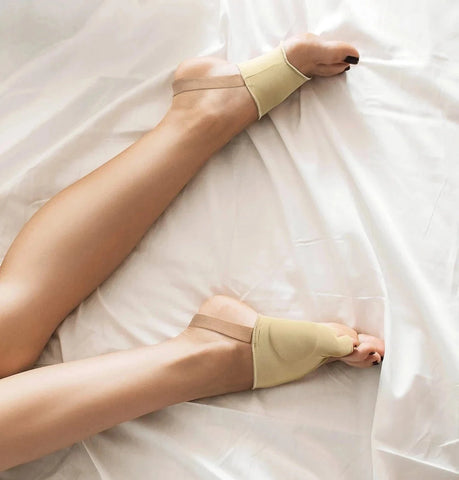
What customers are saying
“The biggest win for me is the pain relief. I used to have this constant ache around the bunion area, especially after a long day on my feet. With the sleeve on, that pain has significantly toned down. I won't say it's a miracle cure, but it's definitely given me some much-needed comfort.”
“My right foot had been bothering me for months — shoes that were always comfortable suddenly hurt after a long day. I’ve been wearing these sleeves for three weeks now and my foot feels mostly back to normal. And the shipping was incredibly fast.”
Technique Modifications
Footwork Adjustments
- Use the outside edge more: Shifting to the outer edge of the shoe reduces pressure on the medial bunion area. This works well on vertical and slightly overhanging terrain.
- Heel hooks over toe hooks: When possible, use heel hooks (no bunion stress) instead of toe hooks (high bunion compression)
- Smearing: On slab terrain, smearing distributes pressure across the whole foot rather than concentrating it on the big toe
- Flag instead of drop-knee: Drop-knee positions can torque the forefoot. Flagging achieves similar balance with less foot rotation.
Session Management
- Take shoes off between climbs: Don't sit around in climbing shoes belaying or resting. Bring approach shoes or sandals.
- Warm up in comfortable shoes: Use your widest pair for easy warm-up routes, save the tighter performance shoes for project attempts
- Shorter sessions, more frequently: Three 90-minute sessions per week is better for bunions than one 5-hour marathon
DIY Shoe Modifications
- Spot stretching: Heat the leather over the bunion area with a heat gun (low setting, 6-inch distance) while wearing a thick sock. The leather molds to the bunion bump permanently.
- Cobbler punch-out: A cobbler experienced with climbing shoes can punch out the bunion spot — creating a small dome of extra room without ruining shoe performance
- Bunion sleeve INSIDE climbing shoe: Ultra-thin silicone bunion guards (not full sleeves) can fit inside climbing shoes for padding without significantly affecting fit
Bouldering vs. Sport vs. Trad: Bunion Impact
- Bouldering: Shortest wear time (individual problems) but most aggressive shoe demand. Best for bunion climbers — you can take shoes off between problems.
- Sport climbing: Moderate wear time per route. Take shoes off at anchors during multi-pitch.
- Trad climbing: Longest continuous wear time. Choose your most comfortable shoes for crack climbing — performance is about technique, not shoe aggression.
Post-Climbing Recovery
- Ice the bunion for 15 minutes immediately after climbing
- Toe stretches — spread toes wide after hours of compression
- Walk barefoot on smooth surfaces to re-establish natural toe splay
- Use toe spacers for 20-30 minutes post-session to counteract compression
Climbing with bunions requires compromise — you won't wear the most aggressive shoes or climb exactly like someone without bunions. But with smart shoe choice and technique, your bunion shouldn't be the reason you stay off the wall.