


Best Insoles and Orthotics for Bunions: A Podiatrist's Buying Guide
I have been treating foot pain long enough to see the same pattern repeat. People buy the squishiest comfort insoles they can find, and their bunion pain gets worse, not better.
Orthotics and insoles will not reverse a bunion. They can still cut day to day pain and slow progression when they correct the mechanics that keep pushing the big toe out of line. This guide covers what actually helps, what wastes money, and how to wear new orthotics without quitting in the first week.
A typical story I see in clinic, and one I have lived through during heavy mileage blocks, looks like this. A mild to moderate bunion (hallux valgus) only hurts after long days. The person switches to softer shoes plus a super cushy insole. Within a month the bump aches more, the toe box rubs more, and a new fatigue shows up along the arch. The bunion did not suddenly grow. The mechanics changed.
How Insoles Help Bunions
The win is not more squish. A useful insole changes how load moves through the foot from heel strike through toe off.
- Redistribute pressure: Shift weight away from the painful bunion joint while you walk.
- Control overpronation: Reduce the inward roll that increases valgus force on the big toe. When the foot rolls in too far, the big toe drifts and the bunion takes more stress at toe off.
- Support the arch: A collapsed arch feeds bunion progression. Firm support keeps the foot closer to neutral.
- Stabilize the heel: A deep heel cup keeps the rearfoot from rolling in, so the rest of the chain is less sloppy.
If you are shopping now, the short version is firm arch support, a deep heel cup, a low profile forefoot, and a shoe with a wide toe box. The product picks below are for the days when an insole alone is not enough.
Readers who found this guide helpful are also checking these out — used by 1,800+ customers managing bunion pain at home:

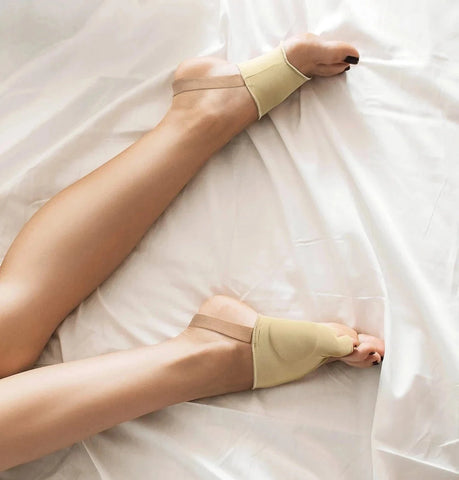
What customers are saying
“The biggest win for me is the pain relief. I used to have this constant ache around the bunion area, especially after a long day on my feet. With the sleeve on, that pain has significantly toned down. I won't say it's a miracle cure, but it's definitely given me some much-needed comfort.”
“My right foot had been bothering me for months — shoes that were always comfortable suddenly hurt after a long day. I’ve been wearing these sleeves for three weeks now and my foot feels mostly back to normal. And the shipping was incredibly fast.”
Why Soft Insoles Often Make Bunion Pain Worse
Pillow foam feels good for about ten minutes, then it lets the arch collapse the same way it always does, only more comfortably. If the goal is less bunion pain, you usually need firm arch support (a semi rigid EVA or polypropylene feel) rather than pure cushioning.
Pressure redistribution matters more than padding. You want load shifted off the irritated big toe joint, not a thicker layer under a joint that is already crowded.
There is a second trap I keep seeing, especially with runners. Someone upgrades to a more supportive insole and keeps the same narrow, tapered toe box. Then they are surprised the big toe joint hurts more. An insole cannot help a bunion if the shoe shape is constantly compressing the forefoot. Thick forefoot foam makes this worse, because it lifts the foot up and crams the toes into the box.
What to Look For in Bunion Friendly Insoles
Use this checklist in the store. If an insole fails two of these, put it back.
- Firm arch support. Press the arch with your thumb. It should resist you. Soft foam that bottoms out is comfort, not correction. Semi rigid EVA or polypropylene is the usual material range.
- Deep heel cup. The heel should sit in a cup, not on a flat pad. That cup limits inward roll.
- Subtle metatarsal support. A small bump just behind the ball of the foot can offload the bunion area for some people. Not everyone likes it in week one. If it feels like a pebble, it is too high or too far forward.
- Low profile forefoot. The front of the insole should stay thin. Extra thickness under the toes pushes you into the upper and increases rubbing right on the bump.
- Room to pair with a wide toe box shoe. If the shoe is already tight, adding any insole makes compression worse. Change the shoe first, then add the insole.
Custom Orthotics vs Over the Counter Insoles
Over the counter insoles ($20 to $60)
Pre made in standard sizes. These are often enough for mild to moderate bunions when the goal is better mechanics during walking or running. They are also the right test before you spend on customs: if firm arch support changes your symptoms, you have useful information. If it does nothing after a real break in, customs are easier to justify.
Best starting point when:
- The bunion is mild to moderate and mainly hurts after long days
- You want to test arch support before a custom pair
- Budget matters and you can return a pair that does not fit
Custom orthotics ($300 to $600)
Made from a mold or 3D scan of your foot. They tend to earn their cost when the problem is more than a simple arch collapse.
- The bunion is more advanced and OTC support did not change symptoms
- You have the combo: bunion plus flat feet plus plantar fasciitis
- You train hard and need more precise control than a stock last can give
- A previous OTC pair helped a little but bottomed out or never matched your foot
Customs are not automatically better. A precise orthotic in a narrow shoe still rubs the bunion. Fit the shoe, then the device.
When Insoles Aren't Enough
Insoles are one part of the toolkit, not a standalone fix. The people who do best treat the insole as the daytime mechanical piece and cover the hours and the shoe shape it cannot reach.
- Bunion sleeves during activity. A sleeve cushions the bump and gives gentle alignment while you walk, work, or train. That is the piece an insole does not do: it sits on the joint itself, not under the arch. Use a big toe sleeve for a hallux valgus bump and a tailor's bunion sleeve if the pain is on the outside of the foot at the fifth metatarsal. Sleeves do not replace arch support. They cover the contact and alignment job the insole misses.
- Wide toe box shoes. The toe box has to be wide enough that the bunion is not pressed into the upper. A good insole in a pointed or narrow shoe often increases pain. Shop shoes later in the day, when feet are slightly swollen, and check that you can spread your toes without the bump hitting the side.
- Toe strengthening. Weak intrinsic foot muscles let the big toe drift. Short foot exercises, towel scrunches, and slow big toe lifts (keeping the other toes down) address the muscle side that no insole can train for you. A few minutes most days beats one long session you abandon.
- Night splints. Daytime insoles do nothing while you sleep. A night splint holds the toe in a gentler position for those hours. Some people cannot tolerate a rigid splint at first. Start with shorter nights and stop if you get numbness or sharp joint pain.
- Activity dose. Long standing days, sudden mileage jumps, and barefoot time on hard floors will outrun a new insole. Cut the spike in load for the same two to three weeks you are breaking the orthotic in.
If pain is sharp, the joint is hot and swollen, or you cannot walk normally, see a podiatrist. Insoles and sleeves manage mechanics and comfort. They are not a substitute for an exam when the joint itself is flaring.
Common Insole Mistakes
- Buying soft, cushiony insoles. They feel good in the store and do almost no biomechanical work. Your arch still collapses, so the valgus force on the big toe stays. If your thumb can squash the arch flat, it is the wrong insole for bunion pain.
- Trimming incorrectly. Cut along the printed trim line for your shoe size. Cutting past that line, or trimming from the heel or the arch instead of the toe, removes the support you paid for. If the insole is still too long after the correct trim, the shoe is too short. Do not keep cutting until the arch sits in the wrong place.
- Using insoles in narrow shoes. This stacks two problems. The shoe already compresses the bunion, and the insole steals more volume. Switch to a wide toe box first, then add the insole. If you must choose one change this week, change the shoe.
- Expecting instant results. Orthotics need a 2 to 3 week break in. Judging them on day one, or wearing them for a full shift immediately, is how people decide "orthotics do not work" when the real issue was too much, too soon.
- Stacking a new insole on the shoe's built in footbed. Most shoes need the factory insole removed first. Leaving both in raises the heel, crowds the toes, and changes the fit you tested in the store.
- Ignoring a metatarsal pad that is in the wrong spot. If the pad sits under the ball of the foot instead of just behind it, it increases pressure instead of shifting it. Slide it back a few millimeters or choose a lower pad before you throw the insole out.
Break In Protocol for New Orthotics
Do not judge a new pair on day one. Arch soreness in the first week is common. Sharp pain, numbness, or a hot swollen bunion is not. Take the pair off if you get those, and get the device adjusted before you push through.
- Week 1: Wear them 2 to 3 hours a day, ideally on shorter walks rather than your longest work shift. Some arch soreness is normal. Skin rubbing on the bunion is a shoe problem, not a "toughen up" problem.
- Week 2: Increase to 4 to 6 hours. Soreness should be fading, not spreading into the heel or the ball of the foot. If a hotspot appears, check trim length and whether the factory insole is still in the shoe.
- Week 3: Move toward full day wear. Most people settle in by the end of this week. If arch pain is still limiting you after 3 weeks, go back to the provider or the brand for an adjustment. Do not keep adding hours on a device that is clearly too aggressive.
A simple log helps: hours worn, where it hurt, and whether the toe box rubbed. That is more useful than a vague "they did not work."
What Usually Matters More, Support or Shoe Shape?
From the cases that actually change, firmer arch support helps when overpronation is part of the pain, and it irritates people when the device is too hard, too high, or forced into a tight shoe. A metatarsal pad helps forefoot pressure for some and annoys others until the position is right. For a lot of runners, widening the toe box reduces big toe joint pain more than swapping insoles does.
If you are troubleshooting your own pair, note the shoe model, whether you removed the factory footbed, and whether you tried over the counter support or customs. Those three facts explain most of the "my new insoles made it worse" visits.
The right insole can change how a bunion feels day to day, but only alongside shoes that do not compress the bump and a simple strengthening habit you can keep. Use the insole for mechanics, a sleeve for cushion and gentle alignment while you are on your feet, and the break in schedule so you do not quit before the support has a fair test.