


How to Avoid Bunion Surgery: Strengthen Your Feet and Reclaim Comfort
Last updated: 2025-12-15T04:13:30.230Z
Author: Dr. Emily Harper, DPM (Doctor of Podiatric Medicine)
If you want to avoid bunion surgery, the best approach is to strengthen your feet, choose proper footwear, and adopt smart walking mechanics. These strategies help reduce pain and improve function without surgery, which is generally reserved for severe cases that do not respond to conservative care.
Key Takeaways
- Bunions (hallux valgus) are bony bumps caused by misalignment of the big toe joint, often leading to pain.
- Surgery is a last resort; conservative care such as footwear changes, exercises, and orthotics can relieve symptoms and improve function.
- Proper shoes should have a wide toe box, low or no heel, and good arch support to reduce pressure on bunions.
- Strengthening foot muscles and correcting walking mechanics significantly help reduce bunion pain.
- Toe spacers, sleeves, and orthoses provide comfort and support but do not correct the deformity.
- Seek podiatric care if pain is severe, persistent, or limits daily activities.
What is a Bunion (Hallux Valgus) and Bunionette (Tailor’s Bunion)?
A bunion (hallux valgus) is a bony bump that forms where your big toe meets your foot. It happens when the big toe pushes toward the second toe, causing the joint to stick out and sometimes become swollen or painful. A bunionette (tailor’s bunion) is a similar bump on the outside of the foot, near the little toe [1].
Both conditions result from pressure, genetics, and foot mechanics. They can cause discomfort, difficulty wearing shoes, and affect walking.
Symptoms and When to Seek Care
Common symptoms include:
- Visible bump at the base of the big or little toe
- Pain and swelling around the joint
- Redness and inflammation
- Difficulty wearing certain shoes
- Toe stiffness or difficulty moving the toe
Seek professional care if you experience:
- Constant or severe pain (rated 7 or above on a 10-point scale)
- Difficulty walking or performing daily activities
- Signs of infection such as increased redness, warmth, or discharge
- No improvement with conservative measures after several months
Conservative Management Options and Product Use Guidance
1. Footwear Tips for Bunion Comfort
Choosing the right shoes is crucial. Look for:
- Wide toe boxes that allow toes to spread naturally without squeezing.
- Low heels (ideally under 2 inches) to reduce pressure on the forefoot.
- Shoes made from soft, flexible materials like leather or mesh.
- Stable soles and good arch support to improve foot alignment.
Avoid narrow, pointed shoes or high heels that worsen bunion pain by increasing pressure on the joint [2].
2. Foot and Toe Strengthening Exercises
Strengthening muscles can stabilize the joint and improve function:
- Toe splay: Spread your toes wide, hold for 5 seconds; repeat 10 times.
- Short foot exercise: Pull the ball of your foot toward your heel without curling toes; hold for 5 seconds; repeat 10 times.
- Calf raises focusing on the big toe: Rise up on toes pushing through the big toe; do 3 sets of 10 repetitions.
Perform these daily to build foot strength and reduce discomfort [3].
3. Correcting Walking Mechanics
Improper gait can increase bunion stress. Focus on:
- Walking with an even step, pushing off gently with the big toe.
- Avoiding excessive inward rolling (overpronation).
- Consulting a physical therapist for personalized gait retraining as needed.
4. Using Orthopedic Supports and Comfort Tools
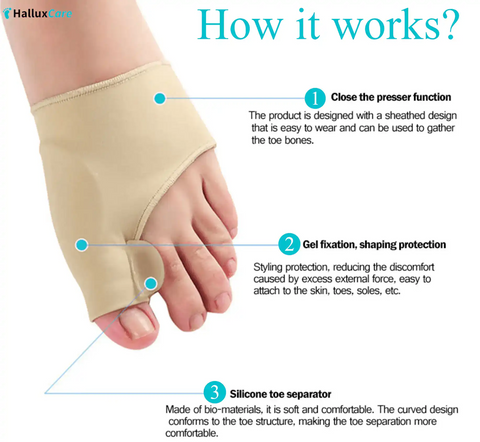
Products like toe spacers, bunion sleeves, and night splints can ease pain by reducing pressure and inflammation. While they don’t reverse deformity, they help maintain foot alignment and improve comfort.
For example, the Orthopedic Bunion Pain Relief & Correction Sleeve is podiatrist-approved and highly rated for reducing bunion pressure during daily activities.
4.9 ⭐⭐⭐⭐⭐ ( 1843 reviews )
How to Use Orthopedic Bunion Sleeves and Spacers
- Put on the sleeve before wearing shoes to cushion the bunion and reduce friction.
- Use toe spacers during rest or light activity to gently realign toes.
- Wear night splints as directed to maintain toe position overnight.
- Combine with strengthening exercises and proper footwear for best results.
Why Surgery Should Be Your Last Option
Surgery can correct bunions but carries risks like infection, nerve damage, and long recovery times [4]. Many patients achieve significant pain relief and improved function through conservative measures. Surgery is typically recommended only if:
- Pain is constant and severe (10/10).
- Conservative treatments fail after several months.
- Foot deformity causes functional problems or skin ulcers.
Practical Tips and Real-World Applications
- Start early: Address bunion symptoms before they worsen.
- Invest in good shoes: Spend a bit more on supportive footwear with a roomy toe box.
- Stay consistent: Perform strengthening exercises daily for lasting benefits.
- Monitor symptoms: Track pain and swelling to report to your podiatrist.
- Use products as aids: Combine sleeves/spacers with footwear and exercises for optimal relief.
Glossary of Key Terms
- Bunion (Hallux Valgus): Bony bump at the base of the big toe causing toe misalignment.
- Bunionette (Tailor’s Bunion): Similar bump on the outside of the foot near the little toe.
- Toe Spacers: Devices placed between toes to improve spacing and alignment.
- Bunion Sleeve: Soft sleeve worn over the bunion to protect and cushion the area.
- Orthoses: Custom or off-the-shelf shoe inserts that support foot alignment.
Frequently Asked Questions (FAQs)
Are toe spacers safe for bunions?
Yes, toe spacers are safe and can help reduce toe crowding and pressure on the bunion. They provide comfort and assist in gentle realignment but should be used alongside exercises and proper footwear [5].
How long should I wear toe spacers daily?
Start with 15–30 minutes a day, gradually increasing to an hour or more as tolerated. Avoid wearing them during high-impact activities unless recommended by a podiatrist.
Bunion vs tailor’s bunion – what’s the difference?
A bunion affects the big toe joint on the inside of the foot, while a tailor’s bunion (bunionette) forms on the outside near the little toe. Both are caused by pressure and misalignment but affect different areas [1].
Do bunion sleeves help with shoe comfort?
Yes, bunion sleeves cushion the bony bump and reduce friction inside shoes, making footwear more comfortable and preventing skin irritation.
When should I see a podiatrist?
See a podiatrist if you have persistent pain, difficulty walking, worsening deformity, or signs of infection. Early evaluation helps prevent complications and guides appropriate treatment.
Can I run or play pickleball with a bunion?
You can participate in many activities with proper footwear, foot strengthening, and padding. However, high-impact sports may aggravate symptoms. Consult your podiatrist for personalized advice.
Join the Conversation
What strategies have helped you manage bunion pain? Share your experiences or questions in the comments below. Your insights may help others avoid surgery and enjoy greater foot comfort.
Explore More HalluxCare Bunion Products
If you're looking for relief from bunion pain, consider using the Orthopedic Bunion Pain Relief & Correction Sleeve, which provides support and helps to alleviate discomfort.
For additional protection, the Tailor's Bunion Bunionette Pain Relief Protection Sleeves are designed to offer comfort and protection for bunionette pain.
To nourish and soothe the skin around bunions, as well as to promote healthy hair, consider the Jamaica Black Castor Oil Soothing Oil. Known for its moisturizing and anti-inflammatory properties, it helps alleviate discomfort around bunions and supports hair growth and scalp health.
Sources
- National Institute of Arthritis and Musculoskeletal and Skin Diseases (NIAMS). "Bunions." https://www.niams.nih.gov/health-topics/bunions
- American Orthopaedic Foot & Ankle Society (AOFAS). "Choosing Proper Footwear for Foot Health." https://www.aofas.org/footcaremd/treatments/footwear
- Journal of Foot and Ankle Research. "Effectiveness of Foot and Toe Exercises in Bunion Management," 2021.
- Cochrane Database of Systematic Reviews. "Surgical versus non-surgical treatment for hallux valgus," 2020.
- American Podiatric Medical Association (APMA). "Toe Spacer Benefits and Safety." https://www.apma.org/foothealth/footcaretoespacers
By integrating expert advice, proven exercises, and suitable products, you can effectively manage bunion pain and maintain an active lifestyle without surgery.
Readers who found this guide helpful are also checking these out — used by 1,800+ customers managing bunion pain at home:

What customers are saying
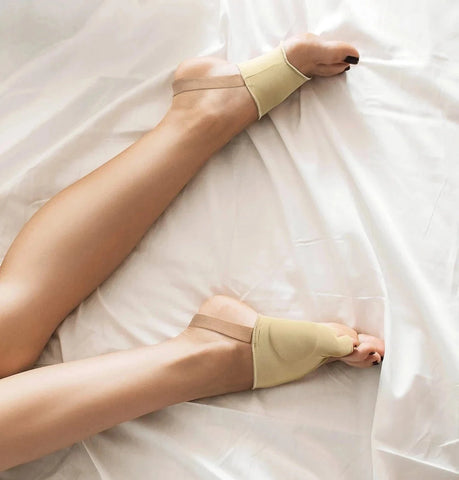
“The biggest win for me is the pain relief. I used to have this constant ache around the bunion area, especially after a long day on my feet. With the sleeve on, that pain has significantly toned down. I won't say it's a miracle cure, but it's definitely given me some much-needed comfort.”
“My right foot had been bothering me for months — shoes that were always comfortable suddenly hurt after a long day. I’ve been wearing these sleeves for three weeks now and my foot feels mostly back to normal. And the shipping was incredibly fast.”