


Bunions in Children and Teens: A Parent's Complete Guide to Juvenile Hallux Valgus
Last updated: March 2026 | Written by: Dr. Karen Sullivan, DPM – Pediatric Podiatry Specialist
Finding a bunion on your child's foot can be alarming. Bunions are usually associated with older adults, but juvenile hallux valgus affects approximately 2-4% of children in the United States, with girls more commonly affected than boys. The good news is that early intervention can prevent progression and help your child stay active and pain-free.
How to Tell If Your Child Has a Bunion
Look for these signs:
- A visible bump on the inside of the foot at the base of the big toe
- The big toe leaning toward the second toe (sometimes overlapping)
- Redness or calluses where the bump rubs against shoes
- Your child complaining about shoe discomfort or refusing certain shoes
- Difficulty during sports, especially running or jumping activities
- Walking with the feet turned outward
What Causes Bunions in Young People?
Genetics (The #1 Factor)
Studies show that 70-80% of juvenile bunions have a genetic component. If either parent has bunions, the child has a significantly higher chance of developing them. The inherited trait isn't the bunion itself, but the foot structure — flat feet, hypermobile joints, and metatarsal bone shape — that predisposes to bunion formation.
Footwear (Contributing Factor)
While genetics loads the gun, footwear pulls the trigger. Children's shoes that are too narrow, too small, or too pointed — including popular fashion sneakers and cleats — can accelerate bunion development in predisposed feet.
Flat Feet (Pes Planus)
Children with flat feet are especially prone to bunions because the collapsed arch allows excessive pronation, which places medial stress on the first ray.
Connective Tissue Conditions
Conditions like Ehlers-Danlos syndrome, Marfan syndrome, and ligamentous laxity increase bunion risk due to joint hypermobility.
When Should You Take Your Child to a Podiatrist?
Schedule an appointment if:
- You can see a visible bump that is getting bigger over time
- Your child reports pain during or after physical activity
- Shoe shopping has become difficult due to foot width
- Both parents have a history of bunions (even if no symptoms yet)
- Your child has flat feet combined with any toe deviation
The podiatrist will take weight-bearing X-rays to measure the hallux valgus angle and assess the growth plates (open growth plates change the treatment approach).
Non-Surgical Treatment for Juvenile Bunions
Surgery is almost always the last resort in children and teens, especially if growth plates are still open. Conservative treatments include:
Proper Footwear
- Wide-toe-box shoes that allow toes to spread naturally
- Athletic shoes with firm arch support (New Balance, ASICS, Brooks in kids' sizes)
- Avoid fashion sneakers with tapered toe boxes
- Soccer/sport cleats: choose wide-fit options from Nike or Under Armour
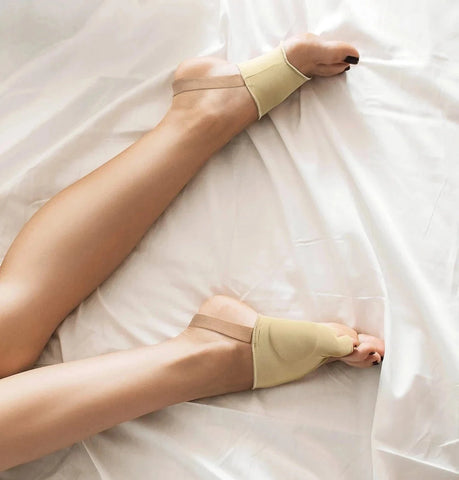
Orthopedic Bunion Sleeves
A pediatric-friendly bunion sleeve provides gentle alignment correction during activity. For teens with mild-to-moderate bunions, wearing a sleeve during sports and daily activities can reduce pain and slow progression.
Recommended Products for Bunion Relief
Shop the HalluxCare Orthopedic Bunion Sleeve →

Custom Orthotics
For children with flat feet contributing to bunion development, custom orthotics can correct overpronation and reduce stress on the first MTP joint. Many insurance plans cover pediatric orthotics.
Foot Exercises
Teach your child these simple exercises:
- Toe splay: Spread all toes wide, hold 5 seconds, repeat 10 times
- Marble pickups: Pick up marbles with toes — makes it a fun game!
- Towel scrunches: Scrunch a towel toward them using only toes
- Big toe stretches: Gently pull the big toe into alignment, hold 10 seconds
When Is Surgery Appropriate for a Child's Bunion?
Pediatric bunion surgery is considered when:
- Conservative treatments have been tried for at least 12 months without improvement
- The bunion causes significant pain that limits activity
- Growth plates are closed or nearly closed (typically age 14-16 for girls, 16-18 for boys)
- The deformity is rapidly progressing
Important: Operating on open growth plates risks growth disturbance. Most pediatric foot surgeons prefer to wait until skeletal maturity unless the deformity is severe.
Sports and Activities with Juvenile Bunions
Most children with bunions can continue all sports with proper management:
- Swimming: Excellent — no impact on the forefoot
- Soccer/Basketball: OK with wide-fit cleats/shoes and a bunion sleeve
- Dance: May require modified pointe work; discuss with instructor and podiatrist
- Running/Track: Fine with proper shoes; avoid minimalist racing flats
- Gymnastics: Monitor for increased pain during barefoot activities
Key Takeaways
- Juvenile bunions affect 2-4% of US children and are primarily genetic
- Early podiatric evaluation and X-rays are important for monitoring
- Conservative treatment (proper shoes, bunion sleeves, orthotics, exercises) is first-line
- Surgery is typically delayed until growth plates close (ages 14-18)
- Most children can continue sports with proper footwear and bunion protection
Readers who found this guide helpful are also checking these out — used by 1,800+ customers managing bunion pain at home:
What customers are saying
“The biggest win for me is the pain relief. I used to have this constant ache around the bunion area, especially after a long day on my feet. With the sleeve on, that pain has significantly toned down. I won't say it's a miracle cure, but it's definitely given me some much-needed comfort.”
“My right foot had been bothering me for months — shoes that were always comfortable suddenly hurt after a long day. I’ve been wearing these sleeves for three weeks now and my foot feels mostly back to normal. And the shipping was incredibly fast.”