


CrossFit and Weightlifting with Bunions: Training Modifications That Work
Bunions don't mean you have to stop lifting or abandon your WOD. But certain movements load the bunion joint heavily, and training smart means knowing which ones to modify. Here's your guide to keeping gains while protecting your feet.
Movements That Stress Bunions Most
High Risk
- Pistol squats: Full bodyweight on one foot with extreme dorsiflexion — maximum MTP joint stress
- Box jumps: Landing impact concentrates on the forefoot
- Rope climbs: Foot lock technique wraps and compresses the bunion area
- Toes-to-bar: While hanging, foot position is fine — but the toe grip places tension through the MTP joint
Moderate Risk
- Front squats: Upright torso shifts weight forward onto the forefoot
- Olympic lifts (snatch, clean): Receiving position requires significant ankle and forefoot dorsiflexion
- Wall balls: Repeated squat-to-press with forefoot loading
- Double-unders: Repetitive forefoot impact during jump rope
Lower Risk
- Deadlifts: Weight distributed through full foot — actually bunion-friendly
- Back squats: Can be performed with more posterior weight distribution than front squats
- Rowing: Foot strapped in place with minimal MTP stress
- Pull-ups/muscle-ups: Upper body — no foot involvement
Modification Strategies
Squat Modifications
- Heel-elevated squats: Place small plates (5-10 lb) or a wedge under your heels. This shifts weight posteriorly, reducing forefoot pressure by 30-50%
- Wide stance: A wider squat stance reduces the valgus angle at the big toe during the bottom position
- Avoid bouncing out of the hole: The stretch reflex at the bottom creates a sudden spike in forefoot loading
Jump Modifications
- Step-ups instead of box jumps: Same muscle activation without the landing impact
- Soft landing: If you jump, land with knees bent, weight mid-foot, NOT forefoot
- Bike or row substitution: For MetCon WODs, rowing or biking produces similar cardiovascular stimulus without forefoot impact
Readers who found this guide helpful are also checking these out — used by 1,800+ customers managing bunion pain at home:

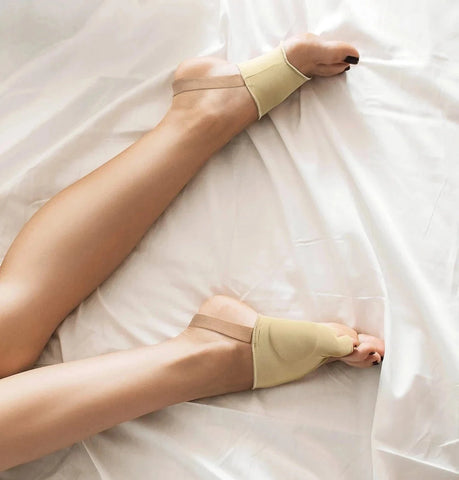
What customers are saying
“The biggest win for me is the pain relief. I used to have this constant ache around the bunion area, especially after a long day on my feet. With the sleeve on, that pain has significantly toned down. I won't say it's a miracle cure, but it's definitely given me some much-needed comfort.”
“My right foot had been bothering me for months — shoes that were always comfortable suddenly hurt after a long day. I’ve been wearing these sleeves for three weeks now and my foot feels mostly back to normal. And the shipping was incredibly fast.”
Footwear for CrossFit with Bunions
Best Options
- Altra Solstice XT: Zero-drop, foot-shaped toe box — built for CrossFit with maximum bunion room
- New Balance Minimus TR: Wide toe box, low profile for lifting, flexible for WODs
- Vivobarefoot Primus Lite: Ultra-wide toe box, minimal drop — barefoot feel with some protection
For Dedicated Lifting
- Weightlifting shoes with bunion accommodation: The elevated heel reduces ankle dorsiflexion demand, which indirectly reduces forefoot pressure
- Consider sizing up in lifting shoes and adding a bunion sleeve for a secure fit with room
What to Avoid
- Standard Nike Metcons and Reebok Nanos in regular width — too narrow for most bunion feet
- Any shoe that compresses the bunion during lateral movements (shuffles, lunges)
In-Shoe Support
- Bunion sleeve: Wear a thin sleeve inside your training shoe — protects the bump during all movements
- Metatarsal pad: A small adhesive pad behind the second and third met heads redistributes forefoot pressure
- Toe spacer: A silicone wedge between big and second toe maintains alignment during loaded movements
Programming Adjustments
- Scale volume, not intensity: 3 rounds of a heavy WOD may be better than 5 rounds for bunion management — same strength stimulus, less cumulative forefoot stress
- Recovery days matter: If your bunion flared from yesterday's WOD, today is a rowing/bike/upper body day — not another forefoot-heavy session
- Track your triggers: Keep a simple log of which movements cause post-workout bunion pain. After 2-3 weeks, you'll know exactly which movements need modification.
When to Take a Break
- Sharp pain in the bunion DURING a movement — stop that movement immediately
- Increased redness or swelling after training — ice and modify for 3-5 days
- Pain that doesn't resolve within 24 hours post-workout
- If you're compensating so much that your form breaks down — poor squat form to avoid bunion pain will lead to knee or back injury
The gym is where you challenge yourself — but smart training with bunion modifications means you can keep challenging yourself for years without sacrificing your foot health.