


Bunion Pain and Weather Changes: Why Barometric Pressure Affects Your Feet
"My bunion is better than the Weather Channel." If you've ever predicted a storm by your foot pain, you're not imagining it. Weather-related joint pain is real, and bunions are particularly susceptible. Here's the science behind it.
The Barometric Pressure Theory
The most widely accepted explanation involves barometric (atmospheric) pressure:
- Normal atmospheric pressure applies constant external force on your body — including your joints
- When barometric pressure drops (before storms, cold fronts, altitude changes), there's less external pressure compressing your tissues
- Inflamed or damaged joint tissues — like the bursa and capsule around a bunion — expand slightly when external pressure decreases
- This expansion stretches already-irritated nerve endings, causing increased pain
- The effect is most noticeable in joints that are already compromised by deformity or inflammation
The Research
- A 2023 study of over 2,600 patients found a statistically significant correlation between falling barometric pressure and increased joint pain reports
- Temperature drops of 10°F+ were associated with 15-20% increases in arthritis pain scores
- The effect was strongest in patients with existing joint inflammation — exactly the profile of a symptomatic bunion
- Humidity also plays a role — high humidity combined with low pressure produced the highest pain reports
Beyond Barometric Pressure: Other Weather Factors
Cold Temperature
- Cold causes vasoconstriction — reduced blood flow to extremities (feet get cold first)
- Less blood flow = less oxygen and nutrients to the bunion joint = increased stiffness and pain
- Cold reduces synovial fluid viscosity — the joint lubricant becomes thicker and less effective
Humidity
- High humidity may increase tissue edema (swelling) around the bunion
- The combination of high humidity + low pressure is the "worst case" weather scenario for bunion pain
Inactivity on Bad-Weather Days
An often-overlooked factor: when the weather is bad, people stay inside and move less. Reduced activity leads to joint stiffness, which amplifies pain perception. The weather may not be directly causing more pain — you may just be more sedentary.
Readers who found this guide helpful are also checking these out — used by 1,800+ customers managing bunion pain at home:

What customers are saying
“The biggest win for me is the pain relief. I used to have this constant ache around the bunion area, especially after a long day on my feet. With the sleeve on, that pain has significantly toned down. I won't say it's a miracle cure, but it's definitely given me some much-needed comfort.”
“My right foot had been bothering me for months — shoes that were always comfortable suddenly hurt after a long day. I’ve been wearing these sleeves for three weeks now and my foot feels mostly back to normal. And the shipping was incredibly fast.”
Managing Weather-Related Bunion Flare-Ups
Keep Feet Warm
- Wool or merino socks: Maintain warmth even when damp
- Heated insoles: Battery-powered insoles provide direct warmth to the foot
- Warm foot soaks: 15-20 minutes in warm (not hot) water with Epsom salts before bed
- Never let feet get fully cold: It's harder to rewarm than to maintain warmth
Stay Active Indoors
- Gentle foot and toe exercises — toe spreads, ankle circles, calf raises
- Indoor walking (mall walking is a great foul-weather option)
- Stationary bike or swimming pool if available
- Even 10-15 minutes of movement significantly reduces stiffness
Anti-Inflammatory Support
- Turmeric/ginger tea as a warming, anti-inflammatory drink
- Omega-3 rich diet (salmon, walnuts) to manage baseline inflammation
- Topical anti-inflammatory (menthol or capsaicin cream) on the bunion area
Bunion Sleeves
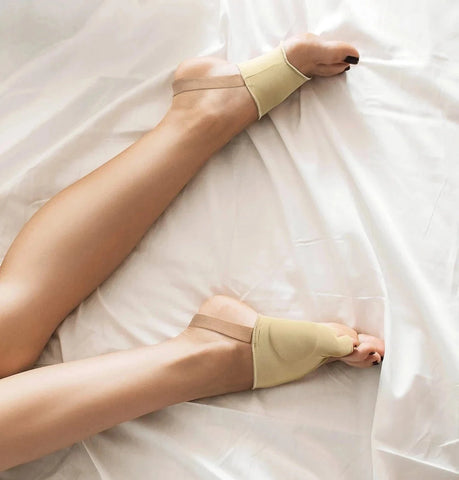
Wearing a medical-grade bunion sleeve during weather changes provides consistent gentle compression that counteracts the tissue expansion caused by dropping barometric pressure. Many patients report that wearing their sleeve preemptively before a storm prevents the flare-up entirely.
Tracking Your Patterns
Keep a simple pain diary for 4-6 weeks:
- Rate bunion pain daily (1-10 scale)
- Note the weather conditions (check local barometric pressure — free on weather apps)
- Record activity level and what you wore on your feet
- After a month, you'll see your personal pattern and can plan preventive measures accordingly
Seasonal Strategies
- Fall/Winter: Focus on warmth, indoor activity, anti-inflammatory nutrition. Biggest flare-up season for most patients.
- Spring: Rapidly changing weather means frequent pressure swings — stay prepared with sleeves and warm socks available
- Summer: Generally better, but intense humidity in the South and Midwest can trigger swelling. Stay hydrated.
You can't control the weather, but you can control your response to it. Understanding your bunion's weather sensitivity transforms unpredictable flare-ups into manageable, anticipated events.