


Bunion and Fall Risk in Seniors: How Foot Deformities Increase Fall Danger
Falls are the leading cause of injury-related death among Americans over 65, claiming over 36,000 lives annually. What's less known: bunions are an independent risk factor for falls. Treating your bunion isn't just about comfort — it could prevent a life-threatening injury.
The Research Is Clear
- A landmark study in the Journal of the American Geriatrics Society found that hallux valgus (bunions) was associated with a 1.5-2x increased risk of falls in community-dwelling older adults
- Bunion severity correlates with fall risk — the larger the deformity, the greater the danger
- Foot problems collectively account for an estimated 20-30% of fall risk in the elderly
Why Bunions Increase Fall Risk
1. Impaired Balance
The big toe is your primary balance anchor. During standing and walking, the big toe provides approximately 40% of forefoot stability. A bunion deformity reduces the big toe's ground contact and push-off force, directly compromising your balance platform.
2. Reduced Proprioception
Bunion deformity distorts the sensory nerve pathways in the big toe joint. This reduces proprioceptive feedback — your brain receives less accurate information about foot position, making it harder to react to uneven surfaces or sudden changes in terrain.
3. Compensatory Gait
Pain avoidance causes shuffling, shortened stride, and lateral weight shifting. These compensatory walking patterns are inherently less stable than normal gait and increase the likelihood of tripping.
4. Reduced Walking Speed
Bunion pain slows walking speed. Research consistently shows that slow gait speed is an independent predictor of falls in older adults — slower walkers have less momentum to recover from balance disturbances.
5. Footwear Problems
Seniors with bunions often wear loose, unsupportive shoes to avoid bunion pressure — but loose shoes increase trip risk. This creates a difficult trade-off between bunion comfort and foot stability.
Readers who found this guide helpful are also checking these out — used by 1,800+ customers managing bunion pain at home:

What customers are saying
“The biggest win for me is the pain relief. I used to have this constant ache around the bunion area, especially after a long day on my feet. With the sleeve on, that pain has significantly toned down. I won't say it's a miracle cure, but it's definitely given me some much-needed comfort.”
“My right foot had been bothering me for months — shoes that were always comfortable suddenly hurt after a long day. I’ve been wearing these sleeves for three weeks now and my foot feels mostly back to normal. And the shipping was incredibly fast.”
Fall Prevention Strategies
Address the Bunion
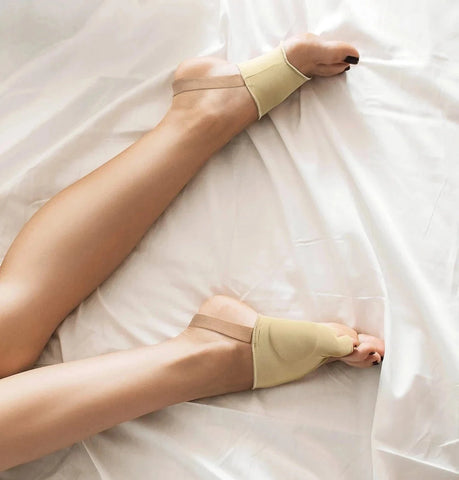
- Bunion sleeves: Provide cushioning so you can wear supportive shoes without pain — eliminates the need for loose, unsafe footwear
- Properly fitted shoes: Wide toe box for bunion comfort + firm heel counter for stability + non-slip sole for traction
- Custom orthotics: Improve foot alignment, arch support, and weight distribution — measurably improves balance scores
Strengthen Your Balance
- Single-leg stance: Hold for 30 seconds each side, near a wall for safety. Do 3 times daily.
- Heel-to-toe walking: Walk in a straight line placing the heel of one foot directly in front of the toes of the other. 20 steps.
- Tai chi: The most evidence-supported fall prevention exercise — reduces fall rates by 19-40% in clinical trials
- Foot muscle strengthening: Towel scrunches, marble pickups, toe yoga — rebuild the intrinsic muscles weakened by bunion deformity
Home Safety
- Remove throw rugs, loose cords, and floor clutter
- Install grab bars in bathroom and near stairs
- Ensure adequate lighting, especially at night (motion-sensing night lights)
- Keep commonly used items within easy reach to avoid stretching or bending
- Non-slip mats in bathroom and kitchen
When to Consider Surgery
If conservative measures don't adequately address fall risk, bunion surgery may be considered even in older patients — the fall prevention benefit can outweigh surgical risk. Discuss with both your podiatrist and geriatrician.
Talk to Your Doctor
If you're over 65 with bunions, specifically ask about:
- A formal balance assessment (can be done in most PT offices)
- Medication review — some medications increase fall risk
- Vision check — poor vision combined with foot problems multiplies fall danger
- Home safety assessment — many health systems offer free evaluations
Treating your bunion as part of a fall prevention strategy isn't vanity — it's potentially life-saving. Every improvement in balance, gait, and stability reduces your risk of a devastating fall.