


Balance Board Training for Bunion Stability and Fall Prevention
Bunion deformity impairs two things simultaneously: the big toe's mechanical contribution to balance, and proprioceptive (position-sensing) input from the first MTP joint. The result — measurably worse balance on the affected foot. Balance board training directly targets both deficits and is one of the most evidence-supported rehab tools for improving bunion-related stability.
Why Bunions Impair Balance
- Reduced base of support: A bunion reduces the effective weight-bearing surface of the big toe, narrowing the stabilizing foundation during single-leg stance
- Impaired proprioception: Joint deformity disrupts the mechanoreceptors in the MTP joint that provide the nervous system with foot position information
- Compensatory patterns: Gait changes from bunion pain (lateral weight bearing, reduced push-off) impair the normal balance reflexes that depend on consistent, predictable muscle activation sequences
- Muscle weakness: The abductor hallucis — a key balance muscle — is stretched and weakened in hallux valgus deformity
Balance Board Options
- Wobble board (dome base): Challenges balance in all directions simultaneously — best for progressive training. Beginners start here.
- Rocker board (one axis): Tilts forward-back or side-to-side only — useful for targeting specific instability directions
- BOSU ball: Dome side up (unstable) or flat side up (more unstable) — versatile, dual-sided training surface
- Balance cushion (disc): Air-filled disc for milder instability challenge — good starting point for seniors or post-surgical patients
Readers who found this guide helpful are also checking these out — used by 1,800+ customers managing bunion pain at home:

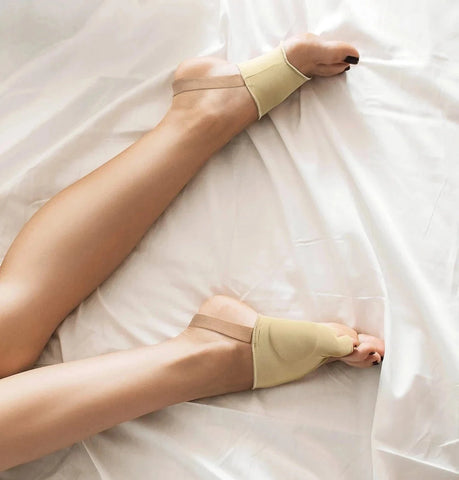
What customers are saying
“The biggest win for me is the pain relief. I used to have this constant ache around the bunion area, especially after a long day on my feet. With the sleeve on, that pain has significantly toned down. I won't say it's a miracle cure, but it's definitely given me some much-needed comfort.”
“My right foot had been bothering me for months — shoes that were always comfortable suddenly hurt after a long day. I’ve been wearing these sleeves for three weeks now and my foot feels mostly back to normal. And the shipping was incredibly fast.”
Progressive Balance Training Protocol
Phase 1: Foundation (Weeks 1-2) — Both Feet
- Stand on the wobble board with feet hip-width apart
- Find your center — keep the board edge from touching the floor
- Progress to slight knee bend (30°) which increases the challenge
- 2-3 sets of 30-60 seconds, 2x daily
- Goal: controlled balance without overcompensating with arms
Phase 2: Single Leg (Weeks 3-4)
- Stand on affected foot on the wobble board (begin near a wall for safety)
- 30 seconds initially — increase by 15 seconds every 3-4 days
- Eyes-open first; when confident, try eyes-closed for enhanced proprioceptive challenge
- 2-3 sets per leg
Phase 3: Dynamic Challenge (Weeks 5-8)
- Ball toss on balance board: Stand single-leg on board, catch and toss a small ball — dual-task challenge that mimics real-life balance demands
- Head turns while balancing: Slowly turn head left and right while maintaining balance — retrains vestibular-proprioceptive integration
- Mini squats on board: Small-range squats (20-30°) on the wobble board — strengthens the full ankle-to-hip chain under balance demands
Phase 4: Functional (Weeks 9-12)
- Step-up and step-down on a low platform with the last step landing on the affected foot on the balance board
- Foam pad plus balance board stacked for seniors seeking fall prevention challenge
Safety Guidelines
- Always train near a wall, counter, or sturdy chair during single-leg work — falls during balance training defeat the purpose
- Start on firm, non-slip floor — not carpet
- Stop if sharp bunion pain develops — reduce to two-foot standing until pain resolves
- Seniors: have a spotter present during single-leg phases
Balance board training takes 10-15 minutes per session and requires a $25-60 piece of equipment — delivering real, measurable improvements in stability, reduced fall risk, and better overall bunion-foot function. It's one of the most powerful tools in conservative bunion management that most patients never know about.