


High Heels and Bunions: What Every Woman Needs to Know in 2026
High heels are a wardrobe staple for millions of American women — but they're also the single biggest modifiable risk factor for bunion development. The good news? You don't have to choose between style and foot health. This guide explains exactly how heels affect your feet and gives you practical strategies to minimize the damage.
The Biomechanics: What Heels Actually Do to Your Feet
When you step into a pair of high heels, your foot mechanics fundamentally change:
- Weight shifts forward: In a 3-inch heel, 76% of your body weight lands on the ball of your foot (vs. 43% in flats)
- Big toe joint compresses: The narrow toe box squeezes the big toe laterally, pushing it toward the second toe
- Calf muscles shorten: Regular heel wearing shortens the Achilles tendon, increasing forefoot pressure even when barefoot
- Metatarsal heads spread: Excess pressure causes the forefoot bones to splay, widening the foot over time
A study published in the Journal of Orthopaedic Research found that wearing 3+ inch heels for more than 40 hours per week doubles the risk of bunion development compared to wearing flats.
The Heel Height Chart: Risk by the Inch
- 1 inch or less (flats/slight heel): Minimal added risk — weight distribution stays relatively normal
- 1-2 inches: Moderate forefoot loading — acceptable for daily wear with a wide toe box
- 2-3 inches: Significant biomechanical change — limit to 4+ hours and take breaks
- 3+ inches: Major forefoot overload — reserve for special occasions only
- 4+ inches (stilettos): Extreme pressure on metatarsal heads — highest bunion risk category
Smart Heel Strategies: Style Without Sacrifice
You don't have to quit heels entirely. These podiatrist-approved strategies significantly reduce bunion risk:
1. Choose the Right Heel Shape
- Block heels > stilettos: Wider base distributes weight more evenly
- Platform heels: A 1-inch platform on a 3-inch heel gives you the height with only 2 inches of actual foot angle
- Wedges: Best overall support — the entire foot is supported
- Pointed toe vs. round toe: Always choose round or almond-shaped toe boxes — never pointed
2. The Commute-and-Change Strategy
Many podiatrists recommend the "commute flat, arrive in heels" approach:
- Wear supportive flats or sneakers during your commute
- Change into heels at the office or event
- Limit heel time to 4-6 hours maximum
- Slip shoes off under your desk when sitting
3. Wear a Bunion Sleeve Inside Heels
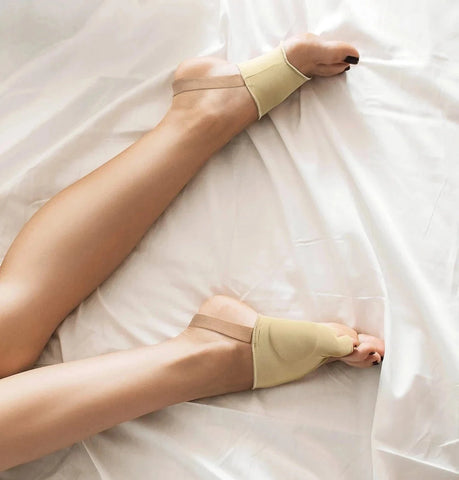
A thin, medical-grade bunion sleeve worn inside heels provides a protective barrier between your toe joint and the shoe. It cushions the bunion area and gently holds the big toe in better alignment, even in less-than-ideal shoes.
Readers who found this guide helpful are also checking these out — used by 1,800+ customers managing bunion pain at home:

What customers are saying
“The biggest win for me is the pain relief. I used to have this constant ache around the bunion area, especially after a long day on my feet. With the sleeve on, that pain has significantly toned down. I won't say it's a miracle cure, but it's definitely given me some much-needed comfort.”
“My right foot had been bothering me for months — shoes that were always comfortable suddenly hurt after a long day. I’ve been wearing these sleeves for three weeks now and my foot feels mostly back to normal. And the shipping was incredibly fast.”
Daily Recovery Routine for Heel Wearers
After a day in heels, this 5-minute routine can prevent cumulative damage:
- Calf stretch: Stand on a step, drop heels below the edge, hold 30 seconds × 3 — reverses Achilles shortening
- Toe spreads: Sit down, actively spread all toes apart, hold 5 seconds × 15 reps
- Golf ball roll: Roll a golf ball under each foot for 2 minutes — releases plantar fascia tension
- Big toe pulls: Gently pull big toe away from second toe, hold 10 seconds × 10 reps
- Ice if swollen: 15 minutes on the bunion area if there's redness or swelling
Signs Your Heels Are Causing Damage
Watch for these early warning signs:
- Redness or warmth over the big toe joint after wearing heels
- Your big toe touching your second toe (early drift)
- Calluses forming on the ball of your foot or side of the big toe
- Foot pain that persists into the next morning
- Needing a wider shoe size than you used to wear
These signs mean your feet are actively changing. Early intervention with proper footwear, bunion sleeves, and toe exercises can halt progression before you need medical treatment.
The Bottom Line for Heel Lovers
High heels and bunion-free feet can coexist — but it requires strategy. Choose lower, wider heels; limit wear time; do daily recovery exercises; and consider a protective bunion sleeve for those occasions when you want the extra height. Your future self will thank you.