


How to Fly Comfortably with Bunions: Air Travel Tips for Foot Pain Sufferers
If you dread flying because of your bunion pain, you're not alone. Airplane cabins create a perfect storm for foot discomfort: cramped legroom, reduced cabin pressure, low humidity, and hours of sitting. For bunion sufferers, these conditions can turn a routine flight into a painful ordeal. Here's how to arrive at your destination with happy feet.
Why Flying Makes Bunions Worse
Three main factors combine to aggravate bunions during air travel:
1. Swelling from Cabin Pressure
At cruising altitude, cabin pressure is equivalent to being at 6,000-8,000 feet elevation. This lower pressure, combined with prolonged sitting, causes feet to swell 6-8% larger than normal. For bunion patients, this means:
- Shoes that fit fine on the ground become painfully tight
- The bunion bump presses harder against the shoe wall
- Increased fluid in the joint causes stiffness and aching
2. Immobility
Sitting with feet down for hours reduces blood circulation. Pooling blood and fluid in the lower legs and feet increases swelling around the bunion joint and can worsen inflammation.
3. Cramped Space
Economy seats provide minimal foot room. Being unable to stretch or elevate your feet compounds the swelling problem.
Before Your Flight: Preparation Checklist
Choose the Right Shoes
- Wear your most comfortable, widest shoes — not your newest or most stylish pair
- Slip-on shoes or shoes with adjustable velcro/laces are ideal (you can loosen them mid-flight)
- Avoid boots, heels, or any shoe with a narrow toe box
- Consider bringing a pair of wide, open-toe sandals in your carry-on for the flight itself
Put on a Bunion Sleeve Before You Leave
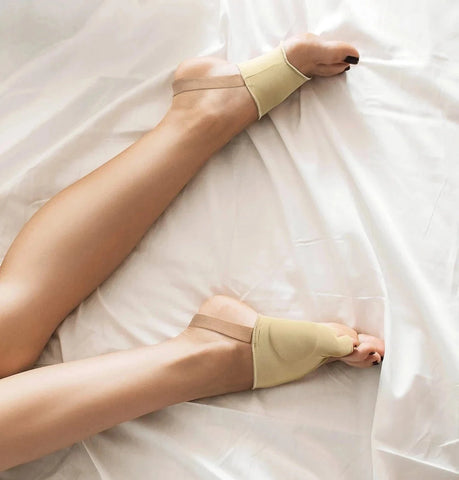
A medical-grade bunion sleeve provides cushioning and gentle alignment that becomes even more important when your feet swell at altitude. Put it on before heading to the airport — you'll be grateful during the flight.
Hydrate Aggressively
Cabin air is extremely dry (10-20% humidity). Dehydration thickens blood and worsens swelling. Drink 8 oz of water for every hour of flight — start hydrating the day before.
During the Flight: Comfort Strategies
In-Seat Exercises (Do These Every 30 Minutes)
- Ankle pumps: Point toes up then down, 20 repetitions — pumps blood back up from the feet
- Ankle circles: 10 clockwise, 10 counterclockwise each foot
- Toe crunches: Curl toes tightly, then spread wide — activates foot muscles and reduces pooling
- Heel raises: While seated, lift heels off the floor and hold 5 seconds × 10 reps
Walk the Aisle
Get up and walk the length of the cabin at least once every 90 minutes on flights over 3 hours. This is the single most effective action for preventing foot and ankle swelling.
Elevate When Possible
- If the seat in front is empty, ask if you can rest feet on the seat (with a blanket or sock)
- Use your carry-on bag as a footrest to get feet slightly elevated
- Cross ankles periodically to vary blood flow patterns
Loosen Your Shoes
On flights over 2 hours, loosen your laces or velcro straps after reaching cruising altitude. Your feet will expand, and keeping shoes tight is the #1 cause of bunion pain during flights.
Readers who found this guide helpful are also checking these out — used by 1,800+ customers managing bunion pain at home:

What customers are saying
“The biggest win for me is the pain relief. I used to have this constant ache around the bunion area, especially after a long day on my feet. With the sleeve on, that pain has significantly toned down. I won't say it's a miracle cure, but it's definitely given me some much-needed comfort.”
“My right foot had been bothering me for months — shoes that were always comfortable suddenly hurt after a long day. I’ve been wearing these sleeves for three weeks now and my foot feels mostly back to normal. And the shipping was incredibly fast.”
Long-Haul Flights (6+ Hours): Extra Precautions
- Compression socks: Medical-grade graduated compression socks (15-20 mmHg) help prevent swelling and reduce DVT risk
- Aisle seat: Book an aisle seat so you can stretch your legs and walk without climbing over other passengers
- Anti-inflammatory: Take an over-the-counter NSAID 30 minutes before boarding (with food) — reduces inflammatory swelling
- Travel pillow for feet: Inflatable foot rest or travel foot hammock keeps feet slightly elevated
After Landing: Recovery Protocol
- Walk slowly for the first 15 minutes — don't rush through the terminal in tight shoes
- Ice your bunion as soon as you reach your hotel (request ice from the front desk)
- Elevate feet for 20 minutes — lie on the bed with feet propped on pillows
- Gentle foot massage: Roll a water bottle under each foot for 2 minutes
- Rehydrate: Continue drinking water — airplane dehydration worsens swelling for hours after landing
Booking Smart: Airline Comfort Hacks for Foot Pain
- Bulkhead seats: More legroom and ability to stretch feet forward
- Exit row: Most leg space in economy class
- Premium economy: Often worth the upgrade for significantly more foot and leg room
- Red-eye flights: You'll be sleeping, which means feet are more naturally elevated
Flying with bunions doesn't have to be miserable. With the right preparation — comfortable shoes, a protective bunion sleeve, in-flight exercises, and post-flight recovery — you can travel anywhere without sacrificing your foot comfort.