


Bunion-Friendly Workouts: How to Stay Active Without Making Bunions Worse
Having a bunion doesn't mean your fitness routine is over — but it does mean you need to be strategic about your workouts. The wrong exercises can accelerate bunion progression and increase pain, while the right ones can actually strengthen your feet and slow the condition. Here's your complete guide to exercising with bunions.
Exercises That Are GOOD for Bunions
Swimming and Water Aerobics ★★★★★
The gold standard for bunion-friendly fitness. Water eliminates impact on the forefoot while providing excellent cardiovascular and strength benefits. The buoyancy means zero weight-bearing stress on the big toe joint.
Cycling (Stationary or Road) ★★★★★
Cycling places nearly zero lateral force on the big toe joint. Make sure your cycling shoes have a wide toe box — clipless cycling shoes tend to be narrow and can aggravate bunions. Flat pedals with wide athletic shoes are the bunion-friendly choice.
Yoga and Pilates ★★★★
Excellent for flexibility, balance, and core strength. Many poses naturally stretch and strengthen the feet. Barefoot practice allows toes to spread naturally — one of the best things for bunion health. Modify poses that require extreme toe flexion if they cause discomfort.
Rowing ★★★★
Full-body workout with no impact on the feet. The pushing motion uses the heel and midfoot, not the forefoot, making it ideal for people with bunions.
Elliptical Machine ★★★★
Low-impact with a smooth motion that keeps the forefoot loaded evenly. Better than treadmill walking for most bunion patients because there's no push-off stress.
Weight Training (Upper Body) ★★★★
Seated and lying exercises (bench press, shoulder press, seated rows) have zero forefoot impact. Just avoid standing exercises in narrow gym shoes.
Exercises That Need Modification
Walking / Hiking ★★★
- Good for general fitness but generates push-off force through the big toe
- Modification: Wear wide-toe-box shoes with a rocker sole, use a bunion sleeve for alignment support
- Stick to flat terrain — hills increase forefoot loading
Weight Training (Lower Body) ★★★
- Squats, lunges, and deadlifts all require forefoot loading during the lift
- Modification: Wear wide shoes or lift barefoot, focus on driving through the heels, avoid narrow weightlifting shoes
Dance Fitness ★★
- Side-to-side movements and pivoting stress the big toe joint
- Modification: Wear supportive dance sneakers with wide toe boxes, avoid barefoot dance on hard surfaces
Exercises to AVOID or Limit
Running / Jogging ★
Each running stride generates 2-3× body weight force through the forefoot during push-off. This is the highest-impact common exercise for bunions. If you must run:
- Choose shoes with maximum forefoot cushioning and wide toe boxes
- Run on soft surfaces (track, grass) rather than concrete
- Wear a bunion sleeve for alignment support
- Limit runs to 3× per week with rest days between
Jump Training (Plyometrics) ★
Box jumps, burpees, jump squats — all generate extreme forefoot loading on landing. For most bunion patients, these should be replaced with low-impact alternatives.
Court Sports ★
Tennis, basketball, volleyball — the lateral cutting and pivoting motions place extreme stress on the big toe joint. Occasional recreational play is usually fine with supportive shoes, but regular competitive play can accelerate bunions.
Essential Gear for Exercising with Bunions
- Wide-toe-box athletic shoes: Brands like Altra, New Balance (wide), and Hoka offer roomy options
- Bunion correction sleeve: Wear inside shoes during any weight-bearing exercise for alignment support
- Moisture-wicking socks: Reduce friction over the bunion bump
- Custom sport orthotics: Your podiatrist can make activity-specific insoles
Readers who found this guide helpful are also checking these out — used by 1,800+ customers managing bunion pain at home:

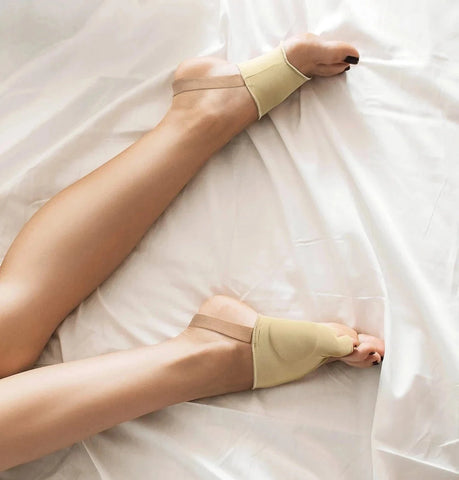
What customers are saying
“The biggest win for me is the pain relief. I used to have this constant ache around the bunion area, especially after a long day on my feet. With the sleeve on, that pain has significantly toned down. I won't say it's a miracle cure, but it's definitely given me some much-needed comfort.”
“My right foot had been bothering me for months — shoes that were always comfortable suddenly hurt after a long day. I’ve been wearing these sleeves for three weeks now and my foot feels mostly back to normal. And the shipping was incredibly fast.”
Pre and Post-Workout Foot Care
Before Exercise
- Warm up your feet: ankle circles, toe spreads, calf stretches for 2-3 minutes
- Put on your bunion sleeve before your socks and shoes
- Check that shoes aren't pressing on the bunion bump — if they are, they're too narrow
After Exercise
- Ice the bunion area for 15 minutes if there's any redness or swelling
- Roll a lacrosse ball under your arch to release tension
- Do toe-strengthening exercises: towel curls, marble pick-ups (3 minutes)
- Elevate your feet for 10-15 minutes
Building a Weekly Bunion-Friendly Workout Plan
Here's a sample weekly plan that keeps you fit while protecting your feet:
- Monday: Swimming or water aerobics (30-45 min)
- Tuesday: Upper body weight training (30 min)
- Wednesday: Cycling (30-45 min)
- Thursday: Yoga or Pilates (45 min)
- Friday: Elliptical + lower body weights (40 min)
- Saturday: Walking with proper shoes + bunion sleeve (30-60 min)
- Sunday: Rest and foot care routine
Living with bunions doesn't mean sitting on the sidelines. With smart exercise choices, proper footwear, and protective bunion sleeves, you can maintain an active lifestyle while keeping your feet healthy and comfortable.