


Bunion Bursitis: When the Bump Gets Inflamed and How to Calm It Down
Not all bunion pain is the same. If your bunion bump is red, swollen, warm to the touch, and intensely painful, you likely have bunion bursitis — inflammation of the fluid-filled sac (bursa) that cushions the bone prominence. This is more than baseline bunion ache — it's an acute inflammatory episode that needs specific treatment.
What Is the Bunion Bursa?
A bursa is a small, fluid-filled sac that acts as a cushion between bone and soft tissue. Your body naturally develops a bursa over the medial eminence (bunion bump) as a protective response to friction and pressure. When this bursa becomes irritated and inflamed, it fills with excess fluid and becomes painful — that's bursitis.
What Triggers Bunion Bursitis?
- Shoe pressure: The #1 trigger — tight or narrow shoes pressing directly on the bump cause friction that inflames the bursa
- New shoes: Shoes that haven't been broken in can cause sudden rubbing
- Increased activity: A sudden spike in walking or standing (vacation, new job, event) that overwhelms the bursa's tolerance
- Direct trauma: Bumping the bunion against a table leg, door frame, or bed post
- Cold weather: Transitioning to winter boots that fit differently than summer shoes
- Weight gain: Even a few pounds increases forefoot loading and bunion pressure
Bursitis vs. Infection: Know the Difference
| Sign | Bursitis | Infection (Seek Immediate Care) |
|---|---|---|
| Redness | Localized to bump | Spreading (red streaks) |
| Warmth | Warm to touch | Hot |
| Fever | No fever | Fever/chills present |
| Skin break | Intact skin | Open wound or ulcer over bump |
| Drainage | None | Pus or cloudy fluid |
If you see signs of infection — especially spreading redness, fever, or drainage — see a doctor immediately.
Readers who found this guide helpful are also checking these out — used by 1,800+ customers managing bunion pain at home:

What customers are saying
“The biggest win for me is the pain relief. I used to have this constant ache around the bunion area, especially after a long day on my feet. With the sleeve on, that pain has significantly toned down. I won't say it's a miracle cure, but it's definitely given me some much-needed comfort.”
“My right foot had been bothering me for months — shoes that were always comfortable suddenly hurt after a long day. I’ve been wearing these sleeves for three weeks now and my foot feels mostly back to normal. And the shipping was incredibly fast.”
How to Treat Bunion Bursitis at Home
Phase 1: Acute (First 48-72 Hours)
- Remove the trigger: Switch to the widest, softest shoes you own — or open-toed sandals
- Ice: 15-20 minutes on, 45 minutes off, repeat 3-4 times daily. Use a cloth barrier to protect skin.
- Anti-inflammatory: Over-the-counter ibuprofen or naproxen (follow package dosing) to reduce inflammation
- Elevation: Keep the foot elevated above heart level when resting
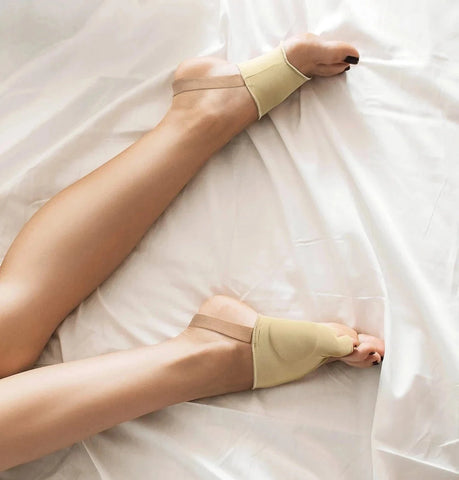
- Protect: A donut-shaped pad or bunion sleeve surrounds the bump without pressing on it, preventing further irritation
Phase 2: Subacute (Days 3-7)
- Contrast therapy: Alternate warm water (3 minutes) and cold water (1 minute) for 15 minutes — promotes circulation and reduces inflammation
- Continue anti-inflammatories if needed
- Gentle range of motion: Slowly wiggle the big toe up and down to prevent stiffness
- Reassess shoes: Identify which pair triggered the flare-up and retire or stretch it
Phase 3: Resolution (Week 2+)
- Gradual return to activity: Don't jump back to full activity level — ease in over a week
- Daily bunion sleeve: Consistent wear prevents recurrence
- Shoe audit: Go through your closet and eliminate or modify any shoes that could trigger another episode
Medical Treatment Options
If home treatment doesn't resolve bursitis within 2 weeks:
- Cortisone injection: A single injection into the bursa can dramatically reduce inflammation. Effective but should not be repeated frequently (3-4 per year maximum)
- Aspiration: If the bursa is significantly swollen, the fluid can be drained with a needle for immediate relief
- Physical therapy: Ultrasound therapy, iontophoresis, and manual techniques can help resolve stubborn bursitis
- Custom orthotics: Redistribute pressure away from the bunion area to prevent recurrence
Preventing Future Flare-Ups
- Wear your bunion sleeve daily — especially when wearing any shoe that's not wide/open-toed
- Don't wear new shoes for extended periods without breaking them in gradually
- Apply silicone or gel padding over the bump before wearing any borderline shoe
- Ice after any day with higher-than-usual activity
- Monitor your bunion — increased redness or warmth is an early warning sign
Bunion bursitis flare-ups are painful but highly treatable. Quick intervention at the first sign of inflammation prevents weeks of suffering and keeps you moving comfortably.